[_view.as] Domestic manufacturing industry emerges as a global IIoT powerhouse with digital twin strategy - e4ds news
반도체 AI 인더스트리 4.0 SDV 스마트 IoT 컴퓨터 통신 특수 가스 소재 및 장비 e4ds plus

Domestic manufacturing industry emerges as a global IIoT powerhouse with digital twin strategy

기사입력2020.03.03 14:30

Manufacturing industry continues to grow rapidly through OT and IT convergence
OPC UA platform essential for CPS implementation
The core technology of smart factories is sharing and integration.


With the recent implementation of the 52-hour workweek and the promotion of job creation policies, the number of companies seeking to build smart factories utilizing IoT technology is increasing in Korea.

However, our country's circumstances have led to many misunderstandings and entry barriers as a result of rapidly implementing smart factory strategies without properly resolving issues such as conflicts of interest between supply and demand companies, government/local governments, and industry.

Small and medium-sized enterprises with insufficient internal capabilities often understood smart factories as simply factory automation, and employees sometimes misunderstood it as a means of reducing manpower.


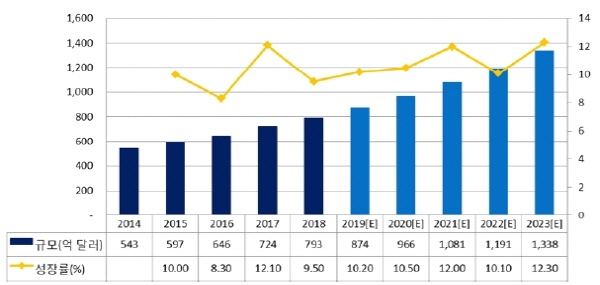
▲ Global smart factory market size <Data = NICE Information Service>

However, the world is rapidly expanding smart factories, especially in the manufacturing sector, and it is expected that high growth will continue through the implementation of factories utilizing digital technologies such as software platforms, applications, sensors, artificial intelligence, big data, communication networks, and cloud services.

Mind Commerce predicted that the global industrial Internet market will grow at an average annual rate of 12.9% from 2015 to 2020, reaching approximately USD 1.4 trillion in 2020. By region, the Americas currently account for the largest share, but it is predicted that rapid growth will occur in the future, centered around the Asia-Pacific region.


Improving competitiveness in the manufacturing industry with IIoT
As inter-industry convergence and on-demand production of products reflecting individual needs expand, the need for an efficient production system that takes into account the product life cycle is increasing.

Global manufacturing companies are recognizing the Internet of Things (IoT) technology as a new growth engine and a means to enhance competitiveness, and are seeking to improve the efficiency of facility operation and reduce costs by connecting people, machines, and data.


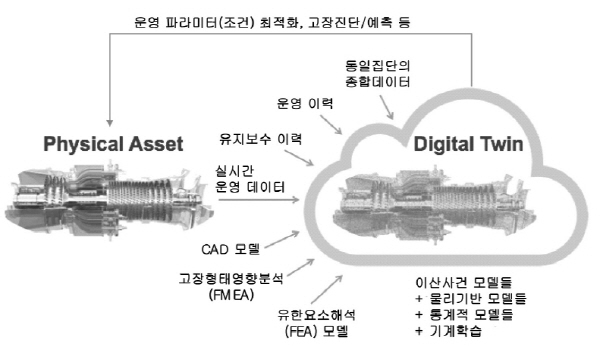
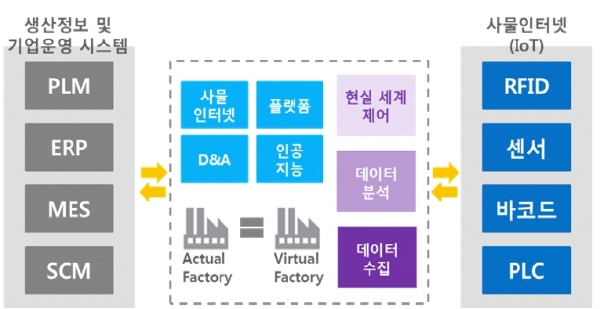
▲ Relationship between physical assets and digital twins <Image = KEIT>

The Internet of Things refers to the expansion of cyber-physical systems (CPS) derived from smart manufacturing to all industrial areas with a focus on the importance of data.

The Industrial Internet of Things (IIoT) is the industrial version of the Internet of Things, which attaches sensors to industrial equipment or infrastructure, connects them to the Internet, and then analyzes the data collected here to create value.

Although the Industrial Internet and smart factories are sometimes defined as almost the same concept, smart factories can be seen as a term that mainly deals with the manufacturing sector.

Smart factories are a B2B sector targeting companies, unlike B2C sectors targeting general consumers such as smart homes and smart cars. Representative companies in this sector include Siemens and GE.le="text-align: center;">
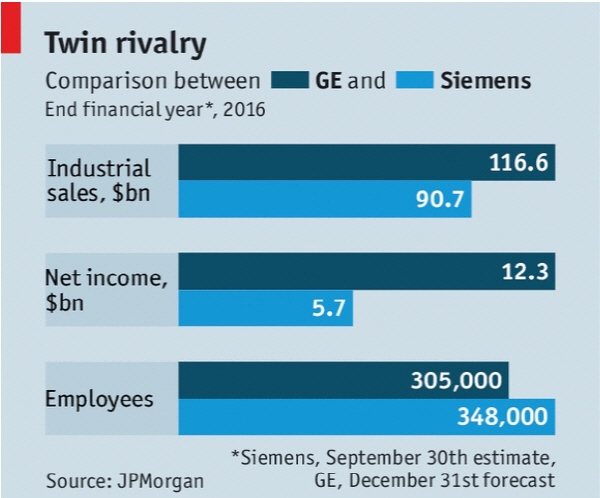
▲ Comparison of GE and Siemens <Source=Ramon>

Siemens is a company that has developed smart factory solutions, and is producing equipment and services to sell to external companies beyond its own productivity improvement. GE is providing solutions for fuel saving and failure prevention based on data accumulated from aircraft engines, etc. through Predix, a cloud-based data analysis service.

In countries such as the United States, Germany, and France, the movement to make CPS (Digital Twin) a part of everyday life is already expanding, and many overseas companies are actively investing in the development of software platforms and solutions to implement a digital twin environment.

Digital twin is an advanced technology type of CPS, which is cited as a comprehensive system in which control elements in the cyber (digital domain) are connected and operated with physical systems in the real world.


OPC UA, a must-have for smart factories
In order to implement a smart factory, a factory of the future, a method is required that goes beyond sharing and integrating data within a single factory and provides CPS data in real time. Machines and robots within a factory each use their own maker language, but the start of a smart factory begins with establishing a single language (standard).

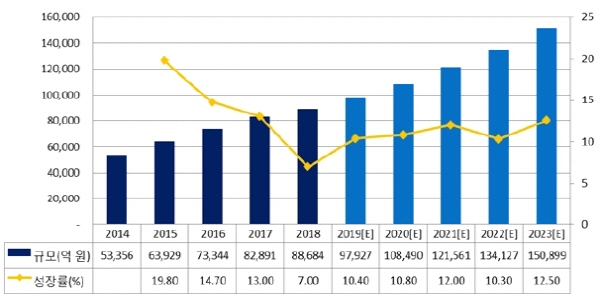
▲ Domestic smart factory market size <Data = NICE Information Service>

In order for domestic companies to increase their global competitiveness, they must secure a core solution that can send data from the lowest level of the industrial field to the highest level. A strategy to build a communication platform that can be combined into a single CPS (Digital Twin) is needed, moving beyond the existing concept of factory automation.

Especially in the manufacturing sector, improving production efficiency requires the process of grafting new communication protocols and security environment-related infrastructure onto existing systems.

OPC UA (OPC Unlfield Architecture) is an open international standard that has secured interoperability for the purpose of safe and reliable data exchange in various industries, including the current industrial automation field.

It is an architecture that does not depend on OS or hardware and is an independent protocol that does not allow dependence on a specific manufacturer. It supports safe connection of the control system network of the manufacturing site with the IT network such as upper MES or ERP.

OPC UA can be used as a distributed control device to prepare for cases where a factory stops due to network failures and CPS errors, and edge computing technology is applied for this.


Strategy encompassing OT and IT
Smart factory solutions are based on the convergence of OT (Operational Technology) and IT (Information Technology).

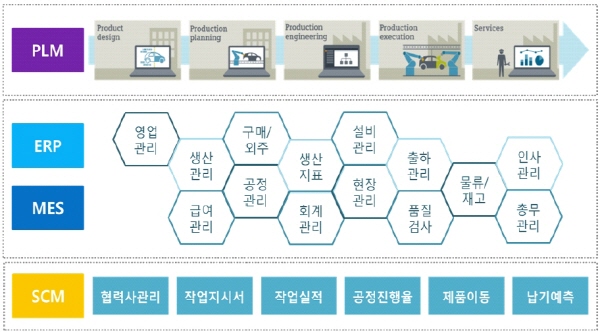
OT includes factory equipment lines such as PLC and PCS, and IT includes ▲SCADA and CPS (production control system), ▲MES (manufacturing execution system), ▲ERP and PLM (enterprise resource planning).

▲ Smart Factory Core Element Technology <Image = NICE Information Service>

However, Korea's smart factories are limited in that they focus only on the approach from IT to OT, and the OT field is largely dependent on foreign companies. Although domestic technological prowess in the SI field holds a global edge, LS Industrial Systems is the only domestic company targeting OT.

In order to utilize the industrial internet in the domestic manufacturing environment, it is important to strengthen demand-linked technology development that fits the manufacturing cycle and establish a collaborative system between large and small businesses.

▲ CPS concept diagram <Image = NICE Information Service>

In the past, during the heyday of PCs, MS Windows and Intel CPUs reigned supreme in the market, and in the smartphone era, Apple and Google dominate the market, but the era of the Internet of Things is still in its infancy.

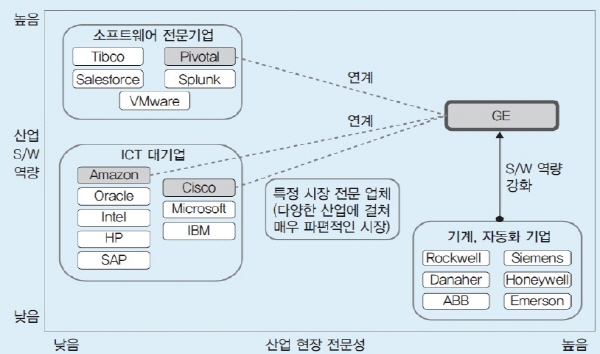
Experts predict that in the future, multiple platforms will likely coexist across industries and regions. Considering this market potential, domestic companies will need to actively utilize platform strategies to implement smart factories.

▲ Competitive landscape of the IIoT platform market <Image = STEPI>


The global smart factory market is expected to grow by 9.3% annually to reach USD 205.42 billion in 2022.

The Korean market size is expected to be the first in Asia to show rapid growth, with a high annual growth rate of 12.2%, reaching USD 7.83 billion in 2020 and USD 12.76 billion in 2022.

The strategy of utilizing the international standard OPC UA can be seen as competitive in implementing a smart factory that accurately understands the current status of the factory, predicts the possibility of failure, and prescribes timely solutions to respond to future situations.

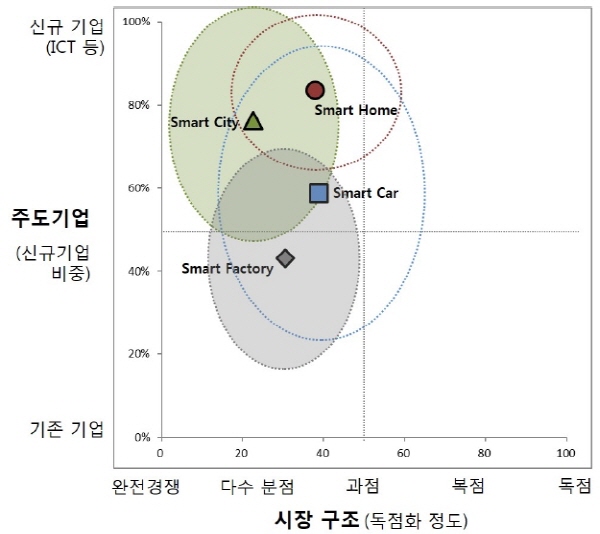
▲ Comparison of competitive scenario outlook by IoT sector <Data = STEPI>

The OPC UA platform, which is characterized by standardization, independence, and complementarity, has ▲security mechanisms such as certificate-based encrypted communication ▲automatic exchange mechanisms utilizing plug-and-play connections ▲continuous collaboration with other industry standards.It requires the establishment of a practical standard system that can be accepted and implemented ▲data exchange between OT and IT ▲complete independence from vendors, OS, and other standards, etc.

If OPC UA is utilized as a communication platform that can be bundled into a single CPS, it is expected that manufacturing capabilities that were lagging behind in the 3rd industry (automation market) will be supplemented in the 4th industry (smart factory).
최인영 기자
기사 전체보기