스마트제조, ‘상호연결·데이터’ 핵심
기사입력 2022.03.15 10:38
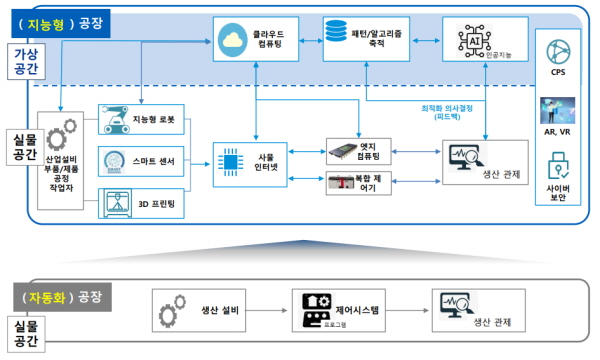
▲지능형 공장과 자동화 공장의 차이점(자료 : 이순열 아이투 대표이사, 2021 IIoT 이노베이션데이 발표자료)
데이터 통합 IIoT 기능 갖춘 완벽한 하나의 공장 구축
데이터 실시간 수집·저장, 검증데이터 기반 분석 적용
데이터 실시간 수집·저장, 검증데이터 기반 분석 적용
기존의 공장 자동화를 넘어선 풍부한 데이터 중심의 스마트제조를 갖추기 위해서는 생산 기기간 상호연결과 이를 바탕으로 생성된 데이터의 효율적 관리와 활용이 필수적인 것으로 분석되고 있다.
스마트제조혁신추진단에 따르면 2020년까지 누적기준으로 목표치인 1만7,800개를 상회한 1만9,799개의 스마트 공장이 보급됐고, 2020년에만 7,139개의 스마트 공장이 보급돼 목표치인 5,600개를 상회한 것으로 나타났다.
또한 스마트 공장으로 인해 생산성은 28.5% 증가하고, 불량률은 42.5% 감소하고, 원가는 15.5% 절감되고, 산업재해는 16.2% 감소하는 긍정적인 효과가 발생하고 있는 것으로 나타났다.
이런 스마트 공장 보급 확산은 코로나19로 인해 더욱 가속화되고 있는데 이는 제조업에서 경쟁력을 갖기 위해서는 스마트 제조 확산이 절대적이기 때문으로 분석되고 있다.
■ IIoT 통한 단일시스템 통합, 스마트 제조 핵심
특히 산업용 사물인터넷을 통한 프로세스의 단일시스템으로의 통합은 스마트제조의 핵심 기술로 평가되고 있다.
산업용 사물인터넷(IIoT, Industrial internet of things)은 제조, 운송, 에너지, 플랜트와 같은 다양한 산업분에서 사용되는 디바이스에 장착된 각종 센서와 주변장치들을 네트워크에 연결해 상호간의 통신 및 데이터처리를 수행하는 인터넷 환경을 이야기한다.
스마트제조가 기존의 공장자동화와 다른 개념은 기존의 공장 자동화는 정해진 개념을 바탕으로 처음 설정한 값으로 반복 작동되는 것에 불과하나 스마트제조는 상호연결을 통해 풍부한 데이터 생산 및 분석을 통해 오류를 수정하고, 검증 데이터를 분석 적용하는데 있다.
일반적인 자동화 공장 내에서는 각각의 장비들에 내장된 컴퓨터나 PLC로부터 생산된 데이터들을 사람이 직접 추출한다던지, 작업자가 수동으로 데이터를 입력해 데이터 오류로 인한 사고의 가능성이 존재해 왔다.
반면 기기간 상호 연결된 스마트제조하에서는 산업용 네트워크를 통해 컨트롤러와 이더넷을 통해 데이터를 입출력할 수 있으며, 클라우드를 통해 수집된 데이터를 저장할 수 있다.
이러한 상호연결인 IIoT의 도입은 4차 산업혁명의 핵심기술로 이를 통해 디지털트윈 등 다양한 기술들을 실현 시킬 수 있다.
■ IIoT 시장, 지속적 성장 전망
Technavio의 2020년 보고서에 따르면 전 세계 산업용 IoT 시장은 2020년 1,335억8,000만달러에서 연평균 성장률 32.95%로 증가해 2025년 5,548억6,000만달러에 이를 것으로 전망됐다.
또한 MarketsandMarkets의 2020년 보고서에 따르면 전 세계 산업용 IoT 시장은 2021년 767억달러에서 연평균 성장률 6.7%로 증가해 2026년에는 1,061억달러에 이를 것으로 전망됐다.
또한 IEIE에 따르면 2025년까지 연평균 29% 성장할 것으로 전망됐다.
각 보고서의 시장 규모 차이가 존재하지만 IIoT 시장이 지속적인 성장을 할 것이라는 것은 분명하다.
이중 MarketsandMarkets에 따르면 네트워킹 기술 시장은 2021년 162억2,000만달러에서 연평균 5.1% 증가해 2026년에는 208억3,000만달러에 이를 것으로 전망됐다.
연결 유형에 따라 유선은 2021년 95억9,000만달러에서 연평균 5.0% 증가해 2026년에는 122억6,000만달러에 이를 것으로 전망됐고, 무선은 2021년 66억4,000만달러에서 연평균 성장률 5.3% 증가해 2026년에는 85억7,000만달러에 이를 것으로 전망됐다.
특히 제조업에서는 2021년 279억달러에서 연평균 성장률 7.3%로 증가해, 2026년에는 397억달러에 이를 것으로 전망됐다.
■ 기하급수적으로 늘어나는 데이터 관리 기술 확보 必
IIoT로 상호연결된 스마트공장 시스템은 실시간 데이터 기반으로 장비의 상태, 품질, 에너지 사용 등 분석 및 경험을 축적할 수 있으며, 이를 기반으로 고장예측, 선행 품질관리, 에너지 최적화 지원 및 외부 시스템과 실시간 연동이 가능하다.
이는 자동화 공장과 스마트제조의 가장 큰 차이점으로 산업데이터의 자산화가 가능하다.
산업 자원간 상호 연결 및 데이터 분석은 제조 지능화 및 디지털 전환의 핵심으로 전통적 시스템과 차별화된다.
특히 이러한 과정에서 데이터 생성은 기하급수적으로 늘어나기 때문에 적합한 데이터 관리도 필수가 되고 있다.
이에 산업계에서는 급증하는 산업데이터의 저장 및 분석을 위해 클라우드를 채택하고 있으며, 산업 특화 클라우드 플랫폼은 속도와 민첩성, 인프라 관리, 비용절감이라는 장점을 바탕으로 시장을 확대하고 있다.
마이크로소프트, 아마존 등은 산업 특화 클라우드를 통해 인공지능 및 혼합현실 등을 활용해 사람 간 협업뿐 아니라, 현장에서 사람과 기계가 더욱 긴밀하게 협업할 수 있는 미래의 공장 자동화 시스템을 제시하기도 했다.
특히 최근에는 클라우드 서비스를 통해 모든 디바이스를 제어할 수도 있는 기술도 등장하기도 했다.
업계에서는 상호 연결과 데이터의 축적을 통한 분석 및 활용 기술이 향후 제조업 혁신을 좌우할 핵심 기술로서 이에 대한 연구 개발이 적극적으로 이뤄져야 한다고 입을 모으고 있다.
※ 한편 e4ds news는 오는 4월8일 코엑스D홀과 e4ds.com에서 온오프라인에서 동시로 ‘디지털트윈을 위한 산업용 통신네트워크 구축’이라는 주제로 ‘2022 IIoT 이노베이션 데이’를 개최한합니다. 이번 세미나에서는 이순열 아이투 대표이사가 ‘산업 디지털 전환을 위한 산업 신뢰성(Trustworthiness) 확보의 중요성과 준비’를 발표하고, B&R, 코드주, 로크웰오토메이션, 에릭슨LG 등이 참여해 최신 IIoT 기술을 소개할 예정입니다. 많은 참여 부탁드립니다. 참가 신청은 https://www.e4ds.com/seminar_introduce.asp?idx=129에서 할 수 있습니다.

관련뉴스
-

[인터뷰]이순열 아이투 주식회사 대표이사-“산업 디지털전환 긴 안목으로 단계적 실행 必”
공장자동화, 스마트팩토리, 산업디지털 전문가인 이순열 아이투 주식회사 대표이사와 만나 산업 디지털 전환에 대한 인사이트를 들어봤다.
2022-03-10 오전 8:48:55by 배종인 기자

많이 본 뉴스

[열린보도원칙] 당 매체는 독자와 취재원 등 뉴스이용자의 권리 보장을 위해 반론이나 정정보도, 추후보도를 요청할 수 있는 창구를 열어두고 있음을 알려드립니다.
고충처리인 장은성 070-4699-5321 , news@e4ds.com