인피니언 HV GaN
반도체 AI 인더스트리 4.0 SDV 스마트 IoT 컴퓨터 통신 특수 가스 소재 및 장비 e4ds plus

[Talking about Industrial IoT⑤] Siemens: "Domestic smart factories will increase investment after the transition period"

기사입력2017.09.18 13:32

Focus on interoperability for universal application across manufacturing
A ‘digital twin’ in which all environments are organically connected is important


As the winds of Industry 4.0 blew, the Internet of Things and services began to be introduced to the manufacturing environment. In response, Siemens, a traditional hardware-based manufacturing company, pursued mergers and acquisitions (M&A) to strengthen its software capabilities. Starting with the acquisition of UGS, a PLM (Product Lifecycle Management) company in 2007, it acquired 17 companies, including Mentor Graphics, an electronic design automation (EDA) company, in 2016.

Siemens, which has not only the hardware but also the software that handles the hardware, is not simply focusing on automating the assembly line, but is focusing on increasing productivity and efficiency with a smart factory.

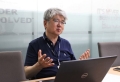
We met with Choi Yu-sun, Manager of the Smart Factory TF Team, to learn about Siemens' smart factory strategy and solutions.
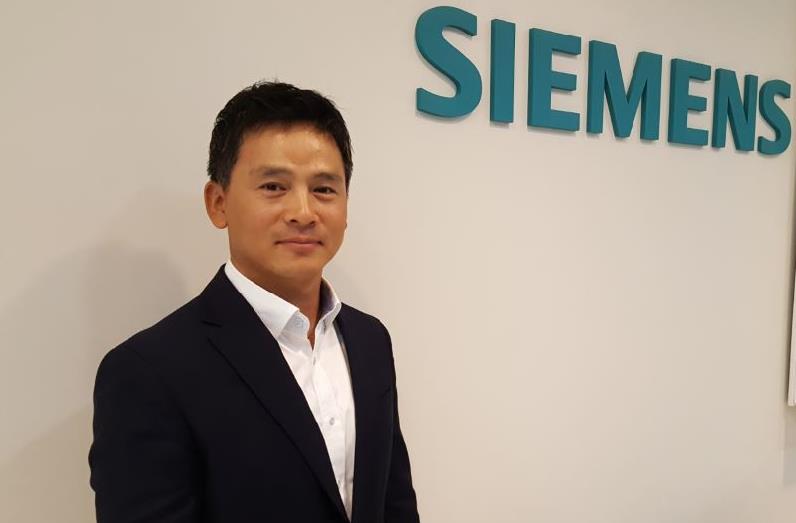
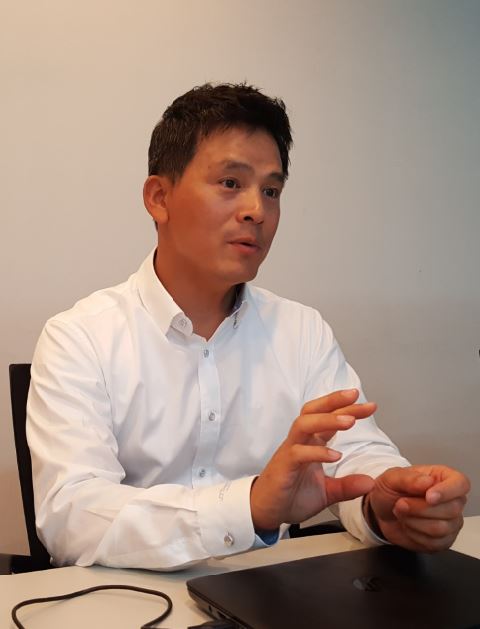
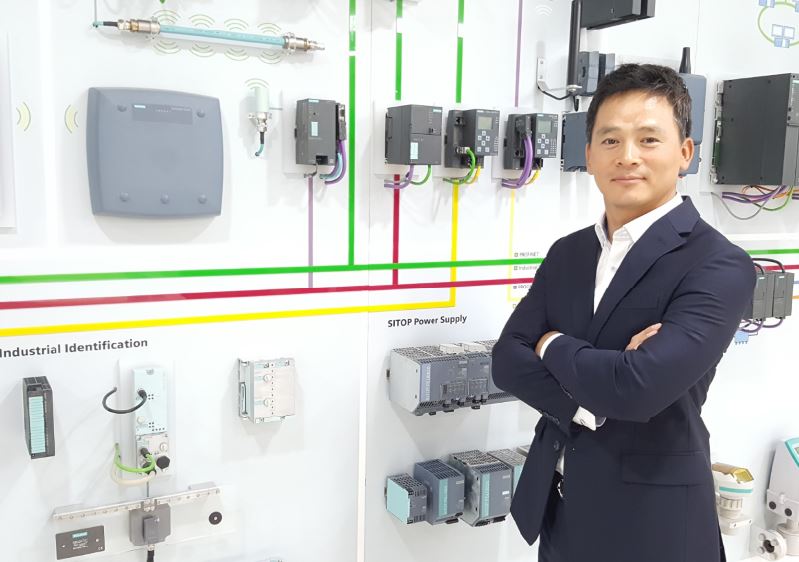
Choi Yu-sun, Manager / Siemens Smart Factory TF Team

-Smart factories have become an inevitable choice in the manufacturing industry. What do you think is the core of a smart factory?
In our country, when we talk about smart factories, we think a lot about automation of assembly lines. We also want to incorporate artificial intelligence, big data, and unmanned systems. In terms of Industry 4.0, a smart factory is something that achieves horizontal integration in the entire value chain and vertical integration in the system architecture, ultimately increasing the productivity and quality of a company and enabling flexible production.

-What is different about Siemens’ solution for implementing such a smart factory?
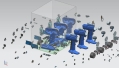
In our country, design and production are separate, and when a problem arises, we intervene, but now, when making a product, we have to be involved from design to production. The traditional way is to meet in person and communicate, and the current way is to computerize data and have each department communicate using one file. In order to do so, any company must organically connect all the data that goes into every step from product design, actual production plan, production, and maintenance. To do this, we need to implement a 'digital twin' environment, a virtual space that is identical to the real world. In automated production, we have to do many simulations to create one assembly line. By simulating potential problems in advance, we can reduce engineering time and costs.

-The basic thing is to send data from the sensor to the cloud and analyze it. How is Siemens' representative industrial IoT platform 'MindSphere' utilized in the manufacturing industry?
The strong players in the platform market are IT companies. Manufacturing came late. However, IT companies are not experts in manufacturing and do not know what is actually needed. Siemens has hardware, software, and domain knowledge specialized in manufacturing, so it knows what services customers actually need. From a manufacturing perspective, data needs to be brought in and moved to the cloud, and to do that, the Industrial Internet of Things (IIoT) is needed. The open IoT operating system based on the cloud is 'MindSphere'.

Before the cloud was used, manufacturing used SCADA or on-premise. Data had to be brought in and analyzed and utilized at a low price, but the problem was cost. That's why cloud services came in. Data can be easily brought in from Siemens products as well as third-party products. After that, you can analyze it and create and use it as you wish, such as an ERP app or energy management app, according to the customer's needs.
"Small and medium-sized businesses are wondering, 'Do we really need to build a smart factory?'
(But) everyone knows the necessity.
Also, automation companies are not convincing customers enough."


-I know there are many cases of MindSphere being applied abroad, but how is it being introduced domestically?
MindSphere opened first in Europe and Asia is the third to open early this year. There are testbeds in Korea, but sales are not yet available. There are cultural differences. Devices used in actual fields are different from those in the consumer market. In the home, each home appliance must have a sensor. However, in a factory, it is nonsense to attach sensors individually to actuators, motors, cylinders, etc.
The sensors are connected to the PLC controller. Once the controller is connected to MindSphere, data collection is complete. The data can be uploaded to the cloud without any separate engineering or coding work, but the server is Siemens. There is some resistance here. They feel uncomfortable handing over their data to automation companies.
However, since we are bringing in raw data and not data from MES or SCADA, you do not need to worry about that.

-You said it was nonsense to individually attach sensors to the factory's motors, cylinders, etc., but wouldn't it be better to attach many sensors to the edge?
Okay. But the current situation is not good. Domestic companies should install sensors from the stage of building new factories. The more sensors there are, the higher the investment cost naturally. Factories that are not newly built cannot install all the sensors now. That is why they have no choice but to use the server provided by the provider. It is in the initial stage now, so they are using the server provided, but the next stage is to use a public server, and the next stage is to use a private server.

-Aside from the reluctance to use the provider's server, is there any other reason for the delay in domestic introduction?
Large companies are already capable of collecting data from sensors and handling them to servers internally. As a result, small and medium-sized companies in general manufacturing are preparing, but they often say, "Is it really necessary?" If you look at it, everyone knows the necessity. Large companies' investment scale is not large in reality. That's why small and medium-sized companies hesitate to invest. Another big thing is trying to do something at once through government projects. Second, automation companies are not able to sufficiently persuade customers. We need to check the customer's condition and suggest appropriate solutions step by step, but this type of consulting service has not been provided for long. The concept of receiving consulting and paying for it is still unfamiliar to them.

"Rather than thinking about how much to achieve now, I'm looking at it as an investment.
Regarding the areas that companies are most concerned about, such as energy conservation,
"It focuses on things that will be of practical help."


-What are Siemens’ unique characteristics and goals in the domestic market?
Even in the digital market, selling products is the same. Rather than targeting sales, we are thinking about how to provide it to customers and making internal preparations. Now, we are looking at it as an investment concept rather than how much we will achieve. In the past, we recommended a complete solution to small and medium-sized companies. Now, we are drawing a big picture and trying to go step by step to fit each individual. We are focusing on things that can be of practical help to companies, such as energy conservation, which is the most concerning part.
GE's solutions and concepts are a little different. GE focuses on customization. Siemens is not focused on a specific industry, but is general-purpose and can be used in manufacturing in general. Each manufacturer has a different production system. We've made it compatible with as many enterprise systems as possible.

-What do you think about the M&A of automation companies that is currently taking place?
Siemens has a clear strategy for M&A. There are many elements needed for manufacturing such as software, robots, and AI to move towards Industry 4.0. It does not fit with the vision for Siemens to do all of these markets. It focuses on the areas that are actually necessary. Existing competitors are also doing M&A, but there is a problem because they try to combine solutions when the products are already manufactured. Siemens develops products together from the M&A planning stage and researches and invests in how to connect solutions.

-How do you see the concept of smart factories becoming an issue in Korea recently, and what is the desirable direction?
I see it as a transitional period. Since the return on investment is not yet clear, there are many cases of hesitation, but through this process, they will be able to distinguish what is necessary and what is important. There are many companies that do not even have assembly automation. Since the government supports them, they start without preparation, but the solutions are not connected. I think that after this transitional period, customers will know what solutions they need and this will lead to investment.
김지혜 기자
기사 전체보기