KAIST, 모빌리티 미래 기술 조망
기사입력 2021.12.01 11:38
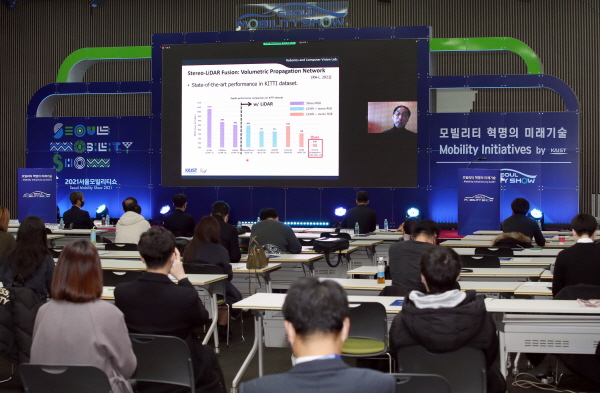
▲모빌리티 혁명의 미래기술 컨퍼런스 전경
‘모빌리티 혁명의 미래기술’ 컨퍼런스 개최
KAIST(총장 이광형)가 미래 모빌리티 기술을 소개하고, 향후 모빌리티 발전방향을 전망했다.
서울모빌리티쇼조직위원회(위원장 정만기 한국자동차산업협회 회장)와 KAIST는 12월1일 ‘모빌리티 혁명의 미래기술: Mobility Initiatives by KAIST’를 주제로 컨퍼런스를 개최했다.
이날 컨퍼런스에서는 미래 모빌리티의 요소기술부터 시스템, 서비스까지 폭 넓은 최신 기술을 소개하고, 향후 미래 모빌리티가 나아가야하는 방향과 비전에 대해 심도 있는 접근이 이뤄졌다.
오전세션에서는 △권인소 교수가 ‘커넥티드 카: KAIST 캠퍼스 사례를 중심으로’를 주제로 기조연설자로 나섰으며, 이어 △장성욱 카카오모빌리티 실장은 ‘자율주행 플랫폼 개발 전략’을 △장석웅 SK플래닛 그룹장은 ‘딥러닝 기반 스마트팩토리 솔루션의 자동차 부품 산업 및 모빌리티 연관 산업 적용 사례’를 설명했고 △심현철 교수는 ‘차세대무인이동체 기술발전 방향’ △금동석 교수는 ‘글로벌 자율주행을 향하여’를 주제로 각각 주제발표가 진행됐다. 이어 장동의 교수를 좌장으로 하는 패널토론도 진행됐다.
오후세션에서는 △강남우 교수의 ‘AI가 스스로 설계하는 모빌리티’ △김진환 교수의 ‘해양 모빌리티와 자율운항 선박기술’ △최정우 교수의 ‘개인 음향 공간 기반 차세대 인포테인먼트 시스템’ △박인철 교수의 ‘실시간 객체 인식을 위한 FPGA 기반 AI 시스템’ △윤준보 교수의 ‘매직라이팅 시트, 미래 모빌리티를 조명하다’ △홍성철 교수의 ‘차세대 고분해능 디지털 레이다’ 등 다양한 최신 모빌리티 기술들이 소개됐다.
김보원 대외부총장은 축사에서 “기후변화로 생태계와 인간사회의 존속이 위협받고 있는 상황에서 친환경적 교통기술의 개발을 위한 자동차, 모빌리티 산업계, 학계의 역할이 더욱 커지고 있다”며 “KAIST는 모빌리티 기술을 다가오는 시대의 핵심 키워드로 선정하고, 조천식녹색교통대학원, 미래자동차학제전공 등을 비롯하여 다양한 학제 전공을 통해 세계 최고수준의 미래 모빌리티 기술을 확보하고 인재를 양성하고 있다”고 말했다.
한편 KAIST는 이번 컨퍼런스 외에도 ‘2021서울모빌리티쇼 메타버스’ 세션을 마련해 진행했다. 해당 세션에서는 컨퍼런스에서 발표된 9개의 기술 외에도 KAIST의 자율주행 관련 기술 13건(자율주행차용 특징점 기반 SLAM, 차량경로 최적화, 강건한 객체인지 기술, 자율주행 선박 등), 로봇 관련 기술 5건(4족보행 로봇, 드론형 벽면등반 로봇, 두더지 로봇, 드론 매니퓰레이터 등)을 포함해 총 30여 건의 기술이 메타버스 형태로 발표됐다.
또한 지난 26일에는 한국자동차산업협회와 모빌리티 기술발전을 위한 업무협약을 체결하기도 했다.
KAIST는 서울모빌리티쇼에 전시 부스를 운영하고 있다. 부스에서는 자율주행 전기차 오픈 플랫폼, 자율주행과 플라잉카, 건물 벽면 등반로봇 등 KAIST가 보유하고 있는 모빌리티 분야 신기술과 제품 등을 전시했다.
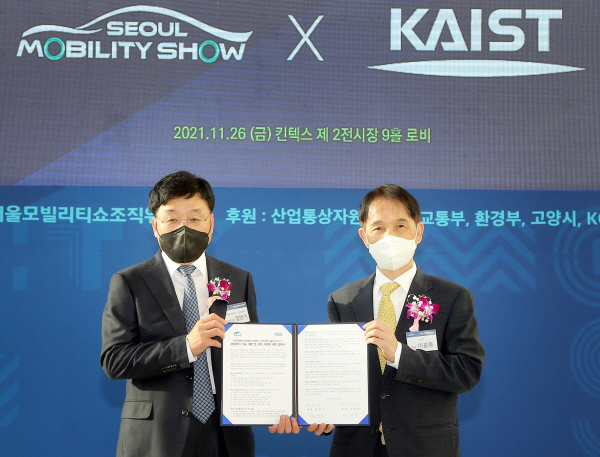
▲정만기 한국자동차산업협회 회장(좌)과 이광형 KAIST 총장(우)이 MOU 체결 후 기념촬영을 하고 있다.

관련뉴스
-

"모바일 알파고 나올까" KAIST, 고효율 AI 반도체 개발
KAIST 유회준 교수팀이 구글의 알파고에 활용됐던 심층 강화학습(DRL)을 높은 성능과 전력효율로 처리할 수 있는 반도체 기술을 개발했다고 밝혔다. DRL은 신경망이 복잡하게 얽혀있고 대규모 데이터를 처리해야 하므로 기존에는 대용량 메모리의 고성능 컴퓨터 다수를 병렬 활용해야 구현할 수 있었다. 연구팀은 모바일 기기 등에서도 DRL이 가능하도록 기존 대비 성능이 우수하고 전력효율이 2.4배 높은 AI 반도체 기술, 옴니DRL을 개발했다.
2021-07-16 오후 3:35:16by 이수민 기자
-

반도체 설계대전, ‘KAIST’ 대통령상 수상
K-반도체를 이끌어 갈 인재와 아이디어의 장인 ‘제22회 대한민국 반도체 설계대전’에서 KAIST가 ‘6G 통신을 위한 초저잡음 W-band PLL’로 영예의 대통령상을 수상했다.
2021-11-23 오전 9:32:37by 배종인 기자
-
KAIST, 능동적 자율주행 등 미래 모빌리티 기술 선
한국과학기술원(KAIST)이 ‘2021 서울모빌리티쇼’에 참가해 자율주행 및 플라잉카 등 첨단 미래 모빌리티 기술을 일반에 공개했다.
2021-11-26 오전 9:21:33by 배종인 기자

.jpg)
많이 본 뉴스

[열린보도원칙] 당 매체는 독자와 취재원 등 뉴스이용자의 권리 보장을 위해 반론이나 정정보도, 추후보도를 요청할 수 있는 창구를 열어두고 있음을 알려드립니다.
고충처리인 장은성 070-4699-5321 , news@e4ds.com