차량 내 USB 충전 포트, C 타입 통일 추세
기사입력 2022.04.19 11:58
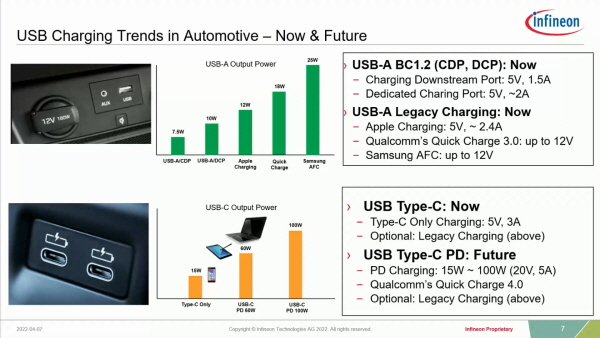
인피니언 USB-C PD 컨트롤러 솔루션 소개
차량 내 충전기 호환 문제…C 타입 규격화
운전자와 탑승자는 자동차의 전기 시스템을 통해 다양한 휴대기기를 충전하고, 인포테인먼트 기능을 실행하는 데 익숙해지고 있는 가운데 최근 USB 충전 포트를 C 타입으로 통일하기 위한 움직임이 지속되고 있다.
문승일 인피니언 이사는 e4ds 웨비나에서 ‘자동차 USB Type-C 충전 컨트롤러 솔루션 및 설계 기술’을 주제로 발표하며 설계 리소스와 전문기술을 이용해 설계 프로세스를 간소화하고 신속하게 USB 타입 C 충전포트로 전환하기 위한 솔루션을 제공할 것이라고 밝혔다.
USB 타입 C는 리버서블 플러그 방향과 케이블 방향을 지원하고 2.4mm 두께로써, 소형 폼팩터 컨넥터로써의 최신 USB 표준이다.
커넥터 타입은 Receptacle과 플러그 타입으로 구분되며 Receptacle은 호스트 또는 디바이스 단에 사용되는 커넥터로 24핀으로 구성된다. 플러그 커넥터는 케이블 끝단에 사용되는 커넥터로 22핀으로 구성된다.
USB 타입 C와 USB PD의 근본적인 차이점은 타입 C는 소형 폼팩터를 가진 새로운 USB 커넥터 규격이고, USB PD는 최대 100W의 전력 공급을 지원하는 전력 공급 프로토콜이다.
USB PD는 프로토콜 메시지를 위해 타입 C의 커넥터 CC(Configuration Channel)핀을 통해 이루지므로, USB 타입 C PD 라고 혼용되어 사용되기도 한다.
USB 타입 C 커넥터는 PD가 없어도 5V, 3A까지 지원된다. PD가 필요한 경우는 9V, 15V, 최대 20V의 전압이 필요한 경우, 또는 3A 이상의 전류가 필요한 경우다. PD를 통해 최대 5A까지 지원할 수 있다.
최대치인 20V와 5A를 고려하면 최대 100W까지 전력을 송출할 수 있다. USB 데이터가 아닌 다른 시그널을 USB C 커넥터를 통해 전송할 때는 PD 컨트롤러가 필요하다.
기존 차량 내 충전포트는 USB 타입 A 포트다. USB 타입 A는 4.5mm, 사각형 형태의 커넥터 타입이다. 이는 규격상 5V, 500mA 또는 3.0 기준으로 5V, 900mA이다. 패스트 충전 조건을 위해 2010년도에 발표된 BC 1.2(Battery Charging 1.2) 기준으로 5V, 1.5A 또는 2A로 충전이 가능하다.
또한 USB A 포트를 통한 충전으로 일부 각 벤더에서 Specific Charging Protocol을 통해 패스트 차징을 적용하고 있다. 애플, 퀄컴의 QC, 삼성의 AFC가 그 예다. 문제는 각 벤더간 Specific Charging Protocol 사용으로 인해 충전기기 간 호환이 되지 않는다.
이러한 호환성 문제로 인해 USB 타입 C가 디자인 상 권장, 규격화되고 있으며 USB C로 5V, 3A 또는 PD 적용 시 최대 100W까지 파워를 전달할 수 있기에 차량 내 충전 관련해 기존 USB A포트에서 C PD 적용으로 변경되어 가고 있다.
인피니언 PD 컨트롤러는 DC/DC를 포함한 고집적, 통합된 싱글 칩 솔루션으로 원 포트 및 투 포트를 지원하며 USB C PD뿐만 아니라 퀄컴의 QC, 삼성의 AFC, 애플 차징 같은 레거시 차징 프로토콜을 지원한다.
또한 시스템 컨트롤러와의 I2C 통신이 가능하며 Cable Compensation을 지원하는 특징이 있다.
인피니언 USB 타입 C PD 컨트롤러는 다양한 애플리케이션 적용을 위해 여러가지 PD 컨트롤러 솔루션을 가지고 있다.
오토모티브 관련 제품은 타입 C 원 포트, 타입 A 원 포트를 한 개의 IC로 구현할 수 있는 PD 컨트롤러로 CCG3PA 제품이 있다. 또한 제품 내부 두 개의 DC/DC를 포함하고 LDO 및 두 개의 PD 컨트롤러를 포함한 고집적 원 칩 솔루션으로 타입 C 두 포트를 하나의 컨트롤러로 설계할 수 있는 CCG7D 제품이 있다.
차량 내 무선 충전으로 DC/DC 및 파워 인버터를 모두 포함한 원 칩 솔루션으로 WLC 무선 충전 컨트롤러 제품이 라인업에 신규 업데이트됐다.
문승일 이사는 “오늘날 자동차 시스템에서 USB 충전 포트는 필수 요소”라며 “인피니언은 제품을 설계하고 구현하는 데 필요한 유연성과 통합을 제공할 것”이라고 전했다.
문승일 인피니언 이사는 e4ds 웨비나에서 ‘자동차 USB Type-C 충전 컨트롤러 솔루션 및 설계 기술’을 주제로 발표하며 설계 리소스와 전문기술을 이용해 설계 프로세스를 간소화하고 신속하게 USB 타입 C 충전포트로 전환하기 위한 솔루션을 제공할 것이라고 밝혔다.
USB 타입 C는 리버서블 플러그 방향과 케이블 방향을 지원하고 2.4mm 두께로써, 소형 폼팩터 컨넥터로써의 최신 USB 표준이다.
커넥터 타입은 Receptacle과 플러그 타입으로 구분되며 Receptacle은 호스트 또는 디바이스 단에 사용되는 커넥터로 24핀으로 구성된다. 플러그 커넥터는 케이블 끝단에 사용되는 커넥터로 22핀으로 구성된다.
USB 타입 C와 USB PD의 근본적인 차이점은 타입 C는 소형 폼팩터를 가진 새로운 USB 커넥터 규격이고, USB PD는 최대 100W의 전력 공급을 지원하는 전력 공급 프로토콜이다.
USB PD는 프로토콜 메시지를 위해 타입 C의 커넥터 CC(Configuration Channel)핀을 통해 이루지므로, USB 타입 C PD 라고 혼용되어 사용되기도 한다.
USB 타입 C 커넥터는 PD가 없어도 5V, 3A까지 지원된다. PD가 필요한 경우는 9V, 15V, 최대 20V의 전압이 필요한 경우, 또는 3A 이상의 전류가 필요한 경우다. PD를 통해 최대 5A까지 지원할 수 있다.
최대치인 20V와 5A를 고려하면 최대 100W까지 전력을 송출할 수 있다. USB 데이터가 아닌 다른 시그널을 USB C 커넥터를 통해 전송할 때는 PD 컨트롤러가 필요하다.
기존 차량 내 충전포트는 USB 타입 A 포트다. USB 타입 A는 4.5mm, 사각형 형태의 커넥터 타입이다. 이는 규격상 5V, 500mA 또는 3.0 기준으로 5V, 900mA이다. 패스트 충전 조건을 위해 2010년도에 발표된 BC 1.2(Battery Charging 1.2) 기준으로 5V, 1.5A 또는 2A로 충전이 가능하다.
또한 USB A 포트를 통한 충전으로 일부 각 벤더에서 Specific Charging Protocol을 통해 패스트 차징을 적용하고 있다. 애플, 퀄컴의 QC, 삼성의 AFC가 그 예다. 문제는 각 벤더간 Specific Charging Protocol 사용으로 인해 충전기기 간 호환이 되지 않는다.
이러한 호환성 문제로 인해 USB 타입 C가 디자인 상 권장, 규격화되고 있으며 USB C로 5V, 3A 또는 PD 적용 시 최대 100W까지 파워를 전달할 수 있기에 차량 내 충전 관련해 기존 USB A포트에서 C PD 적용으로 변경되어 가고 있다.
인피니언 PD 컨트롤러는 DC/DC를 포함한 고집적, 통합된 싱글 칩 솔루션으로 원 포트 및 투 포트를 지원하며 USB C PD뿐만 아니라 퀄컴의 QC, 삼성의 AFC, 애플 차징 같은 레거시 차징 프로토콜을 지원한다.
또한 시스템 컨트롤러와의 I2C 통신이 가능하며 Cable Compensation을 지원하는 특징이 있다.
인피니언 USB 타입 C PD 컨트롤러는 다양한 애플리케이션 적용을 위해 여러가지 PD 컨트롤러 솔루션을 가지고 있다.
오토모티브 관련 제품은 타입 C 원 포트, 타입 A 원 포트를 한 개의 IC로 구현할 수 있는 PD 컨트롤러로 CCG3PA 제품이 있다. 또한 제품 내부 두 개의 DC/DC를 포함하고 LDO 및 두 개의 PD 컨트롤러를 포함한 고집적 원 칩 솔루션으로 타입 C 두 포트를 하나의 컨트롤러로 설계할 수 있는 CCG7D 제품이 있다.
차량 내 무선 충전으로 DC/DC 및 파워 인버터를 모두 포함한 원 칩 솔루션으로 WLC 무선 충전 컨트롤러 제품이 라인업에 신규 업데이트됐다.
문승일 이사는 “오늘날 자동차 시스템에서 USB 충전 포트는 필수 요소”라며 “인피니언은 제품을 설계하고 구현하는 데 필요한 유연성과 통합을 제공할 것”이라고 전했다.

관련뉴스
-
.jpg)
마우저, 인피니언 AIROC CYW20835 BLE 모듈 공급
마우저가 인피니언의 AIROC™ CYW20835 모듈 제품을 공급한다.
2022-03-30 오후 1:58:02by 배종인 기자
-
.jpg)
인피니언, 현대차 ‘2021년도 올해의 협력사’
인피니언 테크놀로지스(코리아 대표이사 이승수)가 현대자동차그룹으로부터 공급망 안정화에 노력한 공로를 인정받았다.
2022-04-05 오후 2:45:40by 배종인 기자
-
.jpg)
마우저, 인피니언 XENSIV PAS CO2 센서 제품 공급
14일 마우저 일렉트로닉스는 인피니언 테크놀로지스(Infineon Technologies)의 XENSIV™ PAS CO2 이산화탄소(CO2) 센서를 공급한다고 밝혔다.
2022-04-14 오전 11:12:52by 명세환 기자

많이 본 뉴스

[열린보도원칙] 당 매체는 독자와 취재원 등 뉴스이용자의 권리 보장을 위해 반론이나 정정보도, 추후보도를 요청할 수 있는 창구를 열어두고 있음을 알려드립니다.
고충처리인 장은성 070-4699-5321 , news@e4ds.com