[전자파학회 하계학술대회]전기차 무선 충전, FOD·P2PS 연구 활발
기사입력 2022.08.22 16:40
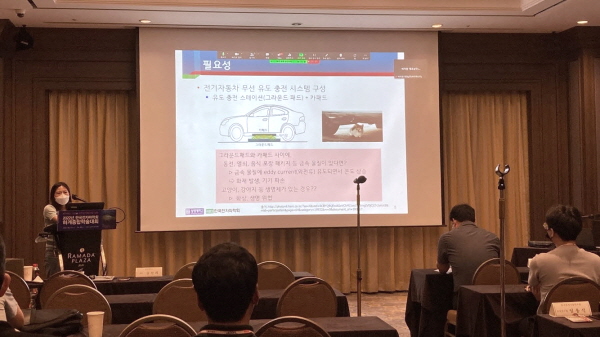
▲ 김선희 상명대 조교수가 FOD, P2PS 기술에 대해 소개하고 있다.
“FOD 기술, 무선 충전 시 화재·화상 예방할 수 있어”
충전 효율·시간 단축 위한 P2PS, 서브시스템 통합 추세
전력 송신부와 수신부가 떨어져 있는 전기차 무선 충전 시스템에서 일어날 수 있는 사고 예방과 충전 효율을 높이기 위해서 FOD와 P2PS 기술 연구가 활발하게 이루어지고 있다.
한국전자파학회는 지난 17일부터 19일까지 3일 간 제주도에서 하계종합학술대회를 열고 최신 전파분야의 기술 동향을 공유하는 자리를 마련했다.
그 중 전기차 무선 충전을 주제로 한 워크숍에서는 김선희 상명대학교 조교수, 이자현 바이에너지 대표, 임용석 바이온에버 대표 등 전문가가 발표자로 나섰다.
이자현 대표는 전기차 무선 충전이 화제가 되고 있는 이유에 대해 △안전성 △효율성 △편리성을 예로 들었다.
안전성 측면에서 유선 충전 방식은 직접 케이블을 연결하는 형태이기 때문에 접촉 부분의 마모, 이물질로 인한 케이블 파손으로 감전 위험이 존재하지만 무선 충전의 경우 케이블이 배설되기 때문에 노출된 전선이 없어 감전 위험을 낮출 수 있다.
효율성으로는 전기 버스 기준으로 정류장에서 30초 동안 1.6kW의 배터리 충전이 가능하다. 이는 약 1.3km 주행 가능한 정도로 적은 양을 계속 충전해 배터리 수명도 늘릴 수 있다.
유선 충전의 경우 기업마다 충전구 모양이 상이하다. 무선 충전기의 경우 통일성을 갖도록 표준화가 진행 중이며 차량의 종류와 상관없이 호환되도록 개발 중이기 때문에 편리성에 있어서도 강점을 가지고 있다.
무선 충전 하드웨어는 바닥에 설치되어 무선 전력을 전송하는(송신부) ‘그라운드 패드’와 자동차 밑면에 탑재되어 전자장을 수신하는(수신부) ‘카 패드’로 구성된다.
송신부의 코일을 통해 자기장을 발생시키고, 수신부가 이 자기장을 받아 전류를 유도시킴으로써 에너지를 모으는 형태다.
전기차 무선 충전의 특징은 전송기와 수신기가 떨어져 있다는 것이다. BMW가 개발한 무선 충전기도 약 8cm 떨어져 있다.
여기서 문제가 발생한다.
김선희 조교수는 “그라운드 패드와 카 패드 사이에 고출력 전력이 노출되어 생명체 및 금속 물질 등 이물질이 있으면 심각한 문제를 초래할 수 있다”고 전했다.
두 하드웨어 사이에 금속 물질이 있을 경우 이 물질에도 전류가 유도되어 시간이 지나면 온도가 상승해 치명적인 화상이나 화재가 발생할 수 있다.
자동차 밑에 누워있는 고양이나 껌종이도 위험의 대상이 될 수 있고, 자기장이 보이지 않기 때문에 무심코 손을 집어넣으면 화상을 입을 수도 있다.
이런 이유로 이물질을 찾아내는 기술인 FOD(Foreign Object Detection)가 전기차 무선 충전 부문에서 주목을 받고 있다.
세계 무선 충전 협회(WPC, Wireless Power Consortium)의 FOD 표준은 충전 시작 전에 Quality Factor 값을 측정해 이물질을 검출하거나 충전 도중 전력 손실량으로 검출하는 것을 목표로 한다.
SAE J2954의 경우에는 송신단 표면에 드러나 있는 이물질이 발화될 정도로 뜨거워지거나, 송신단 표면을 훼손할 정도로 더 이상 뜨거워지지 않게 하는 것을 목표로 하고 있다.
FOD 기술은 생명체를 탐지하는 LOD기술과 비생명체를 탐지하는 MOD 기술로 나뉘며 방식에 따라 전기적, 비전기적 방식으로 구분된다.
비전기적 방식은 이미지, 열 감지 카메라와 같은 센서를 부착하는 것이 대표적이다. 딥러닝 기술을 적용해 이물질이 있다고 판단하는 것도 가능하다.
또한, 비와 눈이 올 때는 카메라의 시야에 문제가 생길 수 있어 이를 보완하기 위해 압력, 무게, 온도 센서의 중요성이 대두되고 있다.
전기적 방식은 위에서 말한 WPC의 표준과 같이 전력 효율로 판단하는 것이 대표적이다. 송신부에서 전압, 전류, 위상을 측정한다.
이물질이 있다면 송수신 간에 공진 관계가 흐트러져 볼티지 전환과 전류의 변화와 함께 위상이 변화하는데, 이를 검출해 내는 것이다.
P2PS 기술은 그라운드 패드와 카 패드의 정합과 무선 충전 시스템 송수신 간 통신을 위해 연구되고 있다.
간단히 요약하면, 무선 충전 전기차가 충전을 하겠다고 입력되면 충전이 가능한 장소로 가이드해주는 것이다.
무선 충전 효율을 높이고 충전 시간을 줄이기 위해서는 송수신 패드 간 정렬이 매우 중요하다.
두 패드 간 정합이 이루어질 수 있도록 자동차 주차 시 운전 안내 및 자율 조정하는 기술의 중요성에 따라 P2PS 기술의 중요성도 커지고 있다.
P2PS도 카메라 영상 처리에 의존을 하고 있다.
지면쪽을 바라보는 카메라를 통해 더 정확하게 정렬될 수 있도록 유도하며 전기차가 자율적으로 주차를 할 수 있도록 한다.
김선희 상명대 교수는 “표준에서는 영상처리보다 전기적 방식을 요구하지만 아직은 비전기적 방식이 우세한 상황”이라며 “서브 시스템을 하나로 통합해 연구를 하는 방식으로 진행되기도 한다”고 전했다.
한국전자파학회는 지난 17일부터 19일까지 3일 간 제주도에서 하계종합학술대회를 열고 최신 전파분야의 기술 동향을 공유하는 자리를 마련했다.
그 중 전기차 무선 충전을 주제로 한 워크숍에서는 김선희 상명대학교 조교수, 이자현 바이에너지 대표, 임용석 바이온에버 대표 등 전문가가 발표자로 나섰다.
이자현 대표는 전기차 무선 충전이 화제가 되고 있는 이유에 대해 △안전성 △효율성 △편리성을 예로 들었다.
안전성 측면에서 유선 충전 방식은 직접 케이블을 연결하는 형태이기 때문에 접촉 부분의 마모, 이물질로 인한 케이블 파손으로 감전 위험이 존재하지만 무선 충전의 경우 케이블이 배설되기 때문에 노출된 전선이 없어 감전 위험을 낮출 수 있다.
효율성으로는 전기 버스 기준으로 정류장에서 30초 동안 1.6kW의 배터리 충전이 가능하다. 이는 약 1.3km 주행 가능한 정도로 적은 양을 계속 충전해 배터리 수명도 늘릴 수 있다.
유선 충전의 경우 기업마다 충전구 모양이 상이하다. 무선 충전기의 경우 통일성을 갖도록 표준화가 진행 중이며 차량의 종류와 상관없이 호환되도록 개발 중이기 때문에 편리성에 있어서도 강점을 가지고 있다.
무선 충전 하드웨어는 바닥에 설치되어 무선 전력을 전송하는(송신부) ‘그라운드 패드’와 자동차 밑면에 탑재되어 전자장을 수신하는(수신부) ‘카 패드’로 구성된다.
송신부의 코일을 통해 자기장을 발생시키고, 수신부가 이 자기장을 받아 전류를 유도시킴으로써 에너지를 모으는 형태다.
전기차 무선 충전의 특징은 전송기와 수신기가 떨어져 있다는 것이다. BMW가 개발한 무선 충전기도 약 8cm 떨어져 있다.
여기서 문제가 발생한다.
김선희 조교수는 “그라운드 패드와 카 패드 사이에 고출력 전력이 노출되어 생명체 및 금속 물질 등 이물질이 있으면 심각한 문제를 초래할 수 있다”고 전했다.
두 하드웨어 사이에 금속 물질이 있을 경우 이 물질에도 전류가 유도되어 시간이 지나면 온도가 상승해 치명적인 화상이나 화재가 발생할 수 있다.
자동차 밑에 누워있는 고양이나 껌종이도 위험의 대상이 될 수 있고, 자기장이 보이지 않기 때문에 무심코 손을 집어넣으면 화상을 입을 수도 있다.
이런 이유로 이물질을 찾아내는 기술인 FOD(Foreign Object Detection)가 전기차 무선 충전 부문에서 주목을 받고 있다.
세계 무선 충전 협회(WPC, Wireless Power Consortium)의 FOD 표준은 충전 시작 전에 Quality Factor 값을 측정해 이물질을 검출하거나 충전 도중 전력 손실량으로 검출하는 것을 목표로 한다.
SAE J2954의 경우에는 송신단 표면에 드러나 있는 이물질이 발화될 정도로 뜨거워지거나, 송신단 표면을 훼손할 정도로 더 이상 뜨거워지지 않게 하는 것을 목표로 하고 있다.
FOD 기술은 생명체를 탐지하는 LOD기술과 비생명체를 탐지하는 MOD 기술로 나뉘며 방식에 따라 전기적, 비전기적 방식으로 구분된다.
비전기적 방식은 이미지, 열 감지 카메라와 같은 센서를 부착하는 것이 대표적이다. 딥러닝 기술을 적용해 이물질이 있다고 판단하는 것도 가능하다.
또한, 비와 눈이 올 때는 카메라의 시야에 문제가 생길 수 있어 이를 보완하기 위해 압력, 무게, 온도 센서의 중요성이 대두되고 있다.
전기적 방식은 위에서 말한 WPC의 표준과 같이 전력 효율로 판단하는 것이 대표적이다. 송신부에서 전압, 전류, 위상을 측정한다.
이물질이 있다면 송수신 간에 공진 관계가 흐트러져 볼티지 전환과 전류의 변화와 함께 위상이 변화하는데, 이를 검출해 내는 것이다.
P2PS 기술은 그라운드 패드와 카 패드의 정합과 무선 충전 시스템 송수신 간 통신을 위해 연구되고 있다.
간단히 요약하면, 무선 충전 전기차가 충전을 하겠다고 입력되면 충전이 가능한 장소로 가이드해주는 것이다.
무선 충전 효율을 높이고 충전 시간을 줄이기 위해서는 송수신 패드 간 정렬이 매우 중요하다.
두 패드 간 정합이 이루어질 수 있도록 자동차 주차 시 운전 안내 및 자율 조정하는 기술의 중요성에 따라 P2PS 기술의 중요성도 커지고 있다.
P2PS도 카메라 영상 처리에 의존을 하고 있다.
지면쪽을 바라보는 카메라를 통해 더 정확하게 정렬될 수 있도록 유도하며 전기차가 자율적으로 주차를 할 수 있도록 한다.
김선희 상명대 교수는 “표준에서는 영상처리보다 전기적 방식을 요구하지만 아직은 비전기적 방식이 우세한 상황”이라며 “서브 시스템을 하나로 통합해 연구를 하는 방식으로 진행되기도 한다”고 전했다.

관련뉴스
-

[전자파학회 하계학술대회]6G·자율주행·우주·국방·EMI 전파 총망라
전자파 분야는 통신·위성뿐 아니라 전기차, 자율주행, 우주·항공, 국방, 의료, AI 등 다양한 응용 및 융합 분야로 확대되고 있으며 차세대 핵심 원천 기술의 근간이 되는 학문이다. 관련 아젠다를 주도하는 한국전자파학회가 하계종합학술대회를 개최하며 산학연을 총망라한 학문 교류의 장을 마련해 최근 성료했다.
2022-08-22 오후 2:32:39by 권신혁 기자

.jpg)
많이 본 뉴스

[열린보도원칙] 당 매체는 독자와 취재원 등 뉴스이용자의 권리 보장을 위해 반론이나 정정보도, 추후보도를 요청할 수 있는 창구를 열어두고 있음을 알려드립니다.
고충처리인 장은성 070-4699-5321 , news@e4ds.com