인피니언 HV GaN
반도체 AI 인더스트리 4.0 SDV 스마트 IoT 컴퓨터 통신 특수 가스 소재 및 장비 e4ds plus

[모빌리티 그랑프리] [Hyundai Motor Company ①] “We will introduce a vehicle that evolves based on software”

기사입력2022.10.12 16:54


CEO Park Jeong-guk: “We will provide a new mobility experience that goes beyond physical limitations.”
Vice President Cho Kyo-woong: “Automobile Platform, the Cornerstone of Software-Centered Vehicles”
Managing Director Ahn Hyung-ki: "Function-focused architecture, easy optimization strategy for each country"


Hyundai Motor Company announced that it will develop cars that evolve around software through 'integrated modular architecture' and 'function-focused architecture.'

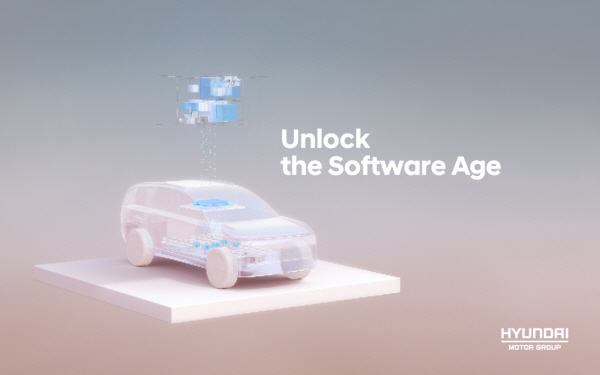
Hyundai Motor Company held an online event titled 'Unlock the Software Age' on the 12th and announced that it will pursue new possibilities through software-defined vehicles (SDVs) that evolve around software.

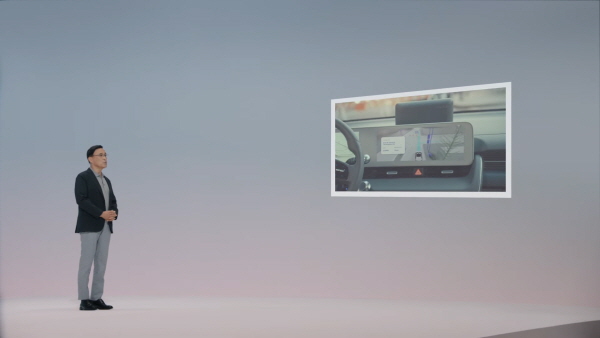
Park Jung-kook, president of Hyundai Motor Group, said, “Through the development of new technologies, we will redefine the concept of a vehicle to overcome physical limitations, create a new mobility experience, and further change the paradigm of the automobile industry.”


▲ Hyundai Motor Group President Park Jung-kook is giving an announcement.

Then he said He emphasized that software technology is key, and announced plans to build cars equipped with software technology that can improve performance through updates and maintain the latest features over time.

The five main themes of this software-defined vehicle event are: △Automobile Platform △Electrical and Electronic Architecture △Software Platform △Data Platform △Hyundai Motor Group’s Challenges.


■ Automotive Platform… SDV Cornerstone

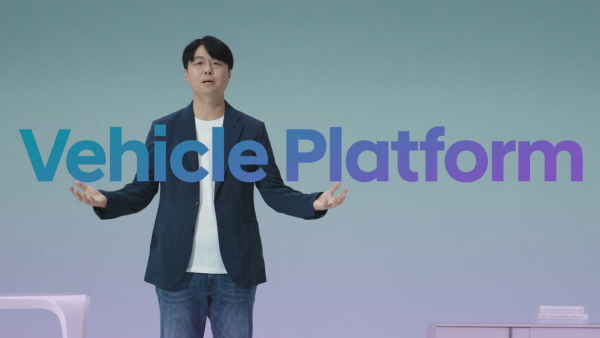
Hyundai Motor Company Vice President Cho Kyo-woong called the automobile platform the “cornerstone of SDV.”

Hyundai Motor Group plans to introduce vehicles using the 'eM', a platform dedicated to passenger electric vehicles, and the 'eS', a platform dedicated to PBVs, in 2025.


▲ Hyundai Motor Group Vice President Cho Kyo-woong is giving a presentation.

These new platforms are being developed under Hyundai Motor Group’s ‘Integrated Modular Architecture (IMA)’ development system.

IMA is a development system that improves existing platforms one step further and standardizes and modularizes core electric vehicle components such as batteries and motors.

This not only maximizes the product viability of electric vehicles by taking advantage of the exclusive platform, but also features expandability that can be applied to various segments.bsp;

Vice President Chu cited the fact that the biggest advantage of SDV is that it reduces development complexity and improves technological reliability.

In this way, Hyundai Motor Group plans to continuously strengthen its modular architecture strategy that integrates hardware and software in line with the MECA era represented by mobility, electrification, connectivity, and autonomous driving platforms.

He continued, “We will develop all new vehicles to be released starting in 2023, including internal combustion engine vehicles, to enable wireless software updates,” and “By 2025, we plan to make all vehicles sold worldwide evolving around software.”

■ Selecting the ‘Function-focused architecture’ method

Hyung-ki Ahn, Executive Director of Hyundai Motor Group, explained the strategy of integrating controllers among electrical and electronic architectures.

The number of electrical components used in vehicles, such as those that operate air conditioners, has increased significantly and their structures have become more complex.


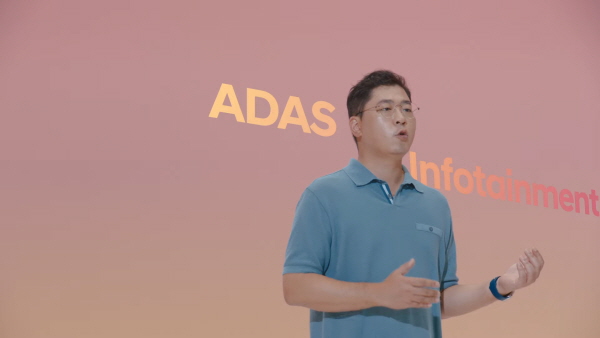
Ahn Hyung-ki, executive director of Hyundai Motor Group, is giving an announcement.

As a solution to systematically and efficiently improve this phenomenon, Hyundai Motor Group has developed a ‘Domain Centralized Architecture’.; chose the method.

The policy is to concentrate the control functions of four areas: △Comfort △Driving △Infotainment △ADAS into the top controller.

This is expected to allow for more flexible development when adding new features or improving performance of the vehicle.

It can also be interpreted as a strategy to introduce regional strategic vehicle models optimized for various vehicle segments and countries.

Director Ahn continued, “We will dramatically reduce the number of controllers by integrating lower-level electronic components managed by the top-level controllers.”

As the number of controllers decreases, various vehicle functions such as safety, convenience, connectivity, security, and driving performance can be upgraded via OTA, and the update cycle and frequency can also become much faster.

Hyundai Motor Group is currently mass-producing integrated controllers in the infotainment and ADAS areas and continuously improving their functions, and is gradually developing integrated controllers in the comfort and driving areas, with plans to complete them by 2025.

In addition, the company announced that it will sequentially apply the 'function-focused architecture' to all global vehicle models by 2025 and enable performance improvements through OTA for all vehicles regardless of electric and internal combustion engine vehicle class or region.