Physical AI HBM Smart Factory SDV AIoT Power Semicon 특수 가스 정정·반론보도 모음 e4ds plus

CharIN Testing, Cross-Verification Test between Electric Vehicles and Chargers

Google 우선 소스 기사입력2022.11.01 17:20


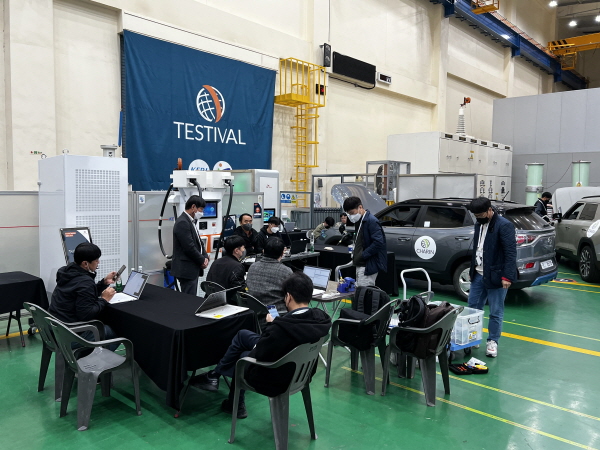
▲ Charin Testimonial Site (Photo courtesy of Charin)


Korea Test, the first in Asia
Pre-check for errors that occur during rapid charging

Charin's 'Electric Vehicle Testing', which had been postponed due to COVID-19, was held and cross-validation testing was conducted with electric vehicle companies and charger manufacturers.

The Korea Electrotechnology Research Institute and CharIN held the 'CharIN Electric Vehicle Testing Festival (Test+Festival)' at the Korea Electrotechnology Research Institute Ansan Branch from October 25 to 27.

In 2020, the Korea Electrotechnology Research Institute attempted to hold a testing event after signing an MOU with Charin, but it was postponed due to COVID-19 and was held in 2022. This testing event, which marked the end of 2022, is also significant in that Korea was the first in Asia to hold it.

The main purpose of the electric vehicle test is to contribute to the commercialization of eco-friendly electric vehicles by △preliminarily checking for various errors that occur during rapid charging and △securing unified charging compatibility (interoperability) between complete vehicle and charger manufacturers.

The goal is to discover problems through testing and use them to change standards or take technical actions to prevent inconvenience to users, which is a common goal for both Charin and the Korea Electric Power Research Institute.

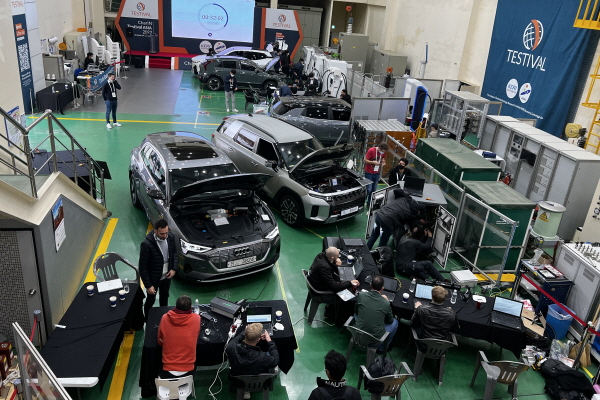
In order to check for errors, the tester deliberately caused errors and conducted tests.

carWe tested the problem by charging it for 1 hour and 30 minutes on different chargers with different capacities.


▲ Charin Testimonial Site (Photo courtesy of Charin)

Seo Woo-hyun, team leader at the Korea Electrotechnology Research Institute, said, “Since there are many foreign cars in Korea, we need to conduct cross-compatibility tests,” and “A total of 11 electric vehicles from seven electric vehicle manufacturers, including Hyundai Motor Company and BMW, and nine charger manufacturers, including ABB and Daeyoung Chaebi, conducted cross-validation tests.”

A test official said, “We must test for errors that are very unlikely to occur during everyday charging to ensure that customers using electric vehicles do not experience any inconvenience,” adding, “We will strive to ensure that customers can charge without worry at any charging station or charger.”

Korea has unified to use the same combo type charger used in North America, while Europe and Southeast Asia use the Combo 2 which has the same technology as Combo 1 except for the physical shape of the tip, so the tests being conducted at this event are expected to be a good verification of the technology.

Meanwhile, only wired charging tests were conducted at this event.

Event organizers cautiously expressed their opinion that it is premature to commercialize wireless charging, and that there is still a long way to go in terms of high prices and efficiency.

The ground needs to be dug up to install the wireless charging pad, and if it breaks down, it needs to be repaired or replaced, which also means digging up the ground again. There is some inconvenience.

Wireless charging is not yet fast enough to support fast charging, as charging efficiency drops sharply when the pad and vehicle are not positioned accurately, and while rapid charging is emerging as a trend for electric vehicle charging.

The price of wireless slow charging is more expensive than that of wired fast charging, so it is disappointing in terms of price compared to wired charging.

Meanwhile, CharIN, short for Charging Initiative EV, is a non-profit organization that promotes the interoperability of global charging solutions for all types of vehicles. As a global leader in interoperability testing along with ISO 15118, it holds testing events related to electric vehicle charging every year.