[성유창의 그랑프리] 2023년 車 제도, 친환경 대세
기사입력 2023.01.04 16:25
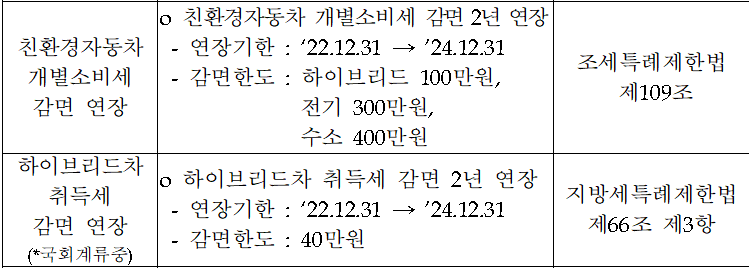
▲ 2023년 자동차 관련 제도 변경 사항 (출처: 한국자동차산업협회)
하이브리드 포함 친환경차 개소세 감면 연장
승용차 평균연비 및 평균온실가스 기준 강화
친환경차 개별소비세 감면 연장, 평균연비 및 온실가스 규제 강화 등 2023년부터 변경되는 자동차 관련 제도의 친환경 흐름이 눈에 띈다.
한국자동차산업협회는 새해 들어 변경되는 자동차 관련 제도를 정리하여 4일 발표했다.
우선 친환경자동차에 대한 개별소비세 및 취득세 감면이 연장되는 등 소비자 부담 경감을 위한 제도가 시행된다.
하이브리드‧전기‧수소차에 대한 개별소비세 감면이 2년 연장되어 2024년 말까지 지속된다.
감면한도는 △하이브리드 100만원 △전기 300만원 △수소 400만원이다.
현재 국회 계류 중이나 하이브리드차 취득세 감면도 연장될 가능성이 있다.
하이브리드차 취득세 감면도 2024년 12월 31일로 2년 연장되며 감면한도는 40만원이다.
또한, 친환경자동차 도시철도채권 매입 의무 면제도 2년 연장된다.
본래 차량 구입시 소비자는 도시철도채권을 의무적으로 매입해야 하나, 친환경차의 보급 확대를 위해 친환경차 구매자에게는 이를 면제했다.
2022년 12월 31일로 종료 예정이었던 면제 기간을 2024년 12월 31일로 연장했고, 면제 한도는 △하이브리드 200만원 △전기 250만원 △수소 250만원이다.
자동차(승용차)에 대한 평균연비 및 평균온실가스 기준은 강화된다.
2022년 평균연비 24.3km/ℓ,를 2023년 24.4km/ℓ, 평균온실가스는 2022년 97 g/km 에서2023년95g/km으로 변경된다.
판매차량의 평균중량에 따라 제작사별 기준이 상이하다고 KAMA는 덧붙였다.
관세부문은 내연기관 및 수소차 배출가스 후처리장치의 촉매물질(플라티늄, 팔라듐, 로듐)과 전기차 필수부품인 영구자석 등이 할당관세 적용품목으로 선정되어 1년(2023.1.1~12.31)간 관세율 0%가 적용된다.
한국자동차산업협회는 새해 들어 변경되는 자동차 관련 제도를 정리하여 4일 발표했다.
우선 친환경자동차에 대한 개별소비세 및 취득세 감면이 연장되는 등 소비자 부담 경감을 위한 제도가 시행된다.
하이브리드‧전기‧수소차에 대한 개별소비세 감면이 2년 연장되어 2024년 말까지 지속된다.
감면한도는 △하이브리드 100만원 △전기 300만원 △수소 400만원이다.
현재 국회 계류 중이나 하이브리드차 취득세 감면도 연장될 가능성이 있다.
하이브리드차 취득세 감면도 2024년 12월 31일로 2년 연장되며 감면한도는 40만원이다.
또한, 친환경자동차 도시철도채권 매입 의무 면제도 2년 연장된다.
본래 차량 구입시 소비자는 도시철도채권을 의무적으로 매입해야 하나, 친환경차의 보급 확대를 위해 친환경차 구매자에게는 이를 면제했다.
2022년 12월 31일로 종료 예정이었던 면제 기간을 2024년 12월 31일로 연장했고, 면제 한도는 △하이브리드 200만원 △전기 250만원 △수소 250만원이다.
자동차(승용차)에 대한 평균연비 및 평균온실가스 기준은 강화된다.
2022년 평균연비 24.3km/ℓ,를 2023년 24.4km/ℓ, 평균온실가스는 2022년 97 g/km 에서2023년95g/km으로 변경된다.
판매차량의 평균중량에 따라 제작사별 기준이 상이하다고 KAMA는 덧붙였다.
관세부문은 내연기관 및 수소차 배출가스 후처리장치의 촉매물질(플라티늄, 팔라듐, 로듐)과 전기차 필수부품인 영구자석 등이 할당관세 적용품목으로 선정되어 1년(2023.1.1~12.31)간 관세율 0%가 적용된다.



많이 본 뉴스

[열린보도원칙] 당 매체는 독자와 취재원 등 뉴스이용자의 권리 보장을 위해 반론이나 정정보도, 추후보도를 요청할 수 있는 창구를 열어두고 있음을 알려드립니다.
고충처리인 장은성 070-4699-5321 , news@e4ds.com