차세대 자동차 위한 차량용 게이트웨이 구현하려면?
기사입력 2020.03.31 14:05
차세대 자동차의 차량용 게이트웨이,
ADAS 애플리케이션 간 데이터 전송 역할
TCU, 차량과 외부를 네트워크로 연결
자동차 아키텍처는 이제 반(半) 자율차량이 아닌 완전(完全) 자율차량을 추구하고 있다.
자동차 제조업체는 스마트 액세스, 차량 공유, 예방 정비, 차량 추적, 기업 차량 관리 및 OTA(Over-The-Air) 업데이트와 같이 다양한 기능을 선보이고 있다. 이런 연결성 및 차량 내 통신은 계속 향상되고 있다.
앞서 언급한 기능들은 고성능 프로세서로 처리되어야 한다. CAN이나 LIN은 물론, 이더넷과 같은 고속의 네트워크 전반에 걸쳐 안전하게 전달되어야 하므로 많은 양의 데이터를 생성한다.
결과적으로 자동차 제조업체는 차량용 게이트웨이 및 텔레매틱스 컨트롤 유닛(Telematics Control Unit; TCU) 시스템을 재평가해야 한다.
차량용 게이트웨이
차량용 게이트웨이는 차량 내에서 데이터를 안전하게 전송하는 핵심 기능을 갖춘 시스템이다. 차량 내에는 여러 종류의 게이트웨이가 있을 수 있다. 중앙집중식 게이트웨이와 다수의 도메인 게이트웨이다.
중앙집중식 게이트웨이는 TCU, 파워트레인, 차체, 인포테인먼트 시스템, 디지털 콕핏 등의 여러 도메인과 ADAS 애플리케이션 간의 데이터를 안전하게 전송한다.
도메인 게이트웨이, 또는 도메인 컨트롤러도 비슷한 기능이 있기는 하지만, 보통 해당 도메인 내의 ECU 간 데이터를 라우팅한다.
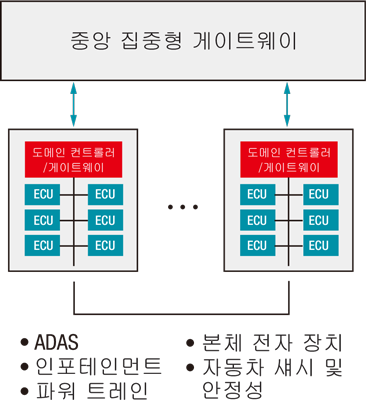
▲ [그림 1] 중앙 집중형 게이트웨이와 2개의
도메인 게이트웨이를 갖춘 SoC 아키텍처 (이미지=TI)
도메인 게이트웨이를 갖춘 SoC 아키텍처 (이미지=TI)
중앙집중식 게이트웨이에는 일반적으로 도메인 게이트웨이보다 더 많은 처리 성능, 인터페이스 및 더 높은 대역폭 네트워킹 프로토콜이 필요하다. [그림 1]은 차량에서 두 가지 유형의 게이트웨이를 구현하는 방법을 보여준다.
텔레매틱스 컨트롤 유닛
TCU는 인터넷과 클라우드를 연결해 주는 차량 내 ECU다. 자동차 제조업체가 Wi-Fi®, Bluetooth® 및 셀룰러 데이터 등의 옵션을 장착해 자동차가 인터넷과 클라우드에 연결되어 언제 어디서나 접속이 가능한 유비쿼터스 환경을 만들어나가고 있다.
이런 연결성 향상과 함께 자동차에서의 디지털 콘텐츠 이용을 위한 OTA 소프트웨어 업데이트를 통해, 이동 중에 긴급 통화(eCall)를 할 수도 있고, 엔터테인먼트나 기타 콘텐츠에 액세스할 수 있다.
차량 공유, 열쇠를 대신하는 휴대폰 액세스, 기업 차량 관리 및 추적, 원격으로 운전 습관을 모니터링하는 보험사, 차량 상태를 원격으로 모니터링하여 오일 교환과 같은 예방 유지 보수 일정을 예약하는 자동차 딜러 등 새로운 트렌드가 모두 인터넷과 클라우드 연결이 필요하다.
완전한 자율성을 향한 또 다른 트렌드는 신호등과 같은 차량 인프라 또는 사람과 같은 주체와 통신할 수 있는 차량의 능력이다. 이를 차량 대 차량(V2V), 차량 대 인프라(V2I) 및 차량 대 보행자(V2P)라고 한다. DSRC(Dedicated Short Range Communication) 또는 C-V2X 연결은 일반적으로 이러한 통신을 쉽게 한다.
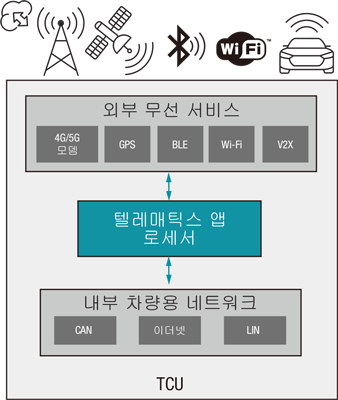
▲ [그림 2] 텔레매틱스의 예 (이미지=TI)
간단히 말해 텔레매틱스는 자동차를 외부 세계와 연결한다. [그림 2]는 텔레매틱스를 그림으로 표현한 것이다.
차량용 게이트웨이 및 TCU에 필요한 애플리케이션 프로세서
차량용 게이트웨이 프로세서는 전통적으로 CAN(컨트롤러 영역 네트워크), LIN(로컬 상호 연결 네트워크) 및 플렉스레이(FlexRay™)와 같은 저속 인터페이스였던 내장형 플래시와 지원되는 게이트웨이 인터페이스를 갖춘 32비트 MCU였다.
그러나 자동차에서 ADAS 및 연결 기능이 증가하면서, 차량은 점점 더 많은 양의 데이터를 다양한 도메인 간에 매우 낮은 대기 시간으로 안전하게 처리하고 통신해야 하게 됐다.
CAN-FD(유연한 데이터 속도) 및 LIN과 같은 인터페이스는 낮은 지연 시간으로 많은 양의 데이터를 처리하도록 설계되어 있지 않기 때문에 자동차 제조업체는 더 높은 대역폭의 데이터 이동을 처리하기 위해 이더넷 TCP/IP 기반 프로토콜로 마이그레이션하고 있다.
TCP/IP는 일반 소비자 영역에서 잘 확립된 통신 프로토콜이므로 검증되지 않은 프로토콜보다 덜 위험하다고 간주하기 때문에 매력적이다.
MCU 자체는 미래 게이트웨이의 처리 요구 사항을 충족하지 못할 수 있으므로 고성능 애플리케이션 프로세서는 미래의 게이트웨이 데이터를 처리하고 라우팅하기 위해 특정 MCU 기능을 대체하거나 확장하고 있다.
또한, 차량 내 네트워크가 이더넷 기반 네트워크로 변경됨에 따라 애플리케이션 프로세서가 지원하는 차량용 게이트웨이는 다양한 도메인 간에 데이터를 빠르고 효율적으로 처리하고 라우팅할 수 있다.
엔터테인먼트 콘텐츠 및 차량/승차 공유 앱과 원격 차량 액세스와 같은 기타 서비스를 새로 수정하려면 OTA 업데이트에 연결해야 한다.
TCU에는 연결을 제공하는 셀룰러 또는 Wi-Fi 모뎀 및 모뎀에서 수신한 데이터를 처리하는 애플리케이션 프로세서가 있다. 처리에는 데이터의 암호 해독, 데이터의 유효성 검사 및 게이트웨이 또는 다른 도메인 ECU로의 데이터 라우팅이 포함된다.
현재 아키텍처에서 모뎀과 프로세서는 단일 반도체 장치에 통합되어 있다. 그러나 모뎀 표준이 지속해서 발전하고 있어서 자동차 제조업체는 모뎀과 프로세서를 분리하는 아키텍처로 이동하고 있다.
또한, 차량용 게이트웨이와 TCU는 PCIe와 같은 고속 연결 주변 장치 지원 및 다양한 도메인 간에 데이터를 처리하고 라우팅하는 높은 컴퓨팅 성능을 갖춘 애플리케이션 프로세서로 구동되는 이더넷 기반 네트워크로 변경되고 있다.
프로세서와 모뎀을 분리하면 모뎀만 교체하고 프로세서와 프로세서에서 실행되는 모든 관련 소프트웨어를 보존함으로써 ECU를 새로운 모뎀 표준으로 신속하게 변경할 수 있다는 장점이 있다.
자동차가 점점 더 연결되고 자율화됨에 따라 차량용 게이트웨이 및 TCU에서 안전 및 보안도 중요해지고 있다.
전용 임베디드 보안 프로세서 또는 하위 시스템은 차량 보안 키에 대한 액세스를 보호하고 통신 채널 보안을 강화하며 신뢰할 수 있는 소프트웨어 업데이트를 사이버 공격의 일부로 사용할 수 없도록 한다.
안전 기능은 일반적으로 안전하다고 인증된 개별 MCU에 구현된다. 그러나 애플리케이션 프로세서와 안전 MCU를 모두 통합한 SoC를 통해 자동차 OEM 업체는 BOM 비용을 절감할 수 있다.
개발 비용
앞에서 설명했듯 게이트웨이 및 TCU 시스템은 기능 면에서 점점 복잡해지고 있다. 그 결과 자동차 제조업체의 개발 비용이 커지고 있다. 이상적으로, 이 비용이 차량의 모든 등급/모델을 위해 발생할 필요는 없다.
OEM 및 티어-1 공급업체는 차세대 게이트웨이 및 TCU 시스템의 요구 사항을 해결할 수 있는 확장 가능하고 소프트웨어 호환 가능한 플랫폼을 제공하는 자신토(Jacinto™) DRAx 차량용 프로세서 제품군을 이용함으로써 개발 비용을 간소화할 수 있다.
자신토 DRA8x 차량용 프로세서는 PCIe, USB3.x 및 기가비트 이더넷과 같은 다양한 고속 I/O와 CAN-FD 및 LIN과 같은 전통적인 차량용 주변 장치를 지원하여 차량 전체의 연결성을 향상한다.
이러한 프로세서는 또한 차량용 게이트웨이에 사용하도록 맞춤화되었으며 온칩 MCU 서브 시스템을 포함하여 TCU, 애플리케이션 프로세서 및 차량용 게이트웨이에 필요한 실시간 처리 요구 및 성능을 충족한다.
딥 러닝으로 ADAS 지원하는 TI '자신토 7' 프로세서
TI의 확장 가능한 하드웨어 및 소프트웨어 호환 DRA8x SOC 제품군은 새로운 게이트웨이 및 TCU 아키텍처의 요구 사항을 충족시켜 차량용 게이트웨이의 시스템 BOM 비용 및 개발 비용을 줄인다.
이 기사는 TI의 수부 벤카트(Subbu Venkat) 사업 개발 매니저의 ‘차세대 자동차를 위한 진화하는 차량용 게이트웨이(Evolving automotive gateways for nextgeneration vehicles)’라는 제목의 글을 정리한 것입니다.
이수민 기자
관련뉴스
-

딥 러닝으로 ADAS 지원하는 TI '자신토 7' 프로세서
ADAS 기술의 발전과 채택 증가로 차량의 소프트웨어 코드 라인은 1억 5천만 라인까지 늘어났다. TI는 CES 2020에서 발표했던 자신토 7 프로세서 2종의 공급을 16일부터 시작했다. 자신토 7 프로세서 플랫폼은 딥 러닝 및 고급 네트워크 연결 기능으로 ADAS와 차량 게이트웨이 애플리케이션 설계 문제를 해결한다.
2020-01-16 오후 5:55:13by 이수민 기자
-

대한민국 성인남녀 62% “완전자율주행차 사고 싶어”
레벨4 이상의 완전 자율주행차가 대중화되면 이를 구매하겠다는 응답자가 62%에 달했다. 나우앤서베이의 발표에 따르면 주 5회 이상 출퇴근을 위해 운전을 하는 경우가 가장 많았으며 차량 운전을 즐긴다는 답변이 괴롭다는 응답보다 3배 이상 높게 나타났다. 차량 공유 서비스가 일반화되어도 차량을 처분하지 않겠다는 응답자가 절반을 넘었다.
2020-03-04 오전 9:28:08by 최인영 기자
-
ST, 자동차용 게이트웨이 지원하는 SGP 출시
ST가 자동차용 스마트 게이트웨이 및 도메인 컨트롤러 애플리케이션의 시제품 제작에 유용한 툴을 제공하고자 SGP 플랫폼을 출시했다. 모듈형 스마트 게이트웨이 플랫폼은 ASIL B 텔레매코 3P 마이크로프로세서와 ASIL D SPC58/코러스 마이크로컨트롤러 간의 기가비트 이더넷 통신에 기반해 클라우드 간 고속 데이터 통신 처리가 가능하다.
2020-03-26 오전 10:47:53by 최인영 기자

.jpg)
많이 본 뉴스

[열린보도원칙] 당 매체는 독자와 취재원 등 뉴스이용자의 권리 보장을 위해 반론이나 정정보도, 추후보도를 요청할 수 있는 창구를 열어두고 있음을 알려드립니다.
고충처리인 장은성 070-4699-5321 , news@e4ds.com