자일링스 "차량용 반도체, ASIC 대신 FPGA 채택해야"
기사입력 2020.12.09 16:55
'40년 차량용 반도체 시장규모, '20년의 4배
자동차 트렌드 앞서려면 적응형 솔루션 필요
자일링스, ISO 26262, ASIL B/D 제품 지원
차량용 반도체 시장이 빠르게 성장하고 있다.
시장조사업체 스태티스타(Statista)에 따르면, 차량용 반도체 시장 규모는 2020년, 450억 달러에서 오는 2040년, 1,750억까지 성장할 전망이다.
차량용 반도체는 AI, 전기화, 자율주행, 기능 안전성, 커넥티드 카, 차량용 인포테인먼트(IVI), 첨단 운전자 보조 시스템(ADAS), 서비스로서의 자동차(Mobility as a Service; MaaS) 및 대중교통(Transportation as a Service; TaaS) 등의 자동차 분야 신기술 촉진에 활용 중이다.
신기술을 제대로 활용하기 위해서는 차량 및 전장 제조사의 제품들이 진화하는 시스템 요건을 충족해야 한다. 하지만 시장의 변화 속도는 이미 반도체 설계주기를 능가했고, 이는 앞으로 더욱 빨라질 것이다. 또한 고객의 요구가 지속해서 변화하며 하드웨어와 소프트웨어 레벨에서 여러 다양한 제품을 구현할 수 있는 적응형 컴퓨팅 솔루션이 요구되고 있다.
자일링스는 9일, 온라인 기자 간담회를 열고 자동차를 위한 적응형 반도체 전략에 관해 설명하는 시간을 가졌다.
유세프 칼릴롤라히(Yousef Khalilollahi) 자일링스 아태지역 영업 부사장은 “자동차 산업은 차량 설계 효율 향상은 물론, 사용자의 안전성과 편의성을 제공하는 다양한 서비스가 도입되며 근본적인 혁신이 일어나고 있다”라며, “가령 기존에 컴퓨터 비전 기술을 채택했던 ADAS가 최근 AI 기술로 이행하며 자일링스의 적응형 플랫폼이 필요하게 됐다”라고 말했다.
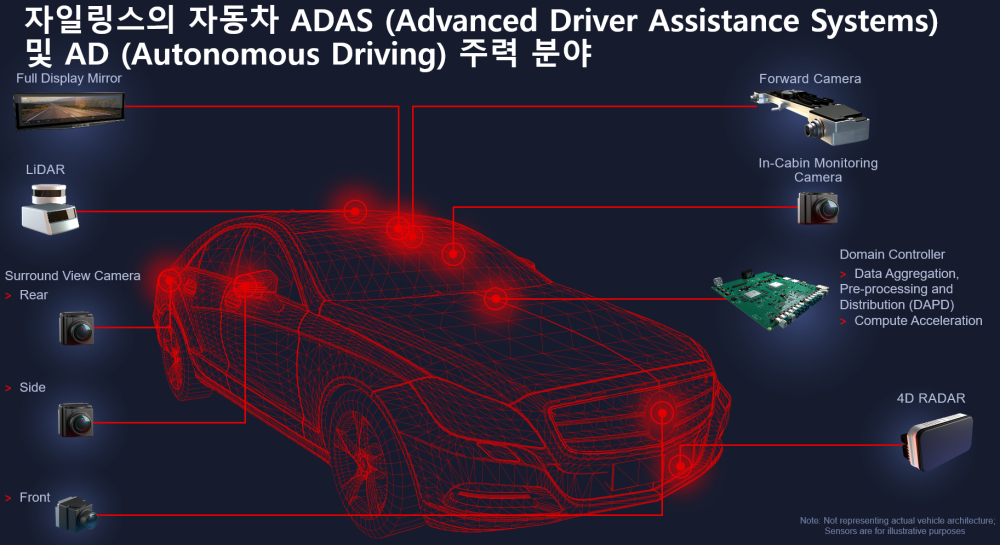
▲ 자일링스의 ADAS 및 AD 솔루션 [이미지=자일링스]
칼릴롤라히 부사장은 ADAS 외에도 자율주행, IVI, MaaS, TaaS 등을 구현하기 위해서는 적응형 차량용 반도체가 필요하다고 밝혔다. 이는 자동차 관련 하드웨어와 소프트웨어 분야의 발전과 관계있다고 그는 설명했다.
먼저 소프트웨어적 측면에서 살펴보면, AI 기술 등이 엄청나게 빠른 속도로 진화하고 있어 이 같은 기능을 ASIC 같은 고정형 프로세서로 구현하려다 보면, 솔루션 출시 시점에 이미 솔루션의 가치가 사라질 가능성이 크다. 또한, 하드웨어적 측면에서도 라이다와 레이더를 비롯한 센서 기술이 계속 진화하고 있어 유연한 구성이 가능한 적응형 실리콘이 필요하다는 것이다.
칼릴롤라히 부사장은 “자일링스는 FPGA를 시작으로 SoC, MPSoC, RFSoC, 적응형 컴퓨팅 가속화 플랫폼(Adaptive Compute Acceleration Platform; ACAP)에 이르기까지 지속해서 성능과 전력, 집적도 등을 높이며 로우엔드에서 하이엔드까지 다양한 애플리케이션을 개발할 수 있도록 지원하고 있다”라고 강조했다.
또한, “OTA(Over-The-Air) 업데이트 등을 통해 빠르게 진화하는 시장에 적응할 수 있는 설계 유연성을 지원한다”라며, “오랜 기간 차량, 산업, 항공, 우주 분야에서 입증해온 기능 안전성 및 품질 표준에 대한 신뢰성을 제공하여 자동차 시장의 새로운 흐름에 대응하고 있다”라고 덧붙였다.
자일링스는 2002년부터 올해까지 총 1억6천만 개 이상의 차량용 반도체를 출하했다. 설계 도구를 포함한 자일링스의 차량용 제품은 자동차 기능 안전성 국제 표준 ISO 26262 인증을 받았고, ASIL B/D 애플리케이션을 지원한다. 칼릴롤라히 부사장은 “자일링스 제품은 리콜한 적이 없으며, 불량률(PPM)도 낮아 지난 4~5년 동안 큰 호응을 얻었다”라고 밝혔다.
오늘날 자동차계 화두는 전기화다. 유럽연합(EU)은 빠르면 2025년, 늦어도 2040년부터 내연기관 자동차의 판매를 금지할 방침이다. 우리 정부도 지난 7일, ‘2050 탄소중립 추진전략’을 발표하며, 전국 2,000만 세대에 전기차 충전기를 보급하여 전기차 생산을 촉진하겠다고 밝힌 바 있다.
윌라드 투(Willard Tu) 자일링스 자동차 부문 수석 디렉터는 “자일링스는 자동차의 전기화와 관련하여 △AI 기반 전기차 관리 ECU, △실시간 다중 프로토콜 통신, △모델 기반 알고리즘, △실리콘카바이드(SiC) 제어 루프 지원 등 4가지 분야에 주력하고 있다”라고 밝혔다.
특히, “SiC는 성능 향상을 위해서 전기차의 모터 드라이브와 온보드 충전기 시스템에 빠르게 채택되고 있다”라며, “SiC 반도체는 2026년 전력 반도체 시장의 19%를 차지할 전망이다”라고 설명했다.
그러면서 “자일링스 징크(Zynq) 7000 제품군은 Arm Cortex-A9 기반 소프트웨어 플랫폼과 유연한 프로그래머블 로직 어레이를 제공하여 복잡한 모터 제어 루프 모델에서 실시간 응답을 구현한다”라며, “프로그래머블 로직은 EMI 감소, 전력 손실 최소화, 특정 플랫폼에 맞는 IO 맵 생성 등의 유연성을 제공한다”라고 첨언했다.
이수민 기자
관련뉴스
-
.jpg)
ST, 산켄과 IPM 개발 맞손, 차량용 제품도 내년 공개
ST마이크로는 고전압 고출력 장비 설계에서 지능형 전력모듈(IPM)의 성능을 개선하기 위해 산켄전기와 전략적 파트너십을 체결했다고 밝혔다. 양사는 현재 650V/50A, 1200V/10A 산업용 모듈을 개발하고 있으며, 엔지니어링 샘플을 내년 3월에 공급할 예정이다.
2020-11-17 오후 4:25:33by 강정규 기자
-
마이크로칩, CAN FD 네트워크 위한 8비트 MCU 공개
차량용, 산업용 애플리케이션의 통신 대역폭이 날로 증가하며 유연한 데이터 전송 속도에 대한 수요도 커지고 있다. 마이크로칩이 이에 대응하여 CAN FD 버스를 통한 데이터 송수신에 활용할 수 있는 PIC18-Q84 MCU 제품군을 출시했다. 해당 MCU 제품군은 CPU가 개입하지 않아도 다양한 작업을 처리하는 CIP가 탑재되어 CAN FD 네트워크에 시스템을 연결할 때 발생하는 비용과 시간을 절감한다.
2020-11-24 오전 11:50:58by 명세환 기자
-

CEVA DSP, 르네사스 차세대 차량용 SoC에 채택
CEVA가 자사의 고성능 DSP 솔루션이 르네사스 사의 차세대 차량용 SoC에 탑재된다고 밝혔다. 차량 제조사들은 안전하면서 자동화된 운전 환경을 제공하기 위해 차량에 더 많은 카메라와 레이더, 기타 센서들을 채택하고 있다. 능동 안전 및 자율주행 기능에서 DSP는 차량 내 센서들이 생성하는 센서 데이터를 처리하는 핵심 IP로 꼽힌다.
2020-11-25 오전 11:55:52by 명세환 기자

많이 본 뉴스

[열린보도원칙] 당 매체는 독자와 취재원 등 뉴스이용자의 권리 보장을 위해 반론이나 정정보도, 추후보도를 요청할 수 있는 창구를 열어두고 있음을 알려드립니다.
고충처리인 장은성 070-4699-5321 , news@e4ds.com