인피니언 HV GaN
반도체 AI 인더스트리 4.0 SDV 스마트 IoT 컴퓨터 통신 특수 가스 소재 및 장비 e4ds plus

UNIST Semiconductor Circuit Design Technology 3, Unveiled at ISSCC

기사입력2021.11.23 16:02

Professor Kim Seong-jin and Professor Kim Jae-jun's team ranks 3rd in number of adoptions among domestic universities

UNIST (President Yong-Hoon Lee) will present three semiconductor circuit design technologies at the 2022 International Solid-State Circuits Conference (ISSCC), also known as the ‘Semiconductor Olympics.’

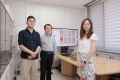
UNIST announced on the 23rd that the brain nerve data monitoring technology and LiDAR sensor design technology of Professor Kim Seong-jin's team in the Department of Electrical and Electronic Engineering, and the real-time blood pressure measurement technology based on bio-resistance information of Professor Kim Jae-jun's team will be presented at the 'ISSCC 2022 Conference' to be held from February 20 to 24 next year.

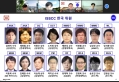
According to the ISSCC Korea press conference held on the 17th, UNIST ranks 3rd among domestic universities in the number of papers accepted by ISSCC, following KAIST (10 papers) and POSTECH (5 papers).

In particular, UNIST researchers have stood out in the field of Image, MEMS, Medical, and Display (IMMD). A total of 10 papers were accepted in this field in Korea, and 3 of them are technologies of UNIST researchers.

Researcher Cha Ji-hyung of Professor Kim Sung-jin's team and others will present a technology that can effectively monitor the signal information created by brain nerve cells. This technology can be applied to electronic devices that read the user's thoughts and operate without pressing a control button. The research team reduced the size of the semiconductor circuit by five times compared to the existing one, while increasing the brain signal measurement efficiency by more than 15 times. Additionally, power consumption could be reduced by significantly reducing data processing volume by more than 50%.

Researcher Cha Ji-hyung explained, “Brain neurons are small in size and number in the hundreds of billions, so analyzing neural signals and connectivity between cells is not easy. However, through this research, we developed a circuit design technology that can monitor brain signal data more efficiently than before.”

There is also bio-impedance measurement technology that can continuously monitor blood pressure by simply wearing it like a neckband.

This is a technology jointly proposed by Professor Kim Jae-jun's research team, Researcher Park Chan-sam, Professor Jang Dong-pyo's team at Hanyang University, and Soso Co., Ltd.

Bio-resistance measurement technology is widely used to measure body composition (muscle, body fat mass). The research team developed a blood pressure monitoring semiconductor circuit that can extract detailed cardiovascular information from bio-resistance.

The key to the technology is to reduce the number of electrodes required by half, thereby reducing the size and cost while maintaining high measurement accuracy. The number of channels for analysis has also been reduced from the previous two to one, which allows for more efficient use of power and area.

Professor Kim Sung-jin's team and researcher Park Sung-hyeok will present lidar sensor technology, also known as the 'eyes of autonomous vehicles.'

LiDAR sensors are a technology that obtains distance images using light. They are clearer (higher resolution) and work well in dark environments compared to existing radar or ultrasonic-based technologies. This is why it is expected to be essential for driver assistance systems (ADAS) and autonomous vehicles.

In this study, the processing speed was dramatically increased (more than twice) while maintaining the pixel size compared to previous studies.

It also features external light removal technology that enables accurate distance images to be captured in real time even under strong external light such as sunlight.

These results are scheduled to be presented at the ISSCC conference to be held in San Francisco, USA in February next year.

This conference will present 200 papers in 12 fields, including analog, data converters, digital architectures and systems, digital circuits, IMMD, RF (radio frequency), wireless, wired, and memory.

Meanwhile, ISSCC, established in 1954, is considered one of the world's top three semiconductor conferences, along with the Very Large Scale Integration (VLSI) Society and the International Electron Devices Meeting (IEDM).

It is a place where approximately 3,000 scholars and researchers from around the world participate, share research results and information, and discuss future semiconductor industries and technologies.

In particular, it is an academic society that focuses on practical research, with more than 60% of its attendees coming from leading semiconductor companies such as Samsung Electronics, Intel, and TSMC.