韓 반도체 수출, 동아시아국과 경쟁 치열...中·臺 맹추격
기사입력 2022.04.05 10:33
중국·대만 수출액 증가율, 한국보다 2배 이상↑
한국-대만 수출 경합도, 17.3%→32.4%로 증가
한국-대만 수출 경합도, 17.3%→32.4%로 증가
대만과 중국의 수출 경쟁력 향상이 두드러지며 한국과 동아시아 주요국 간 반도체 경쟁이 심화하고 있다.
전국경제인연합회(이하 전경련)에서 발표한 ‘동아시아 주요 경쟁국의 수출경쟁력 분석’ 보고서에 따르면 반도체 수출 부문에서 대만과 중국의 추격이 거세지는 것으로 나타났다. 동아시아 반도체 생산국 간 반도체 수출 경쟁이 심화되고 있어 한국의 반도체 수출 경쟁력 약화가 우려된다고 밝혔다.
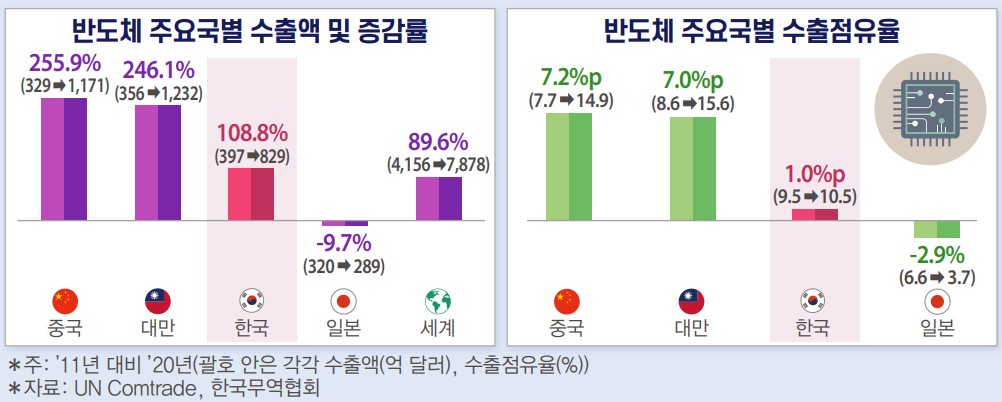
▲반도체 부문 동아시아 주요국 수출액·점유율
동아시아 주요 수출 경쟁국의 최근 10년 변화를 분석한 결과, 반도체 부문에서 국가별 수출액 증감률은 △중국 255.9%(2011년 329억 달러→2020년 1,171억 달러) △대만 246.1%(356→1,232) △한국 108.8%(397→829) △일본 -9.7%(320→289) 순을 기록했다.
같은 기간 국가별 수출 점유율 증감폭은 △중국 7.2%p(2011년 7.7%→2020년 14.9%) △대만 7.0%p(8.6→15.6) △한국 1.0%p(9.5→10.5) △일본 -2.9%p(6.6→3.7) 순으로 나타났다.
일본을 제외한 중국, 대만, 한국 세 나라의 수출액과 점유율은 모두 늘었지만 중국과 대만의 수출액 증가율은 한국보다 2배 이상 높았다. 대만의 수출액과 점유율이 한국을 추월했다는 점에서 한국 반도체 수출 경쟁력이 우려된다고 보고서는 언급했다.
.jpg)
▲전기기기 부문 동아시아 주요국 수출액·점유율
또한 한국 수출 중 가장 큰 비중(31.2%, 2021년)을 차지하고 있는 전기기기에서도 경쟁이 심화하고 있다. 국가별 수출액 증감률을 살펴보면 △대만 129.4%(2011년 761억 달러→2020년 1,746억 달러) △중국 59.3%(4,458→7,101) △한국 34.8%(1,185→1,597) △일본 -20.8%(1,295→1,026) 순으로 대만과 중국의 수출 증가율은 한국을 앞질렀다.
같은 기간 국가별 수출 점유율 증감폭에서는 △중국 4.6%p(2011년 21.0%→2020년 25.6%) △대만 2.7%p(3.6→ 6.3) △한국 0.2%p(5.6→5.8) △일본 -2.4%p(6.1→ 3.7) 순을 기록하며 중국과 대만은 한국 대비 높은 증가폭을 보였다.
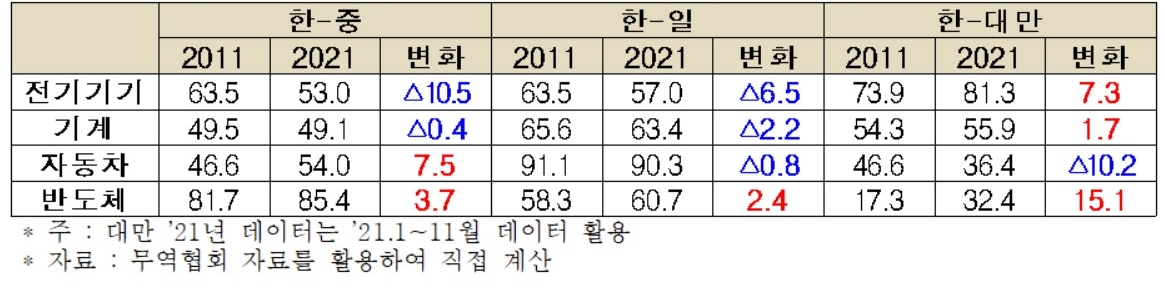
▲주요 품목별 한국과 동아시아 주요국의 수출 경합도 지수
동아시아 주요국 간 수출 경쟁이 점차 치열해지는 가운데 특히 반도체 부문에서 수출 경합이 심화하고 있는 것으로 나타났다. 한국과 동아시아 주요국과의 수출 경합도 지수에서 반도체 부문은 △한-중 3.7%p(2011년 81.7%→2021년 85.4%) △한-일 2.4%p(58.3%→60.7%) △한-대만 15.1%p(17.3%→32.4%)로 높아져 주요국 모두와 경쟁이 치열해졌다.
또한 전기기기의 수출 경합도 지수는 △한-중 -10.5%p(2011년 63.5%→2021년 53.0%) △한-일 -6.5%p(63.5%→57.0%) △한-대만 7.3%p(73.9%→81.3%) 순으로 나타나며 한국의 수출 경쟁이 일부 완화된 것으로 풀이된다. 다만 대만과의 수출 경쟁은 반도체 및 전기기기 모두 증가한 것으로 나타나 한국-대만의 수출 경쟁 심화가 두드러졌다.
김봉만 전경련 국제본부장은 대만, 중국 등 수출 경합도가 높은 국가에 대응하기 위한 경쟁력 강화전략 수립을 주장하며 “반도체 등 주력산업에 대한 국가적인 지원을 강화하고, 수출 신성장 동력을 발굴해야 한다”고 강조했다. 또한 “수출경쟁력 근간이 되는 기업경쟁력 강화를 위해 규제완화가 필요하다”고 덧붙였다.

관련뉴스
-

2월 ICT 수출 188.8억불, 역대 2월 중 최고
2022년 2월 ICT 수출이 전년동월대비 23.7% 증가한 188억8,000만달러를 기록했다.
2022-03-14 오후 3:39:04by 성유창 기자
-
韓·美, 반도체 공급망 강화 논의
한국과 미국의 반도체 글로벌 공급망 이슈를 논의하고, 기술, 인력, 투자에 대한 협력방안을 모색하는 자리가 마련됐다.
2022-03-31 오후 3:13:26by 배종인 기자
-

.jpg)
많이 본 뉴스

[열린보도원칙] 당 매체는 독자와 취재원 등 뉴스이용자의 권리 보장을 위해 반론이나 정정보도, 추후보도를 요청할 수 있는 창구를 열어두고 있음을 알려드립니다.
고충처리인 장은성 070-4699-5321 , news@e4ds.com