MEMS·센서, 온라이프 시대 가속
기사입력 2022.07.08 11:38
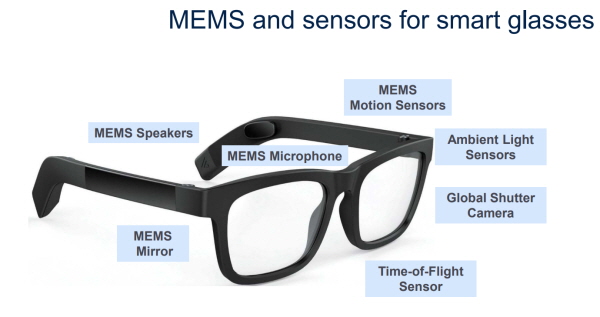
▲스마트 글라스에 채용된 MEMS 및 센서(자료 : ST마이크로일렉트로닉스)
산업·의료·車 더 높은 퍼포먼스 가능
고정밀화·소형화·경량화·저전력화 必
고정밀화·소형화·경량화·저전력화 必
가전, 자동차, 집 등 우리 주변 생활에서 사물인터넷(IoT) 채용이 증가하며, 이를 구성하기 위한 전자부품의 고정밀화, 소형화 및 저전력화가 가속되고 있다.
최근 SEMI가 개최한 MEMS&Sensor Forum 2022에서 기조연설을 발표한 ST마이크로일렉트로닉스의 데이비드 브루노 부사장은 기술과 생활의 융합으로 인해 디지털 영역과 물리적 영역이 융합되며, 이를 실현하기 위한 미세 전자부품 및 센서의 중요성이 높아지고 있다고 밝혔다.
브루노 부사장은 MCU를 장착한 MEMS(미세전자기기시스템)은 IC와 클라우드 연결을 통해 사물인터넷을 가능하게 하고, 센서는 산업, 의료, 자동차 등에서 더 높은 퍼포먼스를 가능하게 하고 있다고 전했다.
브루노 부사장이 예를 든 스마트 글라스의 경우 MEMS 스피커, MEMS 모션 센서, 앰비언트 라이트 센서, 카메라, MEMS 거울, MEMS 마이크 등 다양한 MEMS와 센서들이 장착돼 하나의 제품을 구성하고 있다.
이러한 IoT 제품은 다양한 기능을 수행하며, 디지털 영역과 물리적 영역이 융합된 온라이프(Onlife)를 실현시키고 있다.
온라이프를 실현하기 위해서는 하나의 제품에 수십개의 MEMS와 센서들과 같은 전자부품이 장착된다는 것이다.
이러한 추세는 소형 IoT 제품뿐만 아니라 자동차 등에서도 마찬가지다.
시장조사 기관 Yole Developpement의 Pierre Delbos의 발표에 따르면 MEMS와 센서들은 연결성, 전동화, 지능형운전보조, 모니터링 등 자동차 분야에서도 급성장하고 있다.
MEMS의 경우 2021년 22억2,000만달러의 시장에서 2027년 33억8,000만달러로 연평균 7.3% 성장할 것으로 전망됐고, 마그네틱 센터의 경우 2021년 17억달러에서 2027년 29억9,000만달러로 연평균 10% 상승할 것으로 전망됐다.
특히 MEMS와 센서는 지능형운전보조 및 자율주행 등에서 새로운 성장 기회를 잡고 있다. MEMS 미러는 자동차에서 AR을 실현한다. 또한 카메라, 라이더, 레이더 등은 안전 및 자율주행에서 필수로 사용되고 사용량도 증가하고 있다.
이와 같이 온라이프를 실현하기 위해 MEMS, 센서 등 전자부품의 사용이 증가하며, 각 기기에 적용하기 위한 최적의 요건들에 맞춤 제품 개발이 요구되고 있다.
우선 소형의 전자제품에 다량의 부품을 채용해야 하기 때문에 각각의 전자부품들이 극히 소형화 돼야 하고, 가벼워야 하며, 제품의 에너지 효율을 높이기 위한 저전력 제품이어야 한다.
무엇보다도 수십개의 전자부품이 하나의 제품에 통합되기 때문에 여러부품을 하나의 부품으로 통합한 통합제품의 개발이 빠르게 이뤄지고 있으며, 어플리케이션을 유기적으로 구동하기 위한 소프트웨어의 개발도 중요시되고 있다.
업계관계자는 “MEMS 및 센서는 상시 동작이 가능하고, 늘 연결되는 기술을 통해 온라이프 시대를 열고 있다”며 “이러한 추세에 발맞춰 출력 정확도가 높고, 저전력 소비로 런타임을 연장할 수 있는 제품 개발에 적극적으로 나서고 있다”고 전했다.
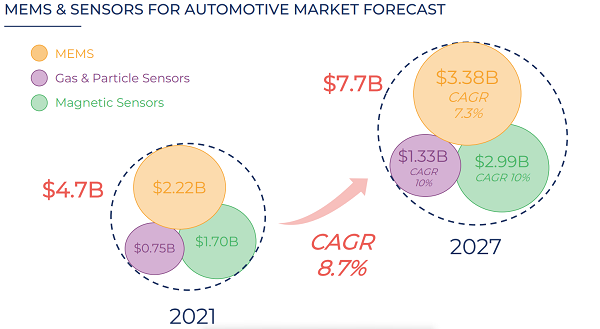
▲MEMS 및 센서 시장 전망(자료 : Yole Developpement)

- 1 Comments
- Y*K (2022-07-12 오후 8:36:36)
- 이디스 안경
관련뉴스
-

ST, 지능 탑재한 센서로 온라이프 시대 개막
신호 프로세싱과 인공지능(AI) 알고리즘을 MEMS(Micro-Electro-Mechanical Systems) 센서에 통합해 공간 및 전력을 크게 절감하면서도 로컬 의사결정 지원할 수 있는 프로세싱 유닛이 출시돼 전자적 의사결정을 내릴 수 있는 기술과 물리적 세계의 융합을 구현할 것으로 기대를 모으고 있다.
2022-02-21 오후 2:19:19by 배종인 기자
-
ST, 첨단 MEMS 센서로 온라이프 시대 가속화
다양한 전자 애플리케이션과 고객들을 지원하는 세계적인 반도체 회사이자 업계 최고의 MEMS(Micro-Electro-Mechanical Systems) 제조사인 ST마이크로일렉트로닉스(STMicroelectronics, 이하 ST)가 정확성과 에너지 효율성을 향상시킨 첨단 MEMS 센서 신제품 출시로 온라이프 시대 가속화에 나선다.
2022-03-11 오후 3:36:36by 배종인 기자
-

[인터뷰]ST 지준영 차장, “고성능·저전력 시스템을 위한 ST MEMS 센서와 ISPU기능 제공”
[편집자주] 반도체가 산업의 쌀이라면 MEMS는 각종 제품에 탑재되며 부가가치를 높이는 디바이스로 산업의 콩과 잡곡 같은 존재이다. 다양한 종류의 잡곡만큼이나 MEMS센서는 △가속도 △자이로 △관성 △지자기 △압력 △온도 등 다채로운 역할을 담당하며 산업계에 두루 활용되고 있다.
2022-05-20 오전 8:09:32by 권신혁 기자


많이 본 뉴스

[열린보도원칙] 당 매체는 독자와 취재원 등 뉴스이용자의 권리 보장을 위해 반론이나 정정보도, 추후보도를 요청할 수 있는 창구를 열어두고 있음을 알려드립니다.
고충처리인 장은성 070-4699-5321 , news@e4ds.com