세계 100대 ICT 기업, 韓 단 2社
기사입력 2022.07.12 16:26
삼성전자·SK하이닉스만 이름 올려
대만 등 중요 경쟁국에 모두 뒤져
대만 등 중요 경쟁국에 모두 뒤져
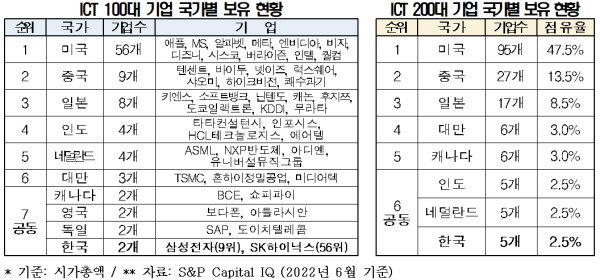
한국이 ICT 강국이라는 타이틀과 달리, 세계 100대 ICT 기업 중 한국 기업은 단 2개에 불과해 중국, 일본, 인도, 대만 등 ICT 경쟁국에 모두 뒤처지며, 소프트웨어, 팹리스 등 경쟁력이 낮은 우리나라 ICT 현실이 적나라하게 드러났다.
전국경제인연합회는 기업분석 데이터베이스인 S&P Capital IQ를 통해 세계 ICT기업 시총 100대 기업을 분석해 최근 결과를 발표했다.
이에 따르면 시가총액 순위로 뽑은 세계 100대 ICT 기업에 한국은 9위의 삼성전자, 56위의 SK하이닉스만이 이름을 올린 것으로 나타났다.
100대 ICT 기업 중 미국기업이 56개로 절반을 차지한 가운데 중국 9개, 일본 8개, 인도 4개, 대만 3개 기업이 포함됐다.
향후 100대 기업에 진입할 차세대 주자들로 구성된 200대 기업까지 범위를 넓혀보면 중국기업 수가 27개로 급격히 증가, ICT 차세대 리더그룹에 많이 포진해 있었다.
일본기업 또한 17개가 포함돼 일본 ICT 잠재력이 여전히 건재함을 드러낸 반면, 한국기업은 삼성SDI(114위), 네이버(120위), 카카오(133위) 등 신흥 디지털 기업들이 추가돼 5개에 그쳤다.
200위권 내 한국 반도체 기업은 DB하이텍(132위), 리노공업(140위), LX세미콘(153위), 심텍(185위) 등이 순위를 올혔다.
이와 함께 우리 기업의 매출액 대비 R&D 투자비중은 7.4%로 경쟁국인 미국(17.1%), 네덜란드(15.4%), 일본(13%), 대만(9.5%)에 비해 매우 낮아 반도체의 미래경쟁력을 낙관할 수만은 없는 것으로 드러났다.
특히 일본은 2019년 3.5% 불과했던 매출액 대비 R&D 투자비중을 2년 만에 급격히 늘리며 국가차원에서 공격적으로 반도체 부활전략을 펼치고 있다.
일본은 반도체 확보를 골자로 하는 ‘경제안전보장추진법’을 통과시켰고, 대만 TSMC 신공장과 연구개발센터를 자국에 유치했으며 이 과정에서 약 4,950억엔(한화 약 4조7,000억원) 규모의 정부지원금을 투입했다.
미국 역시, 바이든 행정부가 추진하고 있는 520억달러(한화 약 68조원) 규모의 반도체지원법(CHIPS) 통과 시, 반도체 분야에 대한 투자가 더욱 활발해질 전망이다.
주요국이 반도체에 국가재원을 적극 투입하는 것에 비해 한국의 상황은 다소 아쉬운 편이다.
전경련이 OECD로부터 제공받은 주요 글로벌 반도체기업의 매출 대비 정부지원금 비중 통계에 따르면, 중국 SMIC 6.6%, 미국 마이크론 3.8%, 네덜란드 NXP 3.1%에 비해 한국은 가장 낮은 수준(삼성전자 0.8%, SK하이닉스 0.5%)을 기록했다.
김봉만 전경련 국제본부장은 “한국이 IT 강국이라지만 세계시장이라는 냉혹한 전쟁터에서의 성적표는 다른 결과를 말한다”며 “우리경제의 디지털화 속도가 생각보다 느리고 사실상 소프트웨어 분야 경쟁력도 낮다는 점이 우려되는 것이 사실”이라고 밝혔다.
이어서 “차세대 업종인 사이버안보의 경우 지난 5월 한미정상회담에서 바이든 대통령이 양국 협력을 강조할 정도로 유망한 분야로 예상되는 만큼 한국 기업이 국제무대에서 성장할 수 있도록 적극적인 투자를 비롯해 관련 각종 제도 정비와 지원이 필요하다”고 밝혔다.

관련뉴스
-
진대제 회장, “반도체 패권 국가적 대비 必”
상당기간 반도체 수요대비 공급이 타이트 할 것이며, 반도체 패권싸움에 대비한 국가차원의 대비책 수립이 필요하다는 의견이 제시됐다. 전국경제인연합회(이하 전경련)는 30일 전경련회관 컨퍼런스센터에서 ‘반도체 산업이 흔들린다 : 반도체 산업 패러다임과 미래’를 주제로 세미나를 개최했다.
2021-03-30 오후 2:52:51by 배종인 기자
-
반도체 산업 이슈와 대응전략 살펴보는 세미나 열린다
글로벌 반도체 수급 불안정 지속으로 반도체에 관한 관심이 그 어느 때보다 뜨거운 상황이다. 세미나허브는 오는 7월 1일(목), 서울 여의도 전경련회관에서 2021년 반도체 산업 핵심 이슈 및 대응전략 세미나를 온오프라인 동시 진행한다.
2021-06-03 오후 4:50:07by 이수민 기자
-
전경련, “디지털세 매출 200억불 이상 한정해야”
전국경제인연합회(회장 허창수)이 디지털세와 관련해 매출 200억달러 이상 디지털서비스 기업으로 한정해야 한다고 주장했다.
2021-06-09 오전 9:17:34by 배종인 기자



많이 본 뉴스

[열린보도원칙] 당 매체는 독자와 취재원 등 뉴스이용자의 권리 보장을 위해 반론이나 정정보도, 추후보도를 요청할 수 있는 창구를 열어두고 있음을 알려드립니다.
고충처리인 장은성 070-4699-5321 , news@e4ds.com