인피니언 StrongIRFET™
반도체 AI 보안 인더스트리 4.0 SDV 스마트 IoT 컴퓨터 통신 특수 가스 소재 및 장비 유통 e4ds plus

Fabless Special (2) - Kang-Yoon Lee, CEO of SkyChips, “Planning first, developing later, considering customer needs is a must”

기사입력2022.09.06 15:06


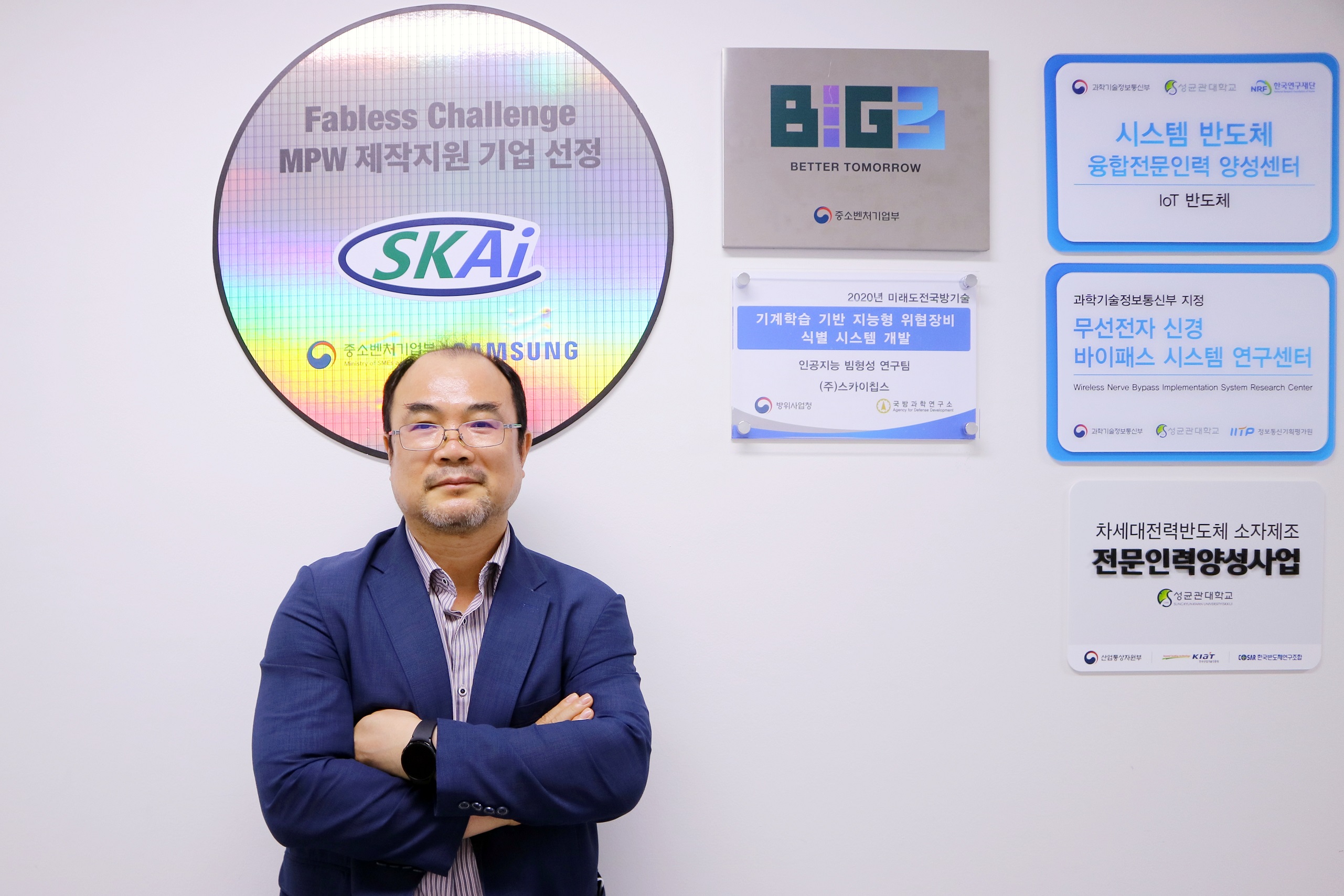
▲Lee Kang-yoon, CEO of Sky Chips
SkyChips, focusing on wireless charging and low-power RF/communication transceivers
CEO Lee Kang-yoon, Lessons from 2nd fabless startup: “Customer needs come first”

[Editor's Note] Domestic fabless companies are struggling to blossom as global innovative companies in the harsh system semiconductor environment where they only have 1% of the global market share. Five innovative fabless companies were selected at the Fabless Challenge held by the Ministry of SMEs and Startups in July. We met with the fabless companies selected for the challenge, which will release new products through Samsung Electronics Foundry, and heard about their solutions and future plans.

SkyChips CEO Lee Kang-yoon, whom we met that day, founded SkyChips, a fabless company, while working as a professor in the Department of Electronic and Electrical Engineering at Sungkyunkwan University. SkyChips, with a research staff of about 70 and over 200 IPs, is a company with design and technology development capabilities, and was about to produce products using technology that combines wireless communication chips and neuromorphic AI.

■ Please introduce SkyChips. What are its main solutions?

The company focuses on designing power semiconductors, including wireless charging, and also designs and manufactures low-power RF transmitters and receivers and communication transmitters and receivers.

Out of the total 90 employees, 70 are researchers, and they are also working on developing intelligent ICT by applying AI functions to these products. Rather than heavy AI like Nvidia, we are focusing on designing neuromorphic AI circuits based on analog circuits.

■ I heard that you previously started a fabless company based at the Seoul National University Integrated Systems Laboratory. What was the semiconductor ecosystem like at that time?

It was the late 90s. It was the time of the venture boom. The government encouraged venture startups more than it does now. A lot of investment was made, but at the time, the semiconductor ecosystem was not active in the system semiconductor sector. As I remember, companies mainly used Taiwanese foundries. They commissioned production to TSMC or UMC.

Compared to then, I think things have improved a lot now. Domestic system semiconductor companies have also grown a lot, and an atmosphere has been created where companies should coexist. In addition, the increased accessibility of domestic foundry companies such as Samsung Electronics has played a part.

■ Have you had any difficulties running the company?

Looking back, at the time, we were only focused on technology development and lacked a marketing or strategic planning approach. If we had developed it first and then approached where to sell it, we are now taking the approach of planning the product first and then grafting technology onto it. I think the needs of the client come first.

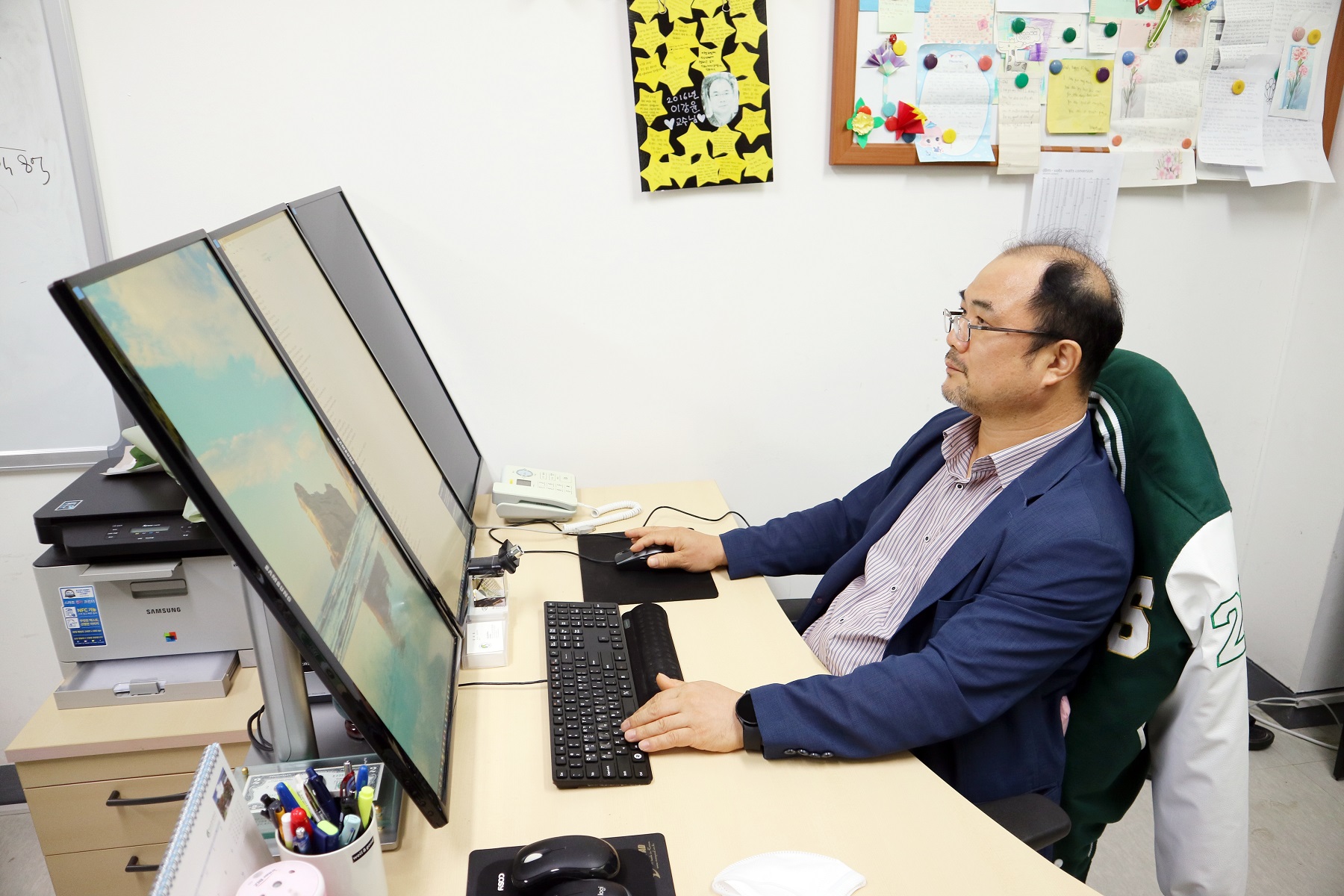
▲CEO Lee Kang-yoon at work

■ After that, you founded a fabless company based in the Sungkyunkwan University Integrated Circuit Research Lab. What was the motivation?

I've done a lot of projects with companies that are at the level of mass-produced products, but once the project is finished, it stops there and ends there. Due to the nature of school labs, there is a lack of motivation to continue working on projects.

There are over 200 IPs developed in the lab. There are also over 100 patents. I started a business with the idea of commercializing products using these IPs.

In addition, there must be several successful models in the system semiconductor industry to have a positive impact on students. I wanted to create a company that would provide students with dreams and vision by creating success stories.

■ At the last fabless challenge, you presented a vision for product development using 'energy harvesting' technology. Please explain this in detail.

Energy harvesting is a technology that harvests energy from various energy sources. These sources include the lights that we see a lot in our daily lives. For example, solar panels in electronic calculators that have been used a lot in the past are representative of the technology that receives solar energy and converts it into energy.

In the case of SkyChips, energy harvesting is achieved through RF signals. There are many RF signals in a room, and the key is to have the technology to extract high efficiency as close to 100% as possible from a small energy source, and SkyChips has conducted a lot of research on high-efficiency technologies.

This technology can be used in any battery-powered device, and we are focusing on developing remote controllers as our first target product group.

■ What are your future plans?

The ultra-low-power communication chip is scheduled to enter mass production around December of this year, with a launch planned for next year. The wireless charging IC is expected to go through the CS stage in the second half of this year and enter mass production in the first half of next year.

In the long term, we also plan to continue research in the field of biosensors. The next plan is to develop chips that can diagnose diseases such as cancer and coronavirus using sensors.

■ What market are you targeting?

The market that SkyChips is targeting is the IoT and wearable sectors. As the related market is growing rapidly, the number of sensors installed has already exceeded the world's population, and it will be a sector with a high growth rate in the future, which will require multiplication.

There are also many opportunities in the field of batteries related to wireless charging. It is a technology that can be applied to various fields such as unmanned systems, smart factories, and toys. It also reduces the consumption of cables for charging and discarded batteries, so it is in line with the ESG perspective.

SkyChips is exploring opportunities in the multi-product manufacturing sector and believes that this is a market suitable for fabless services.

SkyChips is growing with the goal of an IPO in 2024.

thank you