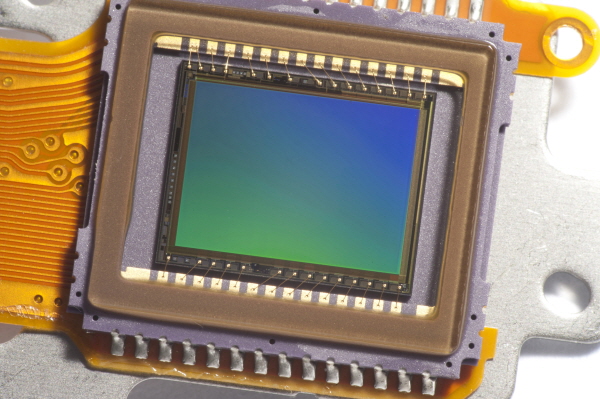
SONY Image Sensor, Equipped in iPhone 15… Possible to be Equipped in Tesla Cybertruck
Samsung ISOCELL HP3, 2023 CES Innovation Award Winner… Equipped with 200 Million 0.56㎛ Pixels The competition between Sony and Samsung is expected to continue amid the advancement of image sensors installed in smartphones, the interior and exterior of automobiles, etc. Sony has confirmed its supply of image sensors for the iPhone 15, and Samsung is raising expectations by announcing that it is mass-producing image sensors for cameras, which are the core of autonomous vehicles, and will prepare many more in the future.
■ Image sensor outlook
Yole Intelligence forecasts that the image sensor industry growth will be in line with the general semiconductor growth rate over the next few years, reaching $31.4 billion by 2027, at a CAGR of 6.7%.
The image sensor market in 2021 was worth $21.3 billion, growing only 2.8% compared to 2020. It saved face thanks to its highest-ever production in the fourth quarter of 2021.
Noh Geun-chang, director of Hyundai Motor Securities, said at the '2022 Sensor Market and Technology Trends' seminar held by the Korea Semiconductor Research Association on the 28th that the 2022 CIS market is expected to reach $19 billion, a 2% decrease from the previous year due to a decrease in smartphone consumption.

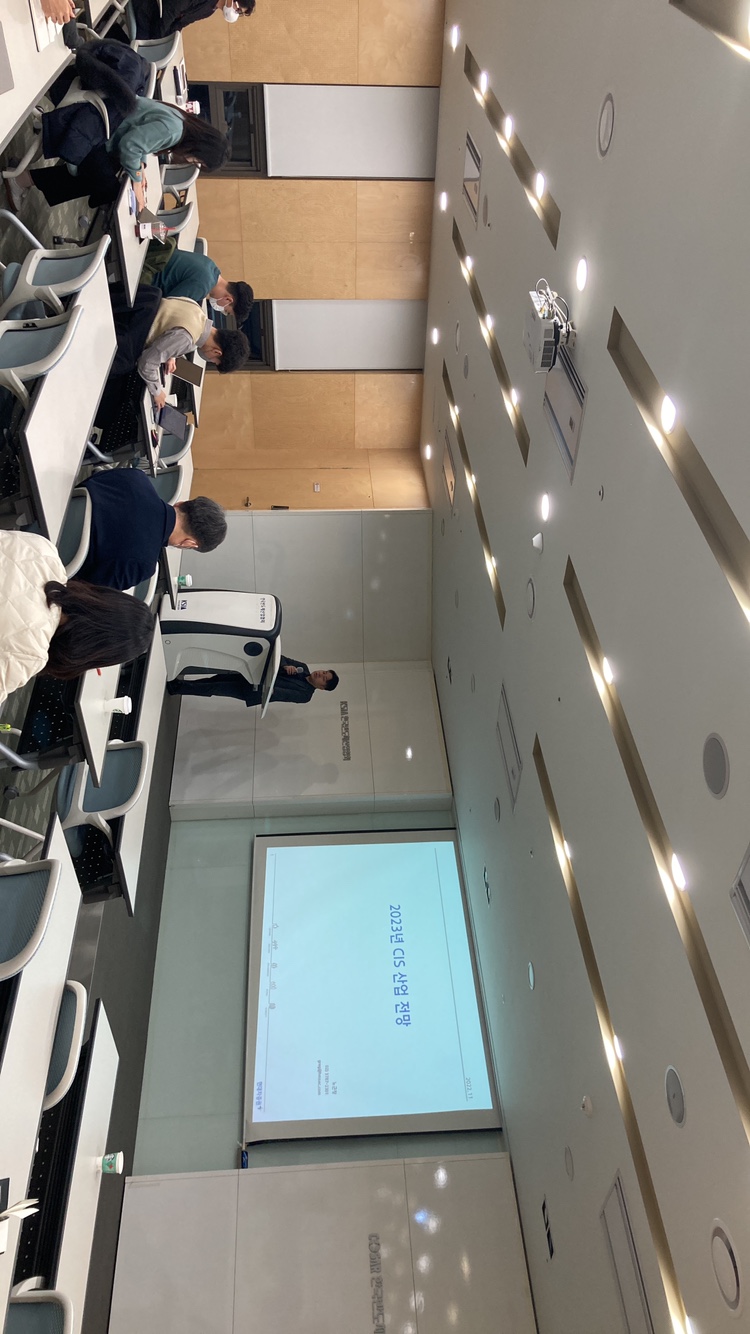
▲ Noh Geun-chang, director of Hyundai Motor Securities, is giving a presentation at the '2022 Sensor Market and Technology Trends' seminar.
Global smartphone consumption has clearly decreased to approximately 1.4 billion units in 2021 and 1.28 billion units in 2022.
However, the market itself is expected to grow as the importance of image sensors increases in various fields such as automotive and IoT.
Director Noh predicted that the overall image sensor market will grow 5% in 2023 compared to 2022, with Sony's market share expected to rise while Samsung's will inevitably decline.
■ SONY
Following its expansion of its capacity, SONY will supply cutting-edge image sensors to be applied to the iPhone 15 model on the 29th.
According to Strategy Analytics, Sony will have a 44% share of the $6.4 billion smartphone image sensor market in the first half of 2022.
SONY expects to expand its global market share to 60% by 2025 through capacity expansion.
Director Noh said Sony will focus on expanding the Nagasaki plant capacity and increasing sales of battlefield sensing.It was reported that the company will take an aggressive approach, including investing in TSMC's Kumamoto fab.
The US-China conflict led to a crisis in which transactions with Huawei and others were cut off, but this contract with Apple seems to provide a breath of relief.
According to Japan's Nihon Keizai Shimbun, Sony's image sensor to be installed in the iPhone 15 can take in more light than before by doubling the saturation signal that can be accumulated per pixel, reducing under- and over-exposure.
In the auto market, Sony is also raising expectations with talk of a deal with Tesla.
In June 2022, there were rumors that Samsung Electronics had won a contract for camera modules for Tesla's Cybertruck, but they remained just rumors, and there was news that LG Innotek had a supply contract with Tesla, but there has been no word since the news that it was in negotiations.
Sony is emerging as a strong candidate in the contract war with Tesla, which is also being fought by Samsung Electronics and LG Innotek.
Noh Geun-chang, director of Hyundai Motor Securities, said that Sony is expected to supply image sensors for Tesla's Cybertruck model.
■ Samsung
Samsung ranked second in the world with a 30% share of the smartphone image sensor market in the first half of 2022.
Samsung is chasing Sony with its 'ISOCELL HP3'.
The ISOCELL HP3 is poised to take flight ahead of CES 2023, where it will be an Innovation Award winner.
Professor Park Sang-sik of Sejong University explained at the '2022 Sensor Market and Technology Trend Seminar' that "ISOCELL is a compound word of Isolate and Cell," and that "it reduces interference between pixels by installing an insulating separator between the photodiodes of the existing BSI sensor." “We have improved the light absorption rate,” he said.
ISOCELL has a 30% larger light-receiving area than existing back-illuminated sensors, and interference is reduced by more than 30%. The latest ISOCELL HP3 is equipped with 200 million 0.56㎛ pixels, the industry's smallest size.
At the '2022 Sensor Market and Technology Trend Seminar,' Director Noh Geun-chang expressed both anticipation and concern, saying, "It appears that the Galaxy model that Samsung Electronics will release next year will be able to shoot videos in 8K," and "It is unknown what devices consumers will use to watch 8K videos when even broadcasting stations are not broadcasting in 8K."
Like SONY, Samsung is also investing in image sensors for automobiles.
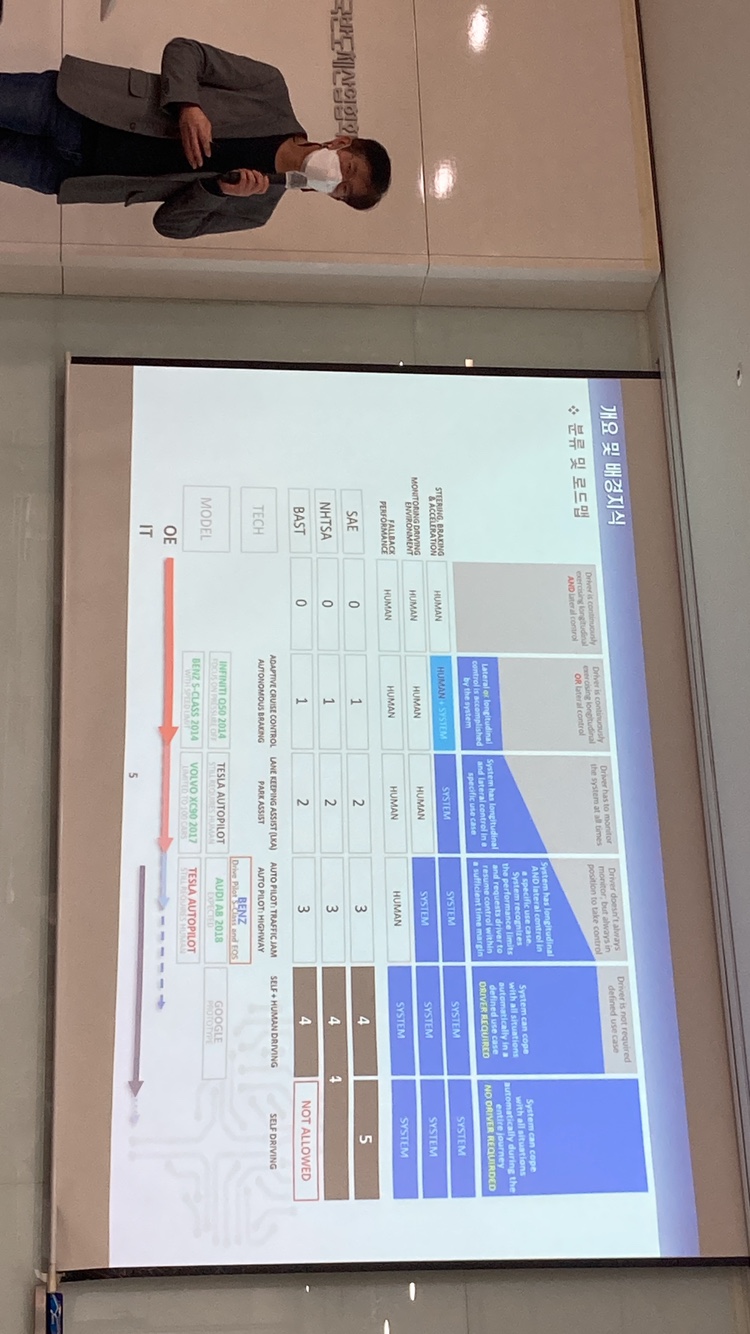
▲ Min Kyung-won, a senior researcher at the Korea Electronics Technology Institute
, is giving a presentation at the '2022 Sensor Market and Technology Trends' seminar.
Min Kyung-won, a senior researcher at the Korea Electronics Technology Institute, said in a presentation at the '2022 Sensor Market and Technology Trends Seminar' that "as autonomous driving emerges as a global trend, the number of image sensors installed in automobiles is increasing," and that "Samsung is also focusing its efforts on developing high-performance image sensors."
In fact, Park Yong-in, President of Samsung Electronics System LSI Business Division, said at ‘Samsung Tech Day 202In 2', he said, "The core of autonomous vehicles is the camera," and "Samsung Electronics is mass-producing image sensors for cameras with a resolution that other companies cannot imitate, and we will prepare many more in the future."