삼성전자, 2022년 매출 300조 불구 영업익 16% ↓
기사입력 2023.01.31 10:13
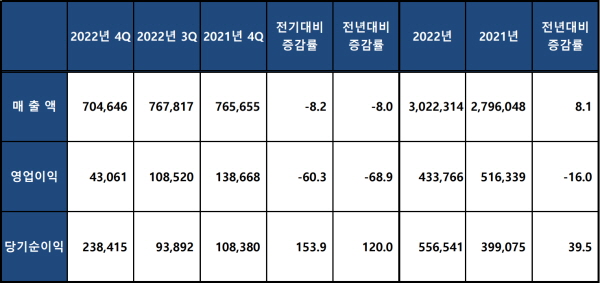
▲삼성전자 2022년 4분기 및 연간 경영실적(단위 : 억원, 연결재무제표 기준)
메모리 재고 조정 가격하락 반도체 부진
2023년 1Q 글로벌 시장 부진 약세 전망
2023년 1Q 글로벌 시장 부진 약세 전망
삼성전자가 2022년 매출 300조원의 시대를 열었음에도 불구하고 글로벌 시장 불황 속 메모리 재고 조정과 가격하락 등으로 영업이익이 지난해 대비 16% 감소하는 부진을 보였다.
삼성전자는 31일 2022년 4분기 경영실적을 발표했다. 이에 따르면 연결기준으로 2022년 4분기 매출은 70조4,646억원을 기록해 전년동기대비 7.97% 감소했고, 영업이익은 4조3,061억원을 기록해 전년대비 68.95% 감소했다. 당기순이익은 23조8,415억원을 기록해 전년대비 119.98% 증가했다.
2022년 연간 경영실적은 연결기준으로 매출은 302조2,314억원을 기록해 전년대비 8.09% 증가했고, 영업이익은 43조3,766억원으로 전년대비 15.99% 감소했다. 당기순이익은 55조6,541억원으로 전년대비 39.46% 증가했다.
메모리는 재고자산 평가 손실의 영향 가운데 고객사 재고 조정이 지속되면서 가격이 큰 폭으로 하락해 실적이 대폭 감소했다.
반면 파운드리는 주요 고객사용 판매 확대로 최대 분기 및 연간 매출을 달성했고, 첨단 공정 중심으로 생산 능력을 확대하고 고객처를 다변화해 전년 대비 이익이 증가했다.
디스플레이는 중소형에서 스마트폰 수요 감소로 전분기 대비 실적이 감소했으나, 플래그십 제품 중심 판매로 견고한 실적을 달성했다. 대형은 연말 성수기 TV용 QD-OLED 판매가 확대되고 LCD 재고 소진으로 적자폭이 완화됐다.
스마트폰은 판매 둔화와 중저가 시장 수요 약세로 인해 매출과 이익이 모두 하락했다.
네트워크는 국내 5G망 증설과 북미 등 해외 사업 확대로 매출이 증가했다.
VD는 연말 성수기 수요 증가에 적극 대응하고 Neo QLED와 초대형 등 프리미엄 제품 중심 판매로 매출과 이익이 모두 증가했다.
생활가전은 시장 악화와 경쟁 심화에 따른 비용 증가로 수익성이 하락했다.
하만은 전장사업 매출 증가와 견조한 소비자 오디오 판매로 2분기 연속 최대 실적을 달성했다.
시설 투자는 연간으로는 53조1,000억원이 집행됐고 DS 47조9,000억원, SDC 2조5,000억원을 기록했다.
메모리의 경우 평택 3, 4기 인프라와 미래 경쟁력 강화를 위한 EUV 등 첨단 기술 적용 확대, 차세대 연구 개발 인프라 확보를 위한 투자를 중심으로 이뤄졌다.
파운드리는 평택 첨단 공정 생산 능력 확대와 미래 수요 대응을 위한 3나노 초기 생산 능력과 미국 테일러 공장 인프라 구축에 투자를 집중했다.
SDC는 중소형 플렉시블 생산 능력 확대와 인프라 투자에 집중했다
1분기는 글로벌 IT 수요 부진과 반도체 시황 약세가 지속될 것으로 예상되지만 단기적 시황 약세가 이어지다가 하반기에는 수요가 회복되기 시작할 것으로 전망했다.
삼성전자는 미래 대응을 위한 인프라 투자 및 서버·모바일용 고용량 제품을 중심으로 수요 성장세에 적기 대응할 계획이다.

관련뉴스
-

삼성전자, 1Q 매출 77조...3분기 연속 최대 매출
지정학적 불확실성과 공급망 재편 등 반도체 시장에 불어 닥친 경영 변수 속에서도 삼성전자가 호실적을 기록하며 견고한 'K-반도체‘ 위상을 보여줬다.
2022-04-29 오전 9:50:52by 권신혁 기자
-
.jpg)
삼성전자, 2Q 매출 77조2,036억…2분기 역대 최대
삼성전자의 2022년 2분기 경영실적이 반도체 부문에서 서버 수요 적극 대응 및 시스템 반도체 공급 확대에 힘입어 2분기 역대 최대 경영실적을 거뒀다.
2022-07-28 오전 11:21:54by 배종인 기자
-

삼성전자, 3Q 영업익 10조8,520억…전년比 31% ↓
삼성전자의 2022년 3분기 경영실적이 글로벌 소비 부진에 따름 메모리 실적 감소 및 가전 실적 감소 등의 영향으로 영업이익이 30% 이상 급감했다.
2022-10-27 오전 10:51:58by 배종인 기자


많이 본 뉴스

[열린보도원칙] 당 매체는 독자와 취재원 등 뉴스이용자의 권리 보장을 위해 반론이나 정정보도, 추후보도를 요청할 수 있는 창구를 열어두고 있음을 알려드립니다.
고충처리인 장은성 070-4699-5321 , news@e4ds.com