커지는 韓 퍼블릭 클라우드 시장, '21년에 더 커진다
기사입력 2020.08.09 10:11
2019년 국내 퍼블릭 클라우드 시장 규모
25.2% 성장한 1조3천억여 원으로 집계
보안, 클라우드 사업자 주요 서비스돼
2019년 국내 퍼블릭 클라우드 시장 규모가 2018년 대비 25% 성장한 것으로 나타났다. 이러한 추세는 기업들의 코로나19 대응과 포스트 코로나 대비로 더욱 가속할 전망이다.
한국IDC는 5일, ‘국내 퍼블릭 클라우드 경쟁 시장 분석 보고서’를 발간하며 2019년 국내 퍼블릭 클라우드 시장 규모가 전년 대비 25.2% 성장한 1조3,010억 원에 이른다고 밝혔다.
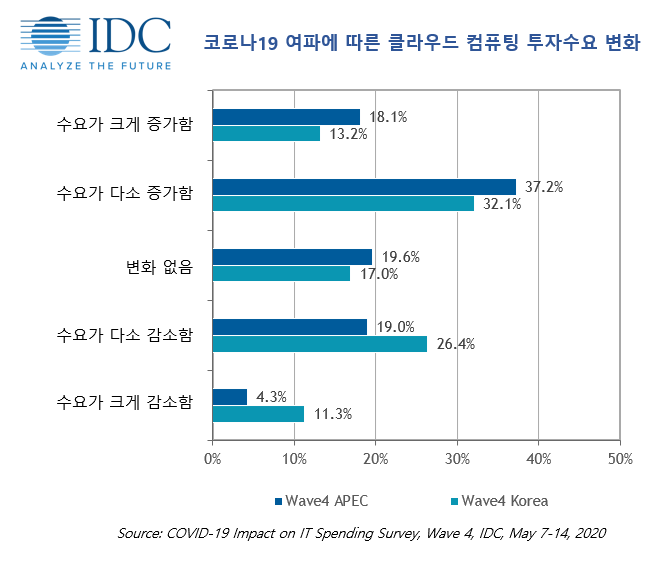
▲ 코로나19 여파에 따른 클라우드 컴퓨팅
투자수요 [그래프=한국IDC]
투자수요 [그래프=한국IDC]
주요 클라우드 사업자들이 퍼블릭 클라우드 서비스에 익숙해진 기존의 고객들에게 서비스를 확대하며 해당 시장이 크게 성장한 것으로 보인다. 퍼블릭 클라우드 시장은 클라우드 인프라(IaaS), 클라우드 플랫폼(PaaS), 클라우드 소프트웨어(SaaS) 시장으로 세분된다.
보고서에 따르면 2019년에는 기업들의 클라우드 네이티브 아키텍처 도입이 확대되면서 요구사항이 다양해지고, 사업자들이 자사의 플랫폼 내에서 통합적인 서비스 지원 영역을 확대하는 움직임을 보였다.
과거에는 애플리케이션 개발의 가장 마지막 단계 고려 사항이었던 보안이 변화된 개발 주기에 맞춰 시작 단계에서부터 고려해야 할 필수 요건이 되면서, 사업자들의 주요 서비스 항목으로 인식되고 있다.
한국IDC는 최근 코로나19로 확산한 비대면 문화가 클라우드 시장 확대 추진력으로 작용하며 기업들의 클라우드 도입 범위가 한층 넓어질 것으로 예상했다.
실제로 비대면 기술의 핵심인 클라우드 네이티브 아키텍처와 클라우드 기반의 원격 근무 및 화상 회의 등의 업무 솔루션, 그리고 자동화 솔루션을 공급하는 SaaS 업체들의 매출이 상승한 것으로 나타났다.
IDC가 진행한 ‘코로나19 여파에 따른 클라우드 컴퓨팅 투자수요 변화’에 대한 설문 조사 결과에 따르면, 국내 응답자의 37.7%가 클라우드 컴퓨팅 클라우드 투자수요가 감소했다고 답했지만, 45.3%는 증가했다고 답했다.
이는 코로나19로 인해 신기술이 요구되고, 조직 업무 환경이 변화하며 기업들이 포스트 코로나 시대에 대응하기 위해 클라우드 활용을 중요하게 고려하고 있다는 뜻으로 풀이된다.
한국IDC에서 클라우드 시장 리서치를 담당하고 있는 박서영 책임연구원은 “국내 퍼블릭 클라우드 사업자들이 기업들의 클라우드 네이티브 아키텍처 활용을 돕는 엔드투엔드 서비스를 제공하며 기존 고객 기반 확대에 집중한 것이 2019년 국내 클라우드 시장 확장으로 이어졌다”라고 분석했다.
그러면서 “이러한 현상은 다가오는 포스트 코로나 시대에 기업들의 클라우드 활용 범위가 넓어지면서 시장 참여자들에게 시장확대 기회로 작용할 것”이라고 덧붙였다.
한국IDC는 이번 클라우드 시장 보고서를 통해 장기적인 클라우드 도입 여정을 고려하여 사업자들이 고객 경험 확보에 집중하고 있다고 밝혔다.
기업이 비즈니스에 클라우드를 성공적으로 접목하기 위해서는 임원진과 실무진의 적극적인 협력이 뒷받침되어야 하며, 사업자들은 기업 조직원들과의 커뮤니케이션을 통해 교량 역할을 할 수 있어야 한다고 제언했다.
이수민 기자
관련뉴스
-

과기정통부, 국내 클라우드 산업 활성화 전략 발표 "공공부문에 국산 클라우드 우선 도입한다"
AI 시대의 데이터 활용과 코로나19 이후의 경제 활성화에 있어 클라우드가 핵심 기반으로 주목받고 있다. 과기정통부는 데이터 경제와 AI 시대를 대비한 클라우드 산업 발전전략을 심의하고 확정했다고 밝혔다. 정부는 국가 클라우드 대전환과 클라우드 산업 생태계 강화를 핵심 목표로, 국내 클라우드 산업의 활성화를 위한 발전전략을 마련하여 추진하기로 했다.
2020-06-25 오전 9:30:40by 이수민 기자
-
시스코, 클라우드 기반 사이버보안 신규 플랫폼 공개
시스코 시스템즈가 클라우드 기반 사이버보안 플랫폼인 시큐어엑스를 출시했다. 시큐어엑스는 시스코의 보안 전 제품을 지원하여 기업들의 보안 가시성 확보를 돕고, 워크플로우 자동화를 통한 신속한 보안 위협 대응 등 향상된 사용자 경험을 제공한다.
2020-07-10 오후 6:55:40by 강정규 기자
-

韓 클라우드 OS 연합체 결성 "공공 DaaS 시장 공략"
KT가 티맥스에이앤씨, 한글과컴퓨터, 틸론, 인베슘 4개 사와 공공기관 대상 DaaS 생태계 조성을 위한 사업 모델 공동개발 및 활성화를 위한 업무 협약을 체결했다. 이번 MOU를 바탕으로 5개사는 공공분야 대상 서비스형 데스크톱(DaaS) 솔루션 개발 및 사업화를 위해 협력할 예정이다.
2020-07-31 오전 11:23:17by 강정규 기자

.jpg)

많이 본 뉴스

[열린보도원칙] 당 매체는 독자와 취재원 등 뉴스이용자의 권리 보장을 위해 반론이나 정정보도, 추후보도를 요청할 수 있는 창구를 열어두고 있음을 알려드립니다.
고충처리인 장은성 070-4699-5321 , news@e4ds.com