KIST, MRI 기반으로 CT 영상 생성하는 AI 기술 개발
기사입력 2021.09.06 08:32
KIST, 방사선 노출 없이 CT 영상 획득 가능한
AI 기술 개발. MRI만으로 두개골 열지 않고
경두개 집속 초음파 시술 가능해질 전망
경두개 집속 초음파는 두개골을 열지 않고 초음파 에너지를 뇌의 특정 영역에 전달해 퇴행성 운동장애, 난치성 통증 및 정신질환 등을 치료할 수 있는 기술이다. 이 치료술은 뇌 병변의 위치를 파악하는 영상기반의 기술과 함께 사용되어야 하는데, 두개골을 통과한 초음파 초점이 정확히 뇌 병변에 맺히게 하기 위해서는 MRI만으로 파악되기 힘든 환자의 두개골 정보를 CT를 통해 얻어야만 했다.
방사선 노출이 불가피한 CT는 검사를 자주 해야 하는 환자나 소아, 임산부의 경우 안전 우려가 있다. 한국과학기술연구원(KIST) 바이오닉스연구센터 김형민 박사팀은 2일, MRI 영상을 기반으로 CT 영상을 생성하는 AI 기술을 개발해 모의 치료 실험을 진행한 결과, MRI만으로도 경두개 집속 초음파 시술이 가능하다는 것을 확인했다고 밝혔다. 연구 결과는 의료 분야 국제 학술 저널인 ‘IEEE Journal of Biomedical and Health informatics(JCR(%): 1.8)’ 최신 호에 게재됐다.
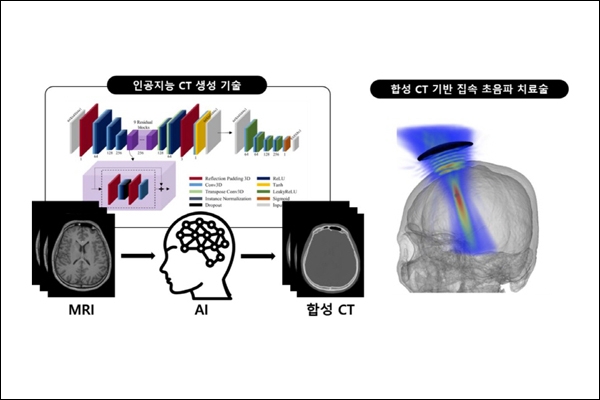
▲ AI 합성 CT 기반 집속 초음파 치료술 [그림=KIST]
그간 MRI 영상에서 두개골 정보를 얻으려는 노력이 있었지만, 의료현장에 널리 보급되지 않은 특수한 MRI 코일 장비나 촬영 기술이 필요했다. 또 다른 대안으로 AI 기반 CT 영상 획득 기술도 세계적으로 관심이 높았지만, 임상적으로 효과가 있다는 것을 증명하지 못했다. 연구진은 초음파를 활용한 모의 치료를 통해 AI로 얻은 CT 영상이 임상에 활용할 수 있다는 것을 증명했다.
KIST 연구팀은 의료현장에서 가장 많이 활용되는 영상 중 하나인 T1 강조 MRI 영상에서 비선형적으로 CT를 변환하는 과정을 학습하는 3차원 조건부 적대적 생성 신경망 모델(3D conditional adversarial generative network)을 개발했다.
CT 영상의 HU(Hounsfield Unit) 픽셀 변화량 오차를 최소화하는 손실함수를 고안했고, Z-점수 정규화, 부분 선형 히스토그램 매칭 정규화 같은 MRI 영상 신호 정규화 방법에 따른 합성 CT 품질 변화를 비교하며 신경망 성능을 최적화했다.
안정적이고 효율적인 초음파 치료를 위해서는 환자의 두개골 밀도 비와 두개골 두께를 사전에 파악해야 하는데, 이러한 두개골 인자들을 합성 CT를 통해 파악했을 때 두 인자 모두 실제 CT와 0.90 이상의 상관관계를 보이며 통계적 차이도 없는 것을 확인했다. 또한, 합성 CT를 이용해 모의 초음파 치료를 시행했을 때, 초음파 초점 간 거리 오차가 1mm 미만, 초음파 음압 오차는 약 3.1%, 초점 부피 유사성은 약 83%인 것을 확인했다. MRI 영상만으로 경두개 집속 초음파 치료 시스템을 시술할 수 있다는 가능성을 보여준 것이다.
KIST 김형민 박사는 “환자들은 방사선 노출에 대한 걱정 없이 집속 초음파 치료를 받을 수 있으며, 의료진의 추가적인 영상 촬영 및 정렬 과정이 간소화돼, 시간적·경제적 비용이 절감될 것으로 예상된다”라며, “초음파 매개변수 및 변환기에 따른 오류율과 다양한 인체 부위에서 AI CT 적용 가능성을 파악하는 후속 연구를 통해 다양한 치료기술에 적용할 수 있도록 발전시켜갈 계획이다”라고 밝혔다.
이수민 기자
관련뉴스
-
KIST, 차세대 반도체 소재 상태 규명하는 ML 모델 제시
차세대 반도체를 개발하는 스핀트로닉스 분야는 최적화 문제 해결이 중요하다. 소재인 나노 자석의 상태 규명과 특성 파악을 정확히 못하면, 스핀 소자의 정확한 동작 특성과 범위를 설계할 수 없다. KIST 스핀융합연구단 권희영, 최준우 박사, 경희대학교 원창연 교수 연구팀은 나노 자석의 가장 안정적인 상태인 기저 상태에서 나타나는 스핀 구조를 추정하는 생성적 머신러닝 모델, 에너지 최소화 변이 오토인코더(E-VAE)를 개발했다.
2021-08-27 오전 8:30:51by 이수민 기자
-

'서버 스토리지' AI 하드웨어 시장, 성장률 가장 높을 것
한국 IDC가 전 세계 AI 시장 전망 보고서를 인용하며 올해 전 세계 AI 매출은 지난해 대비 15.2% 증가한 3,418억 달러에 이를 것이라 언급했다. 내년에는 18.8%의 성장률을 기록하며, 2024년에는 5,000억 달러를 돌파할 전망이다. IDC는 AI 시장을 소프트웨어, 하드웨어, 서비스 시장으로 구분한다. AI 소프트웨어 시장이 전체 AI 시장의 88%에 달하지만, 성장률 측면에서는 AI 하드웨어 시장이 향후 몇 년간 가장 빠른 성장을 보일 것으로 예상된다. 2023년부터는 AI 서비스 시장이 가장 빠르게 성장할 전망이다.
2021-08-27 오전 9:34:13by 이수민 기자
-
코그넥스, PC 전용 AI 기반 결함 검사 소프트웨어 발표
코그넥스가 가장 난도 높은 비전 애플리케이션의 결함 검사를 위한 PC 기반 비전 소프트웨어, 비전프로 10을 출시했다고 밝혔다. 신제품은 스마트라인 기능을 탑재했고, GUI 환경이 개선됐다. 또한 ID 툴 업데이트, 메모리 및 리소스 관리 개선, 코그넥스 딥러닝과의 연동, C# 및 C++ API가 추가됐다.
2021-08-30 오전 11:19:10by 이수민 기자



많이 본 뉴스

[열린보도원칙] 당 매체는 독자와 취재원 등 뉴스이용자의 권리 보장을 위해 반론이나 정정보도, 추후보도를 요청할 수 있는 창구를 열어두고 있음을 알려드립니다.
고충처리인 장은성 070-4699-5321 , news@e4ds.com