QLED·OLED TV 출하량, 올해 사상최대
기사입력 2021.07.02 09:51
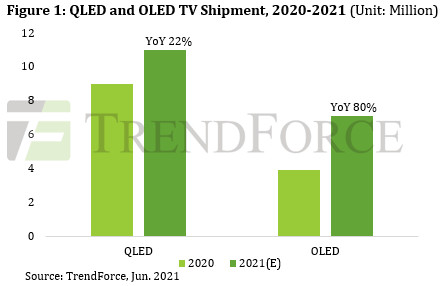
▲QLED, OLED TV 출하전망(자료 : TrendForce)
QLED 1,102만대·OLED 710만대 기록전망
총 TV 출하량 2억2천만대 전년比 1.4% ↑
총 TV 출하량 2억2천만대 전년比 1.4% ↑
QLED·OLED TV 출하량이 TV 세트 업체들의 수익성이 높은 대형 TV 출하 선호로 사상최대의 출하량을 기록할 것으로 전망됐다.
TrendForce는 최근 2021년 QLED TV 연간 출하량이 전년대비 22.4% 증가한 1,102만대를 기록할 것으로 전망했다. 또한 2021년 OLED TV 출하량은 전년대비 80% 증가한 710만대로 예상되며, 두 제품 범주 모두 올해 출하 기준 기록을 경신 할 것으로 예상됐다.
이와 같은 전망은 TV 패널의 지속적인 가격 인상과 TV 세트 제조에 필요한 반도체 부품의 부족현상 및 가격 인상으로 인해 TV 셋트 업체들이 중소형 TV 출하량을 줄이고, 수익성이 더 높은 대형 TV 출하를 선호했기 때문으로 분석됐다.
유럽과 미국의 예방 접종 증가로 재택 경제로 인한 TV 수요는 둔화 될 가능성이 높고, TV 패널 비용은 여전히 높은 수준을 유지하고 있으며 하락 기미가 보이지 않고 있다.
이에 TV 브랜드들은 수익성이 상대적으로 낮은 중소형 TV 판매로 인한 재정적 손실을 최소화하고 수익을 극대화하기 위해 제품 사이즈를 확대하고 사양을 개선하고 있다.
수익성이 낮은 모델의 축소를 감안할 때 TV 브랜드의 연간 출하량은 그에 상응하는 감소를 겪을 가능성이 있다.
따라서 TrendForce는 올해 총 TV 출하량이 2억2,000만대로 전년대비 1.4% 증가 할 것으로 예상하고 있다.
삼성의 Neo QLED 시리즈는 미니 LED 백라이트 TV의 연간 출하량을 2021년 300만대까지 끌어 올릴 것으로 전망되고 있다.
올해 중소형 TV의 수익성이 급격히 하락했는데 시장 선두주자인 삼성전자는 기존 모델과 신모델 교체 기간 동안 소비자 유치를 위해 QLED 제품의 소매가격을 인하했을 뿐만 아니라, 미니 LED 백라이트와 다음과 같은 해상도를 갖춘 새로운 네오 QLED 라인업을 출시했다.
UHD에서 8K로, 삼성의 QLED TV 출하량은 올해 910만대로 전년대비 17% 증가 할 것으로 예상된다. 이는 사상 최대의 연간 출하량이다.
특히 삼성의 라인업은 주로 65인치와 55인치 디스플레이를 갖춘 약 150만대의 미니 LED 백라이트 TV를 포함하고 있으며, 이 크기는 회사 전체 미니 LED 백라이트 TV 출하량의 각각 33%와 30%를 차지하는 반면 울트라 대형 75인치 모델은 17%를 차지하고 있다.
반면 TCL은 2020년에 비교적 저렴한 75인치 미니 LED 백라이트 TV를 출시했으며 올해는 65인치 모델이 출시됐다. TCL의 2021년 미니 LED 백라이트 TV 연간 출하량은 80만대에 이를 것으로 보인다.
앞서 언급 한 두 브랜드 외에도 샤오미와 LG도 미니 LED 백라이트 TV 시장에 진출이 예상된다. 따라서 TrendForce는 2021년에 연간 총 300만대의 미니 LED 백라이트 TV 출하량을 예측했다.
브랜드가 OLED TV용 생산라인을 확장하는 동안 LG와 Sony는 OLED 시장 점유율의 80%를 차지할 것으로 예상된다.
현재 OLED TV는 높은 채도와 명암비를 통한 우수한 화질로 인해 고급 TV 시장에서 소비자들의 관심을 끌고 있다.
LG 디스플레이가 올해 광저우에서 8.5세대 생산 라인을 통해 OLED 용량을 추가로 설치함에 따라 OLED TV 공급이 증가하고 OLED TV 사이즈가 다양화 될 것으로 보인다.
또한 OLED 패널 원가의 전략적 감소로 OLED 패널 원가와 동급 원가의 격차가 크게 좁혀지면서 브랜드들이 OLED TV 제품 라인업을 확대 할 의향이있어 올해 다시 한 번 OLED TV 출하량이 기록을 경신 할 것으로 예상된다.
LCD 패널은 OLED 패널에 비용이점을 제공해 TV 브랜드가 수익성을 높일 수 있도록 변화하고 있다.
TV 브랜드와 관련해 LG 전자는 올해 OLED TV 출하량에서 50% 이상의 시장 점유율로 업계 1위를 유지하고 있으며, 소니는 20%의 시장 점유율로 2위를 차지했다.
파나소닉, 샤프 등 다른 일본 브랜드와 스카이워스, 하이센스, 샤오미 등 중국 브랜드도 향후 출하량 증가가 예상된다.

관련뉴스
-
전 세계 파운드리, 10년 만에 매출 증가치 최대... "TSMC에 삼성만 도전"
원격 교육 및 근무 활성화, 본격적인 5G 상용화에 따른 고성능 휴대폰 및 인프라 수요 증가 등에 파운드리 시장이 호황을 누리고 있다. 대만의 시장조사업체 트렌드포스는 올해 전 세계 파운드리 매출이 전년 대비 23.8% 증가할 것이라 예상했다. 이는 10년 만에 가장 높은 증가치다.
2020-11-19 오후 2:50:18by 이수민 기자
-

경쟁력 여전한 LCD, 차세대 패널 대중화 시기는?
디스플레이 패널 시장은 OLED, 혹은 마이크로 LED 중심으로 돌아갈 전망이다. 디스플레이 산업은 학습효과가 크고 규모의 경제가 작용한다는 특성이 있다. 많이 생산할수록 수율이 늘고 더 싼 가격에 생산할 수 있게 된다는 뜻이다. 중국 업체들의 발전이 눈부신 가운데 SDC와 LGD의 OLED, 미니 LED, 마이크로 LED 등으로의 빠른 전환, 혹은 초격차 전략이 필요한 때다.
2021-06-08 오후 2:14:06by 이수민 기자
-
전세계 IC 시장, 2021년 5천억불 전망
IC(집적회로)에 대한 견고하고 광범위한 수요로 인해 올해 전세계 5,000억달러 시장을 넘을 것으로 예상되며, 성장세는 2023년까지 지속될 것으로 전망됐다.
2021-07-02 오전 8:57:07by 배종인 기자

.jpg)
많이 본 뉴스

[열린보도원칙] 당 매체는 독자와 취재원 등 뉴스이용자의 권리 보장을 위해 반론이나 정정보도, 추후보도를 요청할 수 있는 창구를 열어두고 있음을 알려드립니다.
고충처리인 장은성 070-4699-5321 , news@e4ds.com