TI, “고전압 배터리 팩 채택 안정적 절연 솔루션 요구 ↑”
기사입력 2022.05.13 11:27
TI 내부 유도 변압기, 고수준 전력 전송 달성
TI 솔루션, 400V·800V 시스템 능동 방전
시장 전반에서 고전압 배터리 팩을 채택하려는 추세가 이어지며 차량 전체에 절연 스위치를 사용하고자 하는 요구가 증가하고 있는 가운데 절연 기술에 대해 살펴보는 자리가 마련됐다.
알렉스 트리아노 텍사스인스트루먼트(이하 TI) 솔리드 스테이트 릴레이팀 엔지니어는 12일 e4ds 웨비나에서 ‘전기차와 메타버스 시대를 위한 TI의 솔루션’을 주제로 발표하며 “절연 스위치는 고전압 커패시터의 △사전 충전 △능동 방전 △절연 저항 모니터링 등을 포함한 문제를 해결하기 위해 EV 전체에 사용된다”고 전했다.
차량의 시동을 켤 경우 배터리 관리 시스템 내에서는 고전압 커패시터를 미리 충전해야 한다. 마찬가지로 시동을 끄면 트랙션 인버터 또는 온보드 충전기와 같은 시스템은 HV 커패시터를 안전하게 방전시켜야 한다.
차량 운행 중 고전압 레일의 빈번한 모니터링은 배터리 관리 시스템 내에서 이루어지며, 특히 금속 차대 접지에서 고전압이 분리되도록 절연 저항을 모니터링한다. 이러한 경우 모두 안정적인 절연 솔루션을 요구한다.
이어 트리아노 엔지니어는 TI의 절연 기술을 소개했다.
Electromechanical relay(EMR)는 유전체로 공기 또는 특정 가스 혼합물을 사용한다. ERM의 강도는 마이크론 당 1 ~ 20V rms 범위. 이는 결과적으로 이러한 솔루션이 고전압에 대한 충분한 절연을 달성하기 위해 물리적으로 커야 한다는 것을 의미한다.
이러한 릴레이의 이점은 기본적으로 금속 대 금속 연결을 생성하기 때문에 낮은 저항을 갖는다는 것이다. 단점은 속도와 기계적 기반으로 인한 마모다. 켜거나 끄는 데 1,000분의 1초가 소요될 수 있으며, 진동이나 자기 내성과 같은 설계 한계 내에서 유지해야 한다.
대부분의 릴레이는 최대 85C의 작동 온도를 지정하며 재료 및 조립 비용으로 인해 채택하기 때문에 이러한 솔루션은 비싼 경우가 많다.
포토 및 광절연은 더 높은 유전체를 사용한다. 강력한 EMI 성능을 제공하지만 LED가 광분해 또는 부분 방전 실패로 시달려 시간이 지남에 따라 마모될 수 있다는 단점이 있다. 이러한 소형 장치에서는 빛 에너지가 제한되어 있기 때문에 전달되는 전력의 양이 제한적이다. 대부분의 포토 광계전기는 최대 85C 작동 정격을 갖추고 있다.
TI에서 사용하는 절연 기술 중 하나는 내부 유도 변압기다. 높은 유전 강도를 제공하는 라미네이트 또는 폴리이미드를 사용한다. 이 기술로 고속 및 높은 수준의 전력 전송도 달성할 수 있다. 단점으로는 EMI 방출을 제한할 수 있도록 IC를 설계해야 한다는 것이다.
EMI 성능이 자동차 표준을 충족하는지 확인하기 위해서는 패러데이 실드 또는 확산 스펙트럼 변조와 같은 기술이 사용된다. 이런 변압기는 125C와 같은 고온에서도 작동할 수 있으며 비용도 효율적이다.
지난 10일 출시된 차량용 절연 드라이버 및 스위치를 포함한 솔리드 스테이트 릴레이(SSR)에 사용된 절연 기술은 커패시터 절연이다. 이 기술은 이산화규소를 사용하며, 이는 가장 높은 절연 강도를 제공한다. 고속 및 저전력 소비를 달성할 수 있다. EMI 방출은 IC 개발 내에서 제한되어야 하며 전반적으로 용량성 전력 전송을 제한한다.
TI는 이러한 기술을 절연 스위치 및 드라이버에 사용해 완전한 절연 SSR 솔루션을 구성한다. 이 솔루션의 큰 장점은 부품이 움직이지 않기 때문에 시간이 지나도 마모되지 않고 향상된 신뢰성을 제공한다는 것이다.
트리아노 엔지니어는 솔리드 스테이트 릴레이가 애플리케이션에서 어떻게 작동하는지에 대해서도 설명했다.
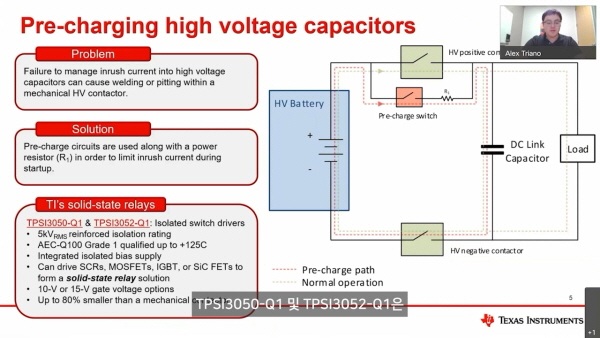
시스템을 켜면 고전압 DC 링크 커패시터에 연결되는 HV 양극 및 음극 접촉기가 있다. 돌입 전류를 관리하지 못할 경우 기계 고전압 접촉기의 피팅 또는 용접과 같은 손상이 발생할 수 있다.
하나의 솔루션은 전원 저항과 함께 사전 충전 회로를 사용하여 시동 중에 전류를 제한하는 것이다. TPSI3050-Q1 및 TPSI3052-Q1은 사전 충전 스위치용 솔리드 스테이트 릴레이 솔루션을 구성하는 절연 스위치 드라이버다. 두 제품은 5kV RMS 강화 절연을 제공하고 최대 125C까지의 자동차 인증을 받았으며 자체 절연 바이어스 전원을 통합했다.
이 제품들은 실리콘 제어 정류기, MOSFET, IGBT 또는 실리콘 카바이드 FET와 같은 다양한 유형의 외부 스위치를 구동할 수 있다. 또 10V, 15V 게이트 구동 옵션을 사용할 수 있어 솔루션 비용 대비 최적화된 효율성을 갖출 수 있다.
다음으로 소개한 애플리케이션은 능동 방전이다. 차량의 전원이 꺼지거나 충돌이 발생한 경우, 고압 커패시터를 몇 초 이내에 안전한 수준으로 방전해야 한다. 솔리드 스테이트 릴레이를 사용하면 고전력 풀다운 저항을 연결하거나 분리할 수 있다. TPSI3050-Q1 및 TPSI3052-Q1은 400V 또는 800V 시스템 내에서 능동 방전 솔루션을 제공한다.
알렉스 트리아노 텍사스인스트루먼트(이하 TI) 솔리드 스테이트 릴레이팀 엔지니어는 12일 e4ds 웨비나에서 ‘전기차와 메타버스 시대를 위한 TI의 솔루션’을 주제로 발표하며 “절연 스위치는 고전압 커패시터의 △사전 충전 △능동 방전 △절연 저항 모니터링 등을 포함한 문제를 해결하기 위해 EV 전체에 사용된다”고 전했다.
차량의 시동을 켤 경우 배터리 관리 시스템 내에서는 고전압 커패시터를 미리 충전해야 한다. 마찬가지로 시동을 끄면 트랙션 인버터 또는 온보드 충전기와 같은 시스템은 HV 커패시터를 안전하게 방전시켜야 한다.
차량 운행 중 고전압 레일의 빈번한 모니터링은 배터리 관리 시스템 내에서 이루어지며, 특히 금속 차대 접지에서 고전압이 분리되도록 절연 저항을 모니터링한다. 이러한 경우 모두 안정적인 절연 솔루션을 요구한다.
이어 트리아노 엔지니어는 TI의 절연 기술을 소개했다.
Electromechanical relay(EMR)는 유전체로 공기 또는 특정 가스 혼합물을 사용한다. ERM의 강도는 마이크론 당 1 ~ 20V rms 범위. 이는 결과적으로 이러한 솔루션이 고전압에 대한 충분한 절연을 달성하기 위해 물리적으로 커야 한다는 것을 의미한다.
이러한 릴레이의 이점은 기본적으로 금속 대 금속 연결을 생성하기 때문에 낮은 저항을 갖는다는 것이다. 단점은 속도와 기계적 기반으로 인한 마모다. 켜거나 끄는 데 1,000분의 1초가 소요될 수 있으며, 진동이나 자기 내성과 같은 설계 한계 내에서 유지해야 한다.
대부분의 릴레이는 최대 85C의 작동 온도를 지정하며 재료 및 조립 비용으로 인해 채택하기 때문에 이러한 솔루션은 비싼 경우가 많다.
포토 및 광절연은 더 높은 유전체를 사용한다. 강력한 EMI 성능을 제공하지만 LED가 광분해 또는 부분 방전 실패로 시달려 시간이 지남에 따라 마모될 수 있다는 단점이 있다. 이러한 소형 장치에서는 빛 에너지가 제한되어 있기 때문에 전달되는 전력의 양이 제한적이다. 대부분의 포토 광계전기는 최대 85C 작동 정격을 갖추고 있다.
TI에서 사용하는 절연 기술 중 하나는 내부 유도 변압기다. 높은 유전 강도를 제공하는 라미네이트 또는 폴리이미드를 사용한다. 이 기술로 고속 및 높은 수준의 전력 전송도 달성할 수 있다. 단점으로는 EMI 방출을 제한할 수 있도록 IC를 설계해야 한다는 것이다.
EMI 성능이 자동차 표준을 충족하는지 확인하기 위해서는 패러데이 실드 또는 확산 스펙트럼 변조와 같은 기술이 사용된다. 이런 변압기는 125C와 같은 고온에서도 작동할 수 있으며 비용도 효율적이다.
지난 10일 출시된 차량용 절연 드라이버 및 스위치를 포함한 솔리드 스테이트 릴레이(SSR)에 사용된 절연 기술은 커패시터 절연이다. 이 기술은 이산화규소를 사용하며, 이는 가장 높은 절연 강도를 제공한다. 고속 및 저전력 소비를 달성할 수 있다. EMI 방출은 IC 개발 내에서 제한되어야 하며 전반적으로 용량성 전력 전송을 제한한다.
TI는 이러한 기술을 절연 스위치 및 드라이버에 사용해 완전한 절연 SSR 솔루션을 구성한다. 이 솔루션의 큰 장점은 부품이 움직이지 않기 때문에 시간이 지나도 마모되지 않고 향상된 신뢰성을 제공한다는 것이다.
트리아노 엔지니어는 솔리드 스테이트 릴레이가 애플리케이션에서 어떻게 작동하는지에 대해서도 설명했다.
시스템을 켜면 고전압 DC 링크 커패시터에 연결되는 HV 양극 및 음극 접촉기가 있다. 돌입 전류를 관리하지 못할 경우 기계 고전압 접촉기의 피팅 또는 용접과 같은 손상이 발생할 수 있다.
하나의 솔루션은 전원 저항과 함께 사전 충전 회로를 사용하여 시동 중에 전류를 제한하는 것이다. TPSI3050-Q1 및 TPSI3052-Q1은 사전 충전 스위치용 솔리드 스테이트 릴레이 솔루션을 구성하는 절연 스위치 드라이버다. 두 제품은 5kV RMS 강화 절연을 제공하고 최대 125C까지의 자동차 인증을 받았으며 자체 절연 바이어스 전원을 통합했다.
이 제품들은 실리콘 제어 정류기, MOSFET, IGBT 또는 실리콘 카바이드 FET와 같은 다양한 유형의 외부 스위치를 구동할 수 있다. 또 10V, 15V 게이트 구동 옵션을 사용할 수 있어 솔루션 비용 대비 최적화된 효율성을 갖출 수 있다.
다음으로 소개한 애플리케이션은 능동 방전이다. 차량의 전원이 꺼지거나 충돌이 발생한 경우, 고압 커패시터를 몇 초 이내에 안전한 수준으로 방전해야 한다. 솔리드 스테이트 릴레이를 사용하면 고전력 풀다운 저항을 연결하거나 분리할 수 있다. TPSI3050-Q1 및 TPSI3052-Q1은 400V 또는 800V 시스템 내에서 능동 방전 솔루션을 제공한다.

관련뉴스
-

TI, 솔리드 스테이트 릴레이 절연기술...신뢰성·안정성↑
친환경 기조가 산업계를 휩쓸며 전기차 시장은 5년만에 10배나 몸집을 키웠다. 전기차 개발·보급이 빠른 속도로 진행되는 가운데 고전압 시스템이 보편화하며 시스템 엔지니어들에게 EMI·EMC 및 절연 등이 까다로운 설계 문제로 부각되기 시작했다.
2022-05-11 오전 8:52:37by 권신혁 기자

.jpg)
많이 본 뉴스

[열린보도원칙] 당 매체는 독자와 취재원 등 뉴스이용자의 권리 보장을 위해 반론이나 정정보도, 추후보도를 요청할 수 있는 창구를 열어두고 있음을 알려드립니다.
고충처리인 장은성 070-4699-5321 , news@e4ds.com