Microchip - Apr 26 (e4ds)
Physical AI HBM Smart Factory SDV AIoT Power Semicon 특수 가스 정정·반론보도 모음 e4ds plus

2021 Semiconductor 229 Companies Achieve KRW 352 Trillion in Sales

기사입력2022.06.09 11:09

Analysis of domestic semiconductor device, material, design, and equipment performance
229 semiconductor companies, sales growth of 23% year-on-year

e4ds News surveyed the 2021 business performance of 229 domestic semiconductor companies. The total sales of the 229 semiconductor companies reached 352.3221 trillion won, a 23% increase from 2020, recording a high average annual growth rate of 16%.

Last year's high performance increase was due to increased sales volume and increased material usage due to increased operating rates caused by the explosion in semiconductor demand. In addition, the entire semiconductor industry achieved growth due to increased equipment input caused by large-scale investment. In 2022, the domestic semiconductor industry is expected to grow due to high demand growth and astronomical investment, following last year.

■Semiconductor components, Samsung and SK Hynix represent the domestic market

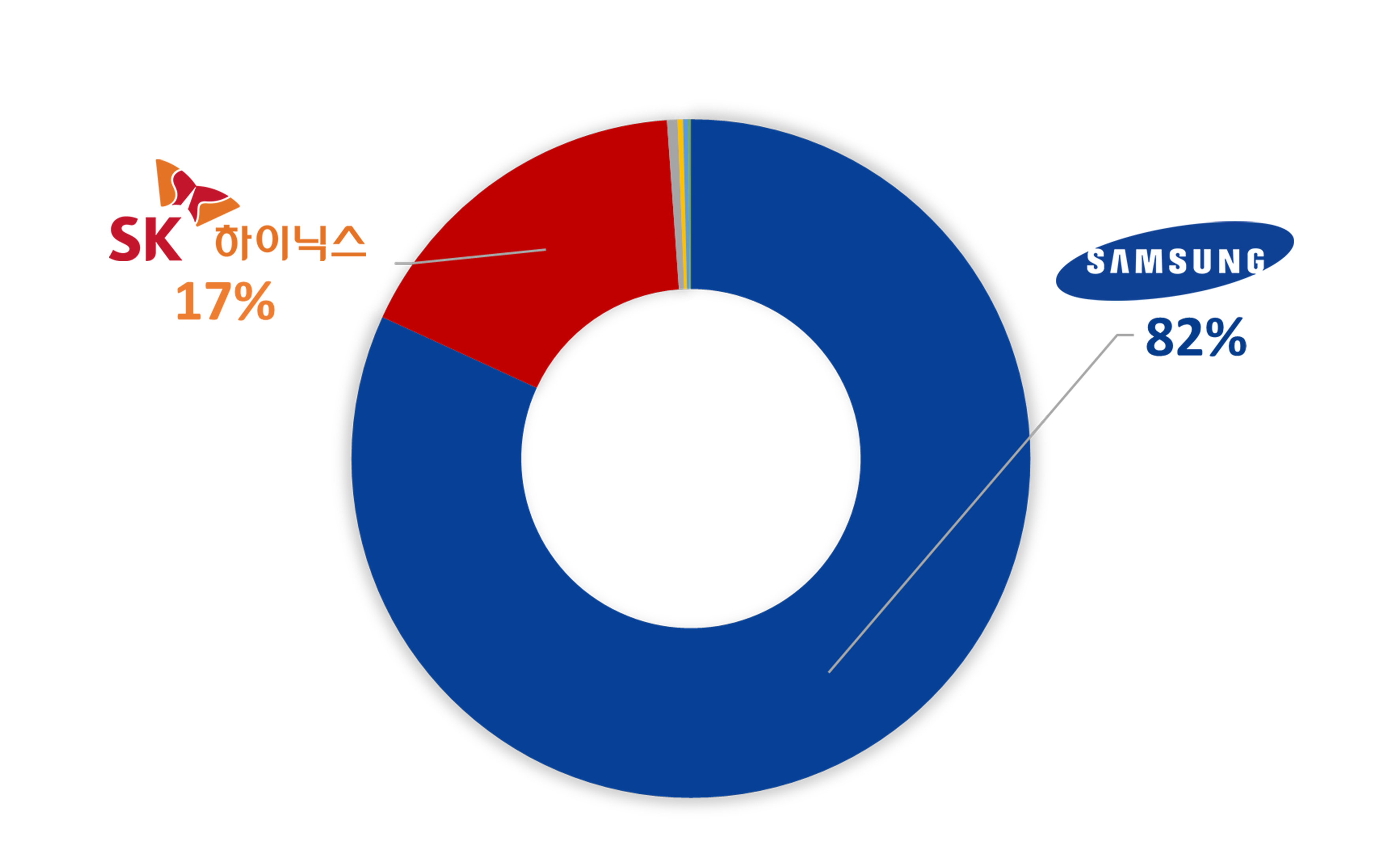
▲2021 Sales ratio of semiconductor component companies

The sales of the seven domestic semiconductor component companies were 244.582 trillion won, a 23% increase from the previous year. The semiconductor component sector accounts for 64% of domestic semiconductor sales, and Samsung Electronics accounts for 82% of that, so it can be said to represent the component industry.

Samsung Electronics recorded sales of KRW 199.7447 trillion in 2021, up 20% year-on-year, of which semiconductor sales excluding home appliances and other businesses amounted to KRW 125.9 trillion. Due to the overall expansion of supply, the company has achieved its best performance ever, and is leading the domestic semiconductor industry as a whole through the expansion of advanced processes and large-scale investments.

SK Hynix recorded sales of KRW 41.5573 trillion, a 36% increase from the previous year, and achieved its highest sales performance ever. SK Hynix actively responded to the increase in demand for PC and server products in the DRAM business, and also recorded a sales volume increase rate that exceeded the market average based on its 128-layer competitiveness in the NAND business.

■Semiconductor materials, even a small supply shortage has a big impact

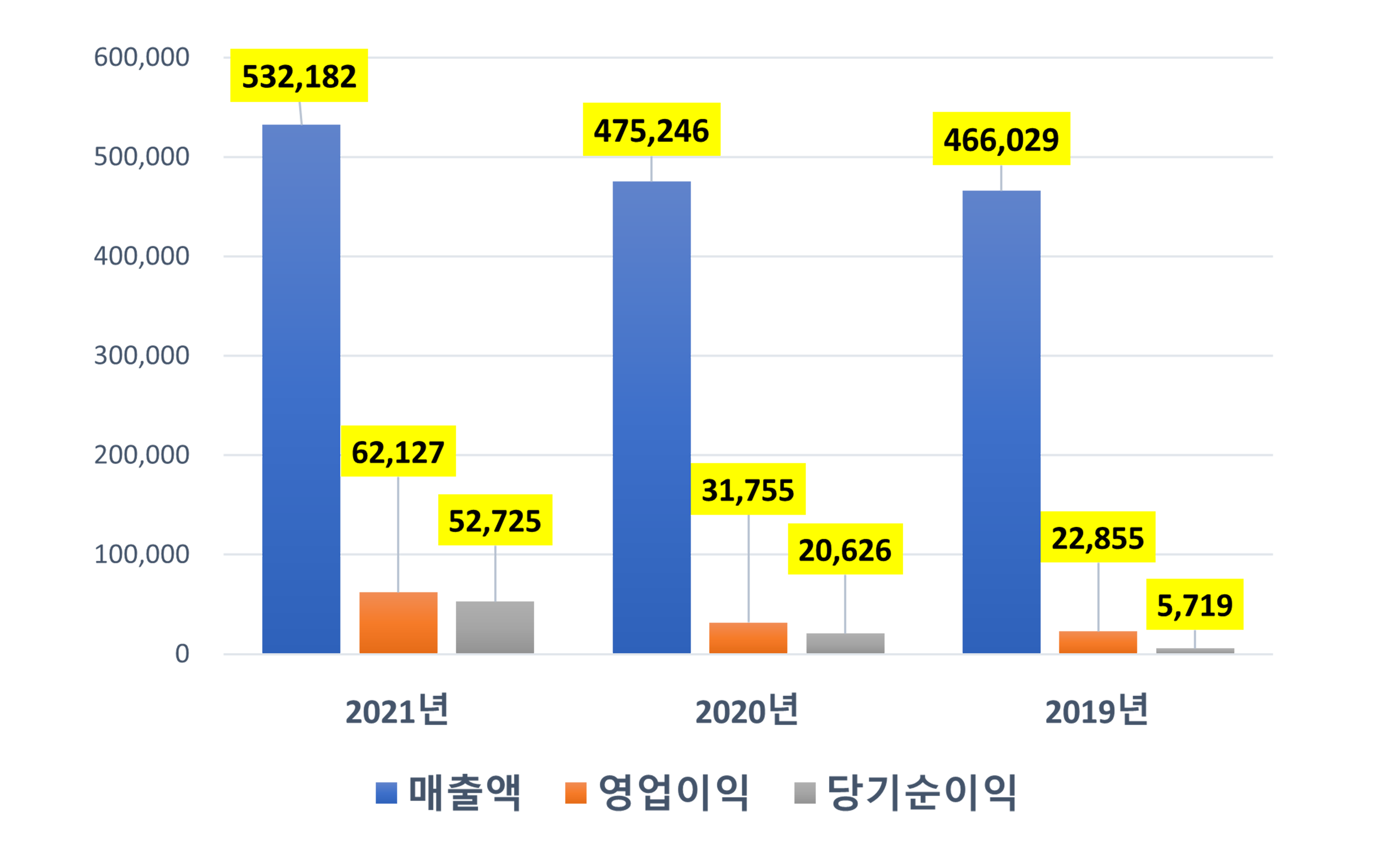
▲Summary of business performance of 51 semiconductor material companies

There are thousands of different materials in semiconductor materials, including photoresists, silicon carbide, precursors, abrasives, high-purity special gases, and cleaning agents.

It was a matter of national interest in 2019 due to Japan's export restrictions. As can be seen from the incident at the time, even a small amount of material supply interruption can cause problems in the semiconductor production process, which has a significant impact on the entire semiconductor process.

In particular, in the case of semiconductor materials, there are many cases where they depend on overseas imports due to differences in technological capabilities. In the case of the three items that were in the spotlight at the time of Japan's export regulations, Japan has a 90% share of the global market for fluorine polyimide. In the case of photoresists, Japan has a 90% share of the global market, and in the case of Korea, the import share of Japanese products was found to reach 91.9%. In addition, Japan has a 70% share of the global hydrogen fluoride market, and in our country, the share of Japanese imports reached 95%.

Since the incident, our country has invested more than 1 trillion won in semiconductor materials every year and is making great efforts to domestically produce semiconductors, but it is expected that it will take a considerable amount of time.

The sales of these 51 semiconductor material companies in 2021 were 53.2182 trillion won, up 12% year-on-year, and have recently maintained an average annual growth rate of 7%. Operating profit was 6.2127 trillion won, up 96% year-on-year, and net profit for the period was 5.2725 trillion won, up 156% year-on-year.

By company, LG Chem ranked first with KRW 20.471 trillion, followed by Samsung SDI in second with KRW 11.5818 trillion. KCC followed with KRW 2.2866 trillion, Hyosung Chemical with KRW 2.1089 trillion, and SK Siltron with KRW 1.8265 trillion.

The amount of semiconductor materials being used continues to increase as various processes are added amid the increasing semiconductor operating rate and trend toward ultra-miniaturization. The semiconductor materials market is expected to continue to grow in proportion to the increase in semiconductor demand in 2022.

However, issues related to ESG, such as GWP, are emerging, and the discovery of new materials is emerging as a challenge to be solved in the future.

■Semiconductor design, potential revealed even in the face of supply shortages

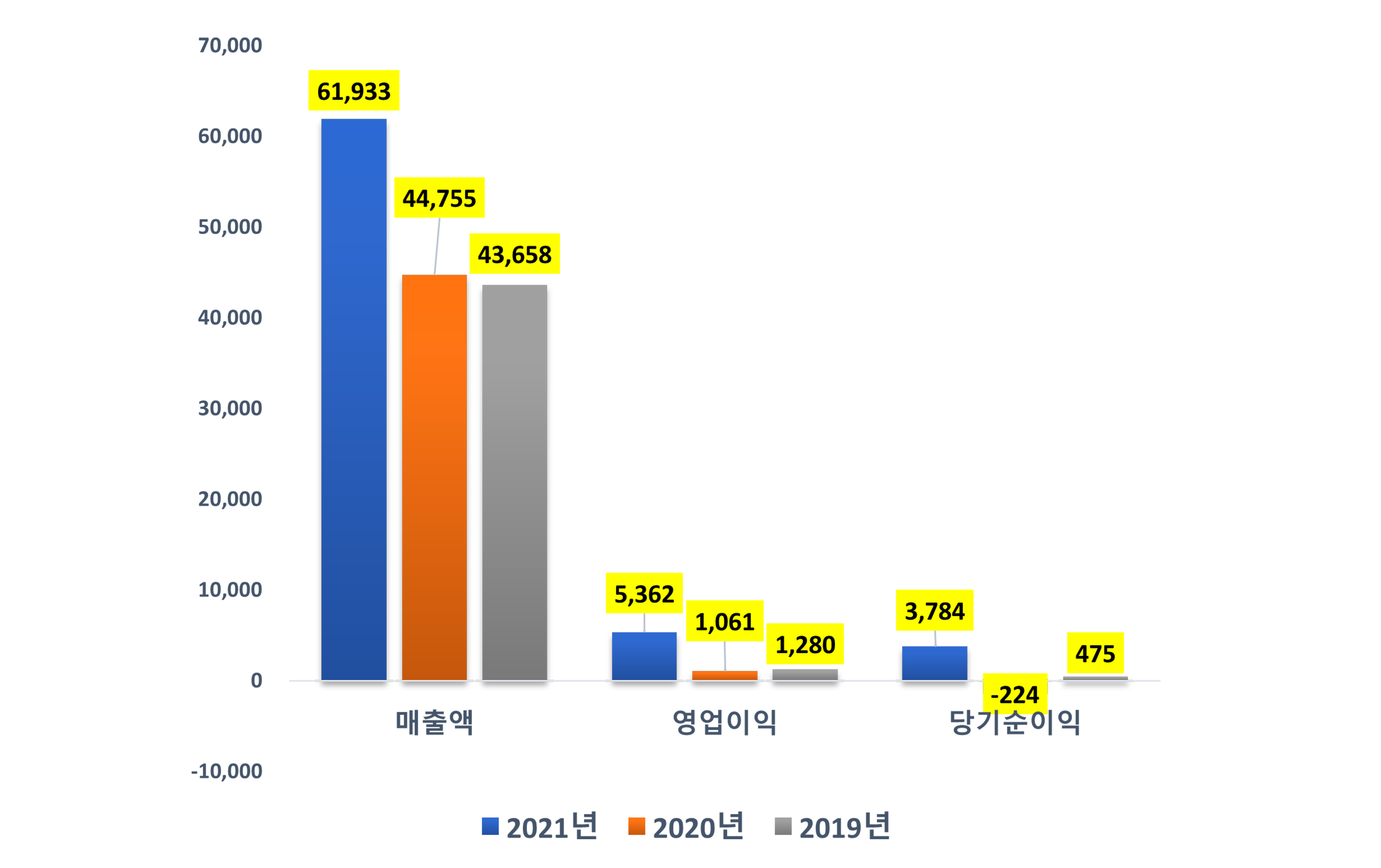
▲Summary of business performance of 40 semiconductor design companies

Fabless, a company specializing in semiconductor design, began to receive attention last year as a result of the semiconductor shortage. Last year, most system semiconductors used as components, including automotive semiconductors and power semiconductors, experienced a supply shortage, and the problem is still far from being resolved.

There are global companies that specialize in manufacturing these system semiconductors with their own fabs, but most of them use foundries to design and manufacture products on consignment. As a result, fabless companies that failed to secure foundries last year had difficulties with product production.

On the other hand, companies that succeeded in producing products amid the semiconductor shortage recorded high growth with improved performance and operating profit.

Looking at the 2021 business performance of 40 semiconductor design companies, sales increased by 38% year-on-year to KRW 6.1933 trillion, and operating profit showed an incredible 405% growth year-on-year to KRW 536.2 billion. Net income also turned to a surplus of 378.4 billion won.

As of 2022, the shortage of semiconductor components continues and delivery dates are reported to be delayed by more than a year, but if only foundries can be secured, continued growth of fabless companies is expected.

LX Semicon ranked first in design sector sales with KRW 1.8988 trillion, followed by Hyundai Autoever with KRW 1.685 trillion, IBM Korea with KRW 558.2 billion, and Silicon Mitus with KRW 329.4 billion.

■Impact of increased facility investment by semiconductor equipment and component companies

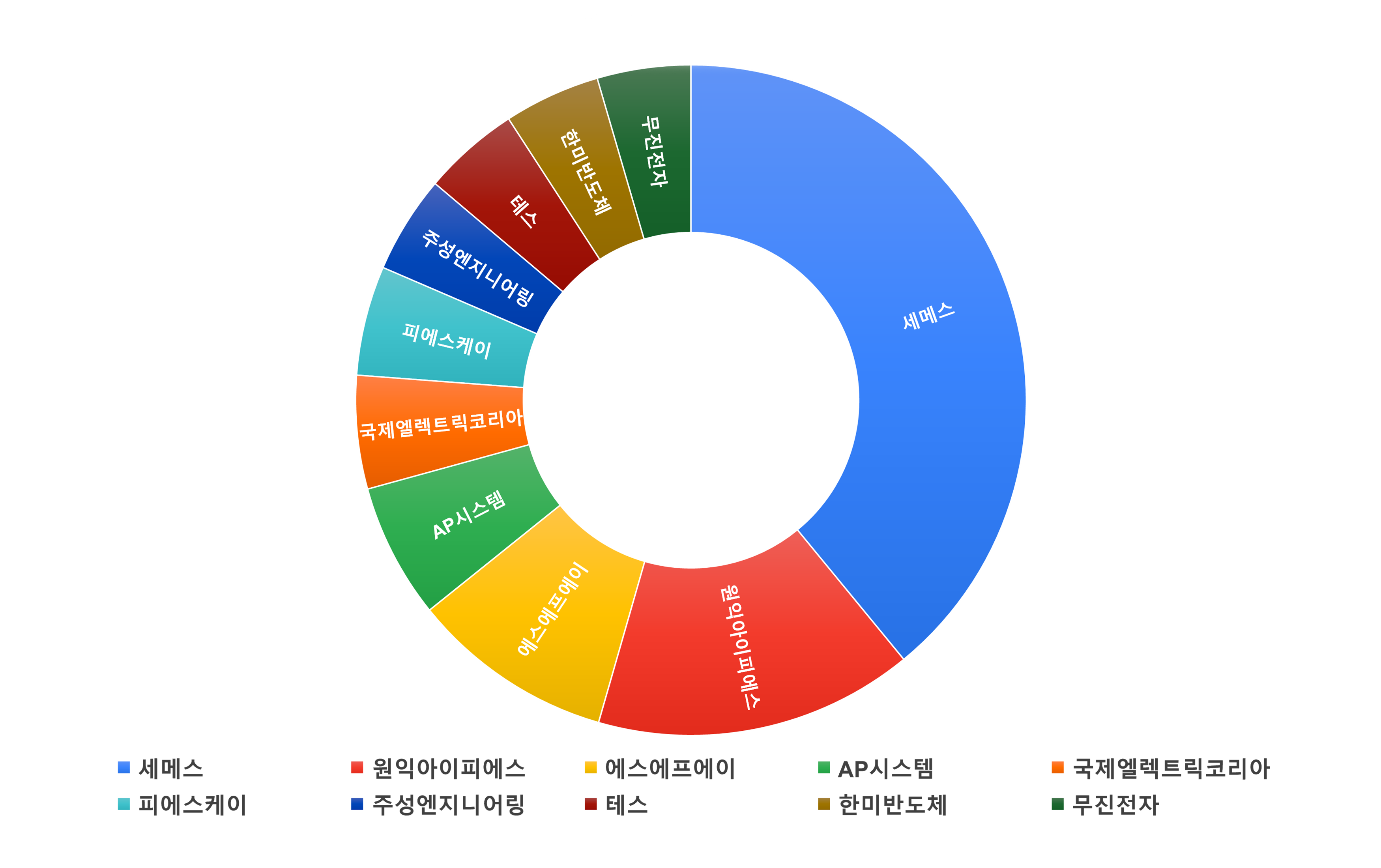
▲2021 Top 10 Semiconductor Equipment Companies Sales Rankings (Clockwise from 12 o'clock, by highest market share)

Semiconductor equipment refers to equipment used in the eight major semiconductor processes, including wafer manufacturing, oxidation processes, and photo processes, and there are various types of process equipment.

The 2021 sales of 77 domestic semiconductor equipment companies increased by 23% year-on-year to KRW 16.8943 trillion. Operating profit increased by 37% year-on-year to KRW 2.1746 trillion, and net profit for the period increased by 56% year-on-year to KRW 1.9009 trillion.

This increase in performance is analyzed to be due to the large-scale investment made by domestic semiconductor component companies in 2021. It can be said that the sales of domestic semiconductor equipment companies depend on the investment of component companies, and it is no exaggeration to say that the largest recent investment is related to Samsung Electronics' investment in the Pyeongtaek plant.

Semes ranked first in domestic semiconductor equipment sales, recording sales of KRW 3.1281 trillion, a high sales increase of 42% compared to the previous year. The main sales source is Samsung Electronics, which has recorded a total order amount of KRW 3.5991 trillion as of September 2022, and the order backlog also reaches KRW 471 billion, so steady growth is expected in 2022 as well. Wonik IPS ranked second with approximately KRW 1.2 trillion, followed by SFA in third with approximately KRW 780 billion.