반도체 AI 인더스트리 4.0 SDV 스마트 IoT 컴퓨터 통신 특수 가스 소재 및 장비 e4ds plus

[Contribution] TI Mark Engie - 5 Reasons Why Electric Vehicles Should Stay With Us

기사입력2023.10.11 15:33

“Power management technology is the key to electric vehicle innovation”
Power semiconductor technology overcomes barriers to electric vehicles and meets customer demands
TI provides BMS, onboard charger, traction inverter, sensors, etc.

Semiconductor technology is helping to remove barriers to electric vehicle adoption by underpinning electric vehicles along the innovation curve, enabling automakers to design economical vehicles that meet customer demands.

As a leader of a team designing hybrid and electric powertrain technologies, I have a unique perspective on electric vehicles.

Rather than thinking of electric vehicles simply as vehicles with batteries and electric motors, think of them as large electronic devices that are on a rapid innovation curve, transforming communications infrastructure, enterprise computing, and the personal electronics markets.

TI's technologies are helping to make electric vehicles more accessible and energy efficient, and make the world a safer place. Here are five innovative technologies that show why electric vehicles should be a part of our everyday lives.

■ Confidence in driving distance

The biggest problem consumers face when considering whether to purchase an electric vehicle is battery discharge.

The good news is that advanced battery management systems (BMS) are helping to overcome significant barriers to widespread adoption, including concerns about range, safety, reliability and cost.

Car manufacturers are working to achieve the longest possible driving range, and accurately calculating the battery state of charge is essential to drivers knowing how much charge their vehicle's battery has left.

TI's new device delivers much higher precision in voltage and current measurements, enabling automakers to accurately measure the true range of electric vehicles.

Advances in battery monitors and balancers have improved state-of-charge and state-of-drive measurements, enabling automakers to charge and discharge vehicle battery packs faster than any cell monitor previously available on the market.

This reduces uncertainty and effectively extends the driving range of electric vehicles, or allows automakers to deliver the same effective range with smaller, lighter battery packs.

■ Faster charging

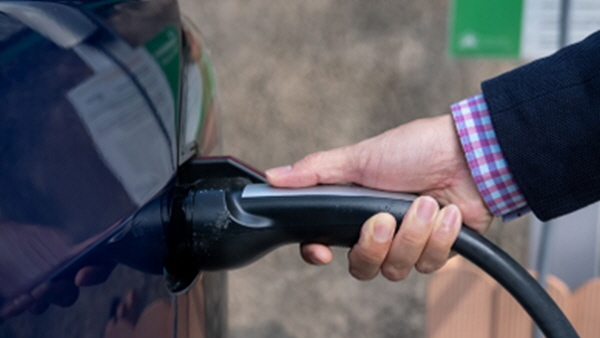
Many people wonder if they will be able to charge their electric vehicles quickly and easily at home and during long trips.

To charge faster without affecting the battery health, it is important to continuously supply the optimal voltage and current to each battery cell.

The latest onboard charger solutions increase charging speeds and deliver power at the highest current and voltage that each battery cell can handle instantaneously. Prevents overcharge or overheating conditions that can shorten cell life and capacity while supplying.


Today, you can charge your electric car overnight in your garage, but in the future, you could potentially charge an 800V battery at home in less than two hours using a DC wall box charger.

In fact, some equipment manufacturers are developing technology that can recharge in just a few minutes.

Additionally, bidirectional charging enabled by semiconductor technology is making vehicle-to-grid, vehicle-to-vehicle, and vehicle-to-infrastructure a reality.

■ Acceleration without reducing driving distance

I really like the quick acceleration of electric cars. They make driving faster and more fun. Traction inverter systems, which convert battery energy into power that controls torque and speed, are the driving force behind electric vehicles' range, performance, and driving experience.

The system draws energy from the battery and supplies it to the electric motor at the high voltage and current required to achieve optimum performance under a variety of conditions.

The efficiency of the traction inverter system is a key factor in ensuring that the driver receives a smooth and enjoyable ride when accelerating.

Advanced semiconductor features, such as adjustable gate drive strength in insulated gate drivers, allow electric vehicles to adjust their energy usage based on road conditions, driving style, and weather.

You won't have to waste battery charge when winding through steep mountain paths or passing through flat areas.

■ Supports safer and more stable operation

In addition to wider range and faster charging, TI's power management technology supports precise power protection and functional safety features to safeguard vehicle operation.

In other words, it allows consumers to have peace of mind by believing and trusting the safety of their electric vehicles.

Preventing overcharging, overheating, or excessive discharge of batteries prolongs battery life and safety.

At the same time, cutting-edge sensors and microcontrollers provide state-of-the-art driver safety systems that warn of sudden hazards and respond to sudden dangerous situations.

■ Economic efficiency

Advances in vehicle electrification will allow automakers to rethink the design of automotive system architectures for a range of models and next-generation vehicles, creating a tremendous opportunity for automotive innovation.

Car manufacturers are using the system We are rethinking, redesigning and introducing innovative solutions such as area-specific control, integrated powertrains, wireless battery management systems, intelligent battery junction boxes and bidirectional charging.

The result is improved performance, range, convenience, overall system size and cost, and more economical vehicles for consumers.

■ Future Vision

The vision of making electric vehicles more accessible is becoming a reality, but there are still many challenges ahead.

The cutting-edge components needed to realize this vision are available today.

Here's what to expect in the future: First, we will increasingly see standardization of automotive communication protocols.

Cloud-based computing will enable machine learning to perform tasks such as vehicle management, battery life calculations, and fault prediction algorithms.

Wide bandgap semiconductors will make electric vehicle drivetrains increasingly efficient and powerful.

The semiconductor industry will continue to innovate with cost-effective materials and advanced technologies that enable cheaper, safer vehicles.

My team and I design hybrid and electric powertrain technologies, helping to transform electric vehicles from a vague idea to a reality as a sustainable form of transportation today.

※ author

Mark NG, General Manager, Hybrid and Electric Vehicle, TI