U+-Crypto Lab Holds PQC Case Briefing Session
Cheon Jeong-hee, CEO of Crypto Lab, said, “Only the PQC algorithm
“You can create an authenticated communication channel,” he explained. On the 10th, LG Uplus held an informational session introducing quantum-resistant cryptography (PQC) technology and application cases at its Yongsan office building in Seoul together with cryptography technology specialist Cryptolab.

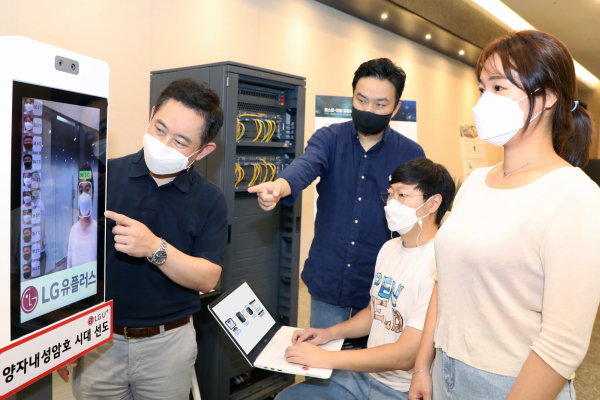
▲ U+ employees strengthen security with PQC
Testing out facial recognition service [Photo = LG Uplus]
Post-quantum cryptography is an encryption method that uses complex mathematical algorithms that would take billions of years to solve with a quantum computer. It can be applied to key security elements such as encryption key exchange/data encryption/decryption/integrity authentication, and has the advantage of being implemented using software alone. Cryptolab's lattice problem-based encryption algorithm (RLizard) was designated as a domestic standard by the Telecommunications Technology Association (TTA) in 2019.
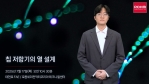
Cheon Jeong-hee, CEO of CryptoLab, explained why PQC is necessary as the era of quantum computers approaches and that only the PQC algorithm can create a securely authenticated communication channel. LG Uplus Wired Business Division Director Koo Seong-cheol, who oversees related businesses, introduced a case in which LG Uplus built PQC for public and private sector dedicated lines as part of the Digital New Deal.
Lim Jang-hyeok, head of the LG Uplus Enterprise Infrastructure Business Group, said, “We will prepare for the ‘post-quantum transition’ that will strengthen the security of the entire communications infrastructure through quantum-resistant cryptography that can withstand attacks from quantum computers.” LG Uplus has secured PQC technology by making an equity investment in Cryptolab for the first time in the communications industry. Cryptolab is a cryptographic technology company founded by Professor Jeong-hee Cheon of the Department of Mathematical Sciences and Director of the Industrial Mathematics Center at Seoul National University, and holds patents for PQC and homomorphic encryption that can calculate original data in an encrypted state.