로보틱스 및 자율 시스템 기술의 발달로 오늘날 로봇은 기존의 로봇이 할 수 없었던 보다 높은 차원의 작업이 가능하다. 하지만 전문 지식의 부재와 한정된 구축 시간에 따라, 진보한 자율 기술을 실제 환경에 적용하는 것에는 애로가 따른다. 매스웍스는 자율 시스템 개발에 필요한 생태계를 제공하며, 모델링, 시뮬레이션, 테스트, 배포를 통합한 로보틱스 AI 솔루션과 기술 서비스로 고객을 지원하고 있다.
매트랩/시뮬링크, 자율 로봇 개발 도구 제공
안전한 로봇 시스템 개발 프로세스 간소화
로봇 운용 넘어 공장 및 사업 모니터링 지원
제조업 현장에서 흔히 볼 수 있던 로봇이 타 산업은 물론 사회 전반으로 확산하고 있다. 특히 ‘로보틱스 및 자율 시스템(Robotics and Autonomous Systems; RAS)’ 기술의 발달로 오늘날 로봇은 기존의 로봇이 할 수 없었던 보다 높은 차원의 작업이 가능하다.
하지만 전문 지식의 부재와 한정된 구축 시간으로 인해, 해당 기술을 실제 환경에 적용해야 하는 엔지니어들의 어려움이 가중되고 있다. 매스웍스는 18일, ‘자율 로봇 시스템 개발을 위한 매트랩(MATLAB) 및 시뮬링크(Simulink): 아이디어를 현실로’를 주제로 온라인 세미나를 개최하고 이에 대한 해결책을 제시했다.
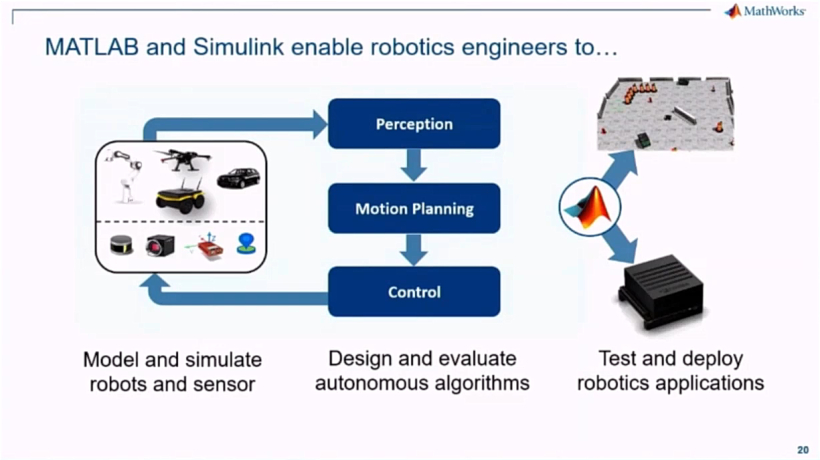
▲ 매스웍스는 자율 로봇 시스템 개발 통합 워크플로를
지원한다 [그림=매스웍스]
매스웍스 본사의 프레드 노토(Fred Noto) 로보틱스 산업 담당 매니저는 ‘로보틱스, 자율 시스템 개발 동향과 매스웍스 솔루션’이란 제목의 발표를 통해 산업용 로봇 기술의 현황과, 향후 전개될 자율 로봇 시스템 동향을 전망했다. 그리고 해당 시스템을 구축한 기업들의 사례를 소개했다.
◇ 매스웍스, 자율 로봇 시스템 개발 생태계 구축
최근 스마트팩토리, 물류센터, 건설 현장 등과 같이 각종 산업 분야에서 자율 기술이 탑재된 산업용 로봇 도입이 가속하고 있다. 많은 산업에서 산업용 로봇의 자율 기술을 고도화하면서 자율 로봇의 복잡성도 심화하고 있다. 그만큼 안전한 로봇 시스템을 개발하기 위한 프로세스도 복잡해지고, 시간도 오래 걸리고 있다.
특히 많은 엔지니어가 △로봇 모터, 조인트, 바디 등 복잡한 기계적, 물리적 특성의 모델링과 시뮬레이션, △인식, 동작 계획, 제어를 포함한 자율 알고리즘 설계, △로보틱스 앱의 테스트와 하드웨어 배포 작업에 어려움을 호소하고 있다.
노토 매니저는 “매스웍스의 매트랩과 시뮬링크는 자율 로봇 개발에 필요한 생태계를 제공한다”라며, “모델링, 시뮬레이션, 테스트, 배포를 통합한 로보틱스 AI 솔루션과 기술 서비스로 고객의 자율 시스템 개발과 도입을 지원한다”라고 밝혔다.
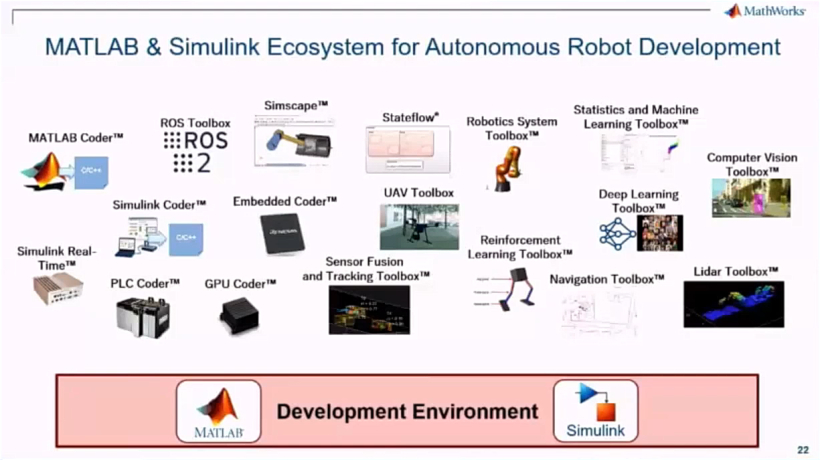
▲ 자율 로봇 개발을 지원하는 매트랩/시뮬링크 생태계
[그림=매스웍스]
매트랩과 시뮬링크는 자율 로봇 시스템 워크플로(▲모델 기반 설계 ▲멀티 도메인 시스템의 모델링과 시뮬레이션 ▲인식, 동작 계획, 제어 등의 자율 알고리즘 개발 ▲고급 제어 기능 설계와 최적화 ▲가상 환경 기반 통합 시스템 테스트 및 ROS 연동 ▲하드웨어 배포용 자동 코드 생성) 전 단계를 지원한다.
먼저 모델 기반 설계 단계에서 매스웍스는 △‘심스케이프(Simspace)’를 통한 물리적 로봇 모델링, △‘로보틱스 시스템 툴박스(Robotics System Toolbox)’를 통한 모델링 속도 향상을 지원한다.
자율 알고리즘 개발 단계에선 △‘딥러닝 툴박스(Deep Learning Toolbox)’를 통한 객체 인식, △‘컴퓨터 비전 툴박스(Computer Vision Toolbox)’와 ‘라이다 툴박스(Lidar Toolbox)’를 통한 이미지 분류 및 포인트 클라우드 데이터 처리, △로보틱스 시스템 툴박스, ‘내비게이션 툴박스(Navigation Toolbox)’를 통한 첨단 경로 계획과 충돌 확인 및 감지 기반 동작 계획 알고리즘 개발, △‘스테이트플로(Stateflow)’, ‘MPC 툴박스(Model Predictive Control Toolbox)’, ‘강화 학습 툴박스(Reinforcement Learning Toolbox)’를 통한 작업 순서 스케줄링, 충돌 회피 및 강화학습 휴머노이드 개발을 지원한다.
테스트와 배포 단계에선 매트랩 ‘ROS 툴박스(ROS Toolbox)’ 인터페이스로 ‘가지보 시뮬레이터(Gazebo Simulator)’와 연결하고, 로보틱스 시스템 툴박스와 연결하여 동시 시뮬레이션을 수행하고 검증한 다음, FPGA용 C/C++ 또는 VHDL 및 GPU용 CUDA 코드를 자동 생성하여 하드웨어로 배포한다.
◇ 자동화 넘어서 자율을 추구하는 산업용 로보틱스
노토 매니저는 산업용 로보틱스(Industrial Robotics) 트렌드 3가지를 소개했다. 첫 번째는 ‘자율 시스템 생태계의 활성화’다. 자동화 시스템(Automated Systems)의 ‘자동화’가 높은 자유도의 ‘자율(Autonomous)’로 바뀌고 있다.
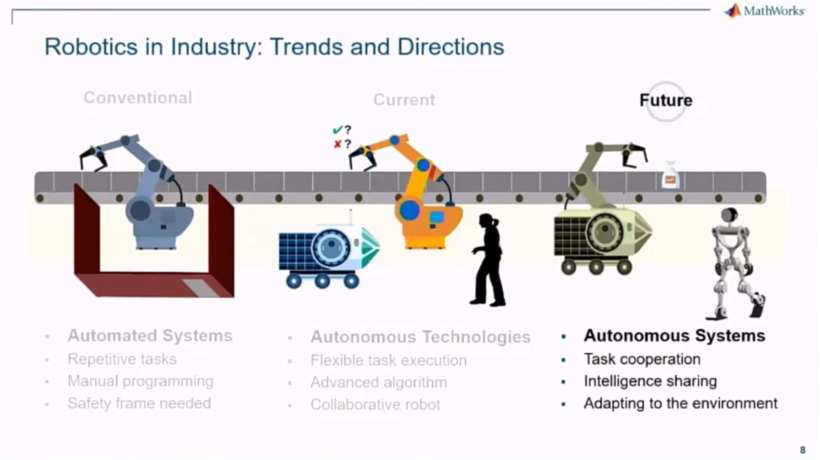
▲ 로보틱스 산업 트렌드 [그림=매스웍스]
기존 산업용 로봇은 자동화 시스템으로, 사전에 프로그래밍이 된 작업을 24시간 반복 수행한다. 고정된 작업 환경에서 장기간 단순 작업 반복으로 효율성을 높일 수 있다는 장점이 있으나, 작업 환경을 인지하는 기능이 없어 사고 및 피해 예방을 위한 안전 프레임과 함께 작동된다.
리코(Ricoh)는 매스웍스 모델 기반 설계로 로봇 구동 핵심 부품인 다부품 비선형 더블 모터 액추에이터 모델을 반나절에 구축했다. 이는 심스케이프 툴에서의 3D CAD 데이터 활용과 시뮬레이션을 통한 하드웨어 동작 검증 덕분에 가능했다.
3T는 매스웍스 모델 기반 설계로 로봇 비상 제동 시스템을 개발했다. 매스웍스 ‘HDL 코더(HDL Coder)’를 통해 vHDL 코드를 자동 생성, 제어 알고리즘을 FPGA에 고정 소수점 연산 방식으로 구현했다. 또한, 클린룸(Cleanroom) 시간을 몇 주에서 며칠로 단축했고, 몇 달이 걸리던 버그 해결 시간을 하루로 단축했다.
자율 기술의 다양화와 고도화는 인간의 개입 없이 상황에 맞춰 작업을 수행하는 로봇의 산업 적용을 이끌고 있다. 여기에는 작업 수행을 스스로 결정하는 고급 알고리즘과 인간과의 상호작용을 지원하는 ‘협동 로봇’을 포함한다. 협동 로봇은 변화하는 작업 환경에 신속하게 적응하는 민첩성(Agility) 덕분에 개발과 채택이 최근 들어 가속하고 있다.
교세라(Kyocera)는 매트랩, 시뮬링크, 기타 매스웍스 툴박스, 매스웍스 컨설팅 서비스를 통해 협동 로봇용 파지(Grasping) 및 동작 계획 애플리케이션을 개발했다. 그들은 ‘심스케이프 멀티바디(Simscape Multibody)’로 로봇 팔의 물리적 모델을 구축하고, 모델링과 시뮬레이션을 거쳐 자율적인 동작의 수행을 훈련시켰다.
노토 매니저는 “자율 시스템은 향후 제조업에서 큰 비중을 차지할 것”이라며, “복잡한 환경에서도 적응성이 높고, 그보다 더 복잡한 모바일 매니퓰레이터, 또는 휴머노이드 같은 고도화된 자율 로봇의 역할이 더욱 중요해질 것이다”라고 말했다.
그러면서 “자율 시스템 로봇은 광범위한 작업을 자율 수행할 뿐만 아니라, 인간이나 다른 기계 시스템과 협동 작업을 수행하고, 최적화 및 목표 달성을 위해 데이터를 통신하는 지능화 기능을 갖출 것”이라 전망했다.
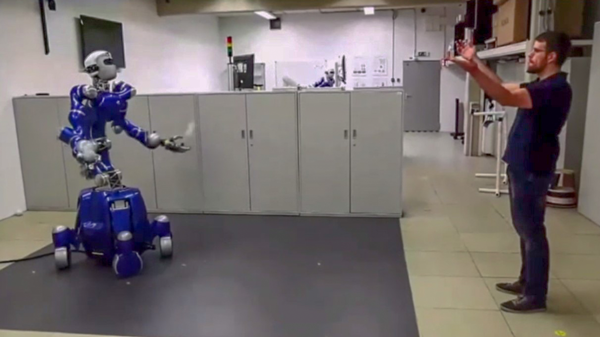
▲ DLR에서 개발한 휴머노이드 로봇, 애자일 저스틴
[사진=매스웍스]
독일 항공우주연구센터(DLR)는 자율 기술의 진화를 보여주는 휴머노이드 로봇, ‘애자일 저스틴(Agile Justin)’을 개발했다. 스테레오 비전 카메라 기반의 시각, 특수 피부 센싱 기반의 촉각, 물체 탐지, 자율적인 구동 및 경로 계획 최적화 기술을 탑재했다. 해당 로봇은 공간 및 물체 인식 기술로 작업공간 전체를 인식하고, 파이프 연결 같은 작업을 수행할 수 있으며, 인간과 캐치볼도 가능하다.
53 자유도의 휴머노이드 로봇인 애자일 저스틴의 실시간 제어 시스템 알고리즘, 이미지 보정 및 경로 계획 알고리즘 개발에는 매트랩과 시뮬링크가 사용됐다. 스테이트플로는 파지 등의 동작 실행 순서 설계를 지원했다. 애자일 저스틴 개발팀은 모델 기반 설계로 복잡한 기능 실행에 걸리는 시간을 단축했고, 자동 코드 생성으로 수동 코딩 에러를 제거하여 복잡한 시스템 설계에 집중할 수 있었다.
◇ 로봇 자율화, 공장 및 사업 운영에 긍정적인 영향
노토 매니저는 두 번째 산업용 로보틱스 트렌드로, ‘스마트팩토리에서의 산업용 로봇의 운영 최적화’를 들었다. 스마트팩토리는 초고속 통신을 기반으로 클라우드, OT 및 현장 자율 시스템을 통합한 환경으로 운영되며, 자율 시스템에 속하는 각종 로봇과 기계에 부착된 센서로 데이터를 수집해 운영 최적화에 활용한다.
수집된 스마트팩토리 데이터는 AI 기반 분석 모델을 통해 공정 관리, 품질 향상 및 예측 유지보수에 활용되며, OT 담당자의 공장 모니터링에도 쓰인다. 전 세계에 흩어진 다수의 공장을 운영하는 제조기업은 여러 스마트팩토리 간 연결을 통한 더 많은 데이터를 수집하고, 효율성 제고의 가능성도 더 높일 수 있게 된다.
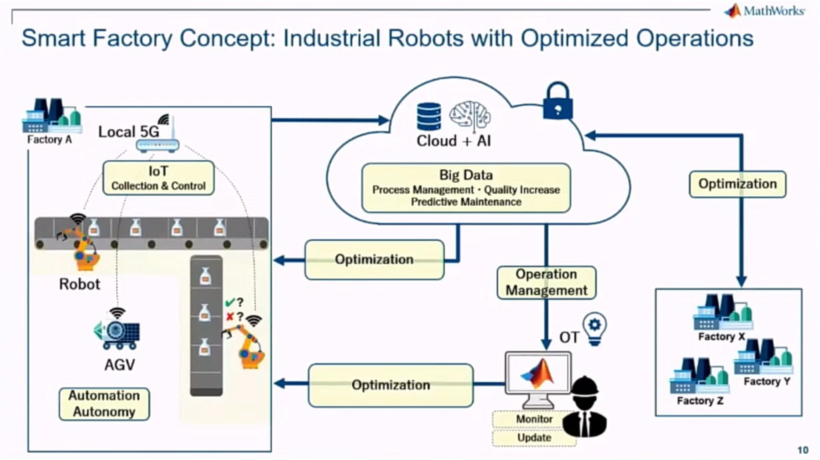
▲ 산업용 로봇을 활용하여 운영을 최적화한
스마트팩토리 콘셉트 [그림=매스웍스]
몬디(Mondi)는 매트랩으로 공장 운영 모니터링 및 예측 유지보수 소프트웨어를 개발했다. 1년 365일 24시간 구동되는 해당 소프트웨어는 머신러닝을 기반으로 공장설비 고장을 예측하고 알려준다. 몬디는 연간 5만 유로의 비용 절감 효과를 거뒀다. 크로네스(Krones)는 시뮬링크로 자동화된 패키지 취급 로봇의 디지털 트윈을 개발했고, 이를 설계 최적화, 결함 테스트, 예측 유지보수에 사용하고 있다.
세 번째 산업용 로보틱스 트렌드는 ‘비즈니스 운영 향상을 위한 IT/OT, 5G 기술 접목 가속화’다. 상하이 일렉트릭(Shanghai Electric)은 매트랩으로 분산 에너지 계획과 설계 플랫폼을 위한 투자 수익 산출 알고리즘을 개발하고, 이를 ‘매트랩 서버(MATLAB Server)’로 운영 IT 시스템에 배포했다.
셸 인디아(Shell India)는 자사 석유화학 플랜트 전체(OT)를 대상으로 하는 실시간 운영 최적화 애플리케이션(IT)을 매트랩으로 구현하는 데 성공했다. 또한, 레카(Lekha Wireless)는 매트랩과 ‘5G 툴박스(5G Toolbox)’로 LTE보다 10배 빠른 데이터 전송 성능을 제공하는 5G NR 기술을 개발해서 적용 중이다.
이날 세미나는 노토 매니저의 발표 외에도 △로봇 팔 하드웨어 플랫폼 모델 개발, △로봇 팔의 궤적 계획, △궤적 추종을 위한 로봇 팔 제어기 설계, △로봇 제어 알고리즘의 배포 및 ROS와의 통합 등 매트랩과 시뮬링크를 활용한 자율 소프트웨어 개발 방법을 시연하고 인사이트를 제시하고 마무리됐다.
노토 매니저는 “설명한 사례 외에도 다양한 분야의 자율 소프트웨어 개발에 매트랩과 시뮬링크를 활용할 수 있다”라며, “매스웍스는 프로그램뿐만 아니라 기업의 사업에 맞는 소프트웨어 개발을 위한 지원도 제공하고 있다”라고 밝혔다.
.jpg)