마이크로칩7월
Physical AI HBM Smart Factory SDV AIoT Power Semicon 특수 가스 정정·반론보도 모음 e4ds plus

Arm Unveils Mali DDK to Expand In-Vehicle Display Capabilities

Google 우선 소스 기사입력2020.07.06 12:26

Arm Releases Mali DDK with Added Virtualization Support
Cockpit domain controller enables in-vehicle graphics implementation


Demand for in-vehicle displays is growing as many consumers want smartphone-like experiences in their vehicles. As a result, the possibility of running advanced applications on in-vehicle displays is increasing in the future.

Arm, which has technological prowess in digital cockpit solutions and smartphones, unveiled a new version of the 'Arm Mali DDK (Driver Development Kit)' on the 6th to enhance the driver experience of next-generation vehicles.

Mali DDK works with GPU products belonging to the Valhall and Bifrost architecture GPU families. Based on GPU capabilities, DDK enables APIs such as OpenGL® ES 1.1, 2.0, 3.2, Vulkan® 1.1, OpenCL™ 1.1, 2.0 full profile, and Renderscript (Android only).
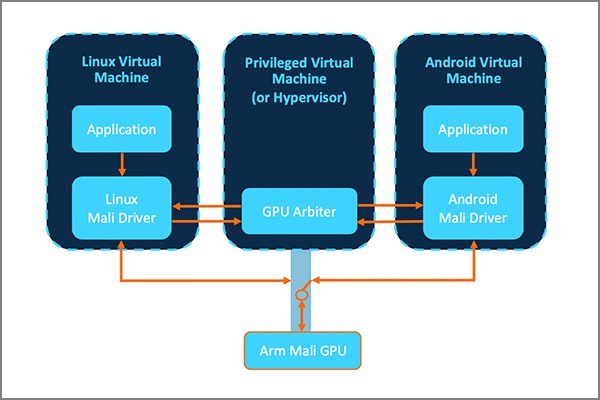
▲ Software-controlled GPU virtualization [Image = Arm]

Here, Arm has added new virtualization support, allowing GPU resources to be shared between multiple applications running different virtual machines.

Mali DDK virtualization is designed to be completely invisible to applications, running entirely within the driver and system software, with no need for developers to modify their applications to support it.

This enables in-vehicle graphics to be implemented in the cockpit domain controller, which allows multiple electronic control units (ECUs) to be integrated into a single ECU or single SoC.

In the past, a single ECU might perform one function, such as a digital instrument cluster displaying speed and warning lights to the driver, but now cockpit domain controllers can perform multiple functions by flexibly allocating resources to multiple workloads on a single SoC.

For example, a single SoC using the Mali DDK can allocate compute resources to the instrument cluster, IVI, and navigation systems rather than requiring one SoC or ECU per application.

Mali DDK supports Linux and Android. Virtualization capabilities can be used across multiple OSs and hypervisors, ensuring a smooth user experience, such as fast touchscreen response times, in virtualized systems.