China to abolish electric vehicle subsidies… January NEV sales down 48.3% from December
US to Receive Electric Vehicle Subsidy for Commercial Vehicles Without Lease Vehicle Assembly in North America As electric vehicle subsidies are decreasing, the directions of China and the United States' subsidy policies for 2023 are different, and attention is focused on future distribution expansion and competitive advantage.
■ China to abolish electric vehicle subsidies in January 2023
China has completely abolished subsidies for new energy vehicles by 2023.
According to Kotra's overseas market news, Cui Dongshu, chairman of the China Passenger Car Market Information Association, said, "China's electric vehicle consumption is shifting from policy-centered to market-centered," and predicted, "The abolition of subsidies may have a short-term impact, but it is expected to continue to grow in the long term."
According to publicly available data, the total amount of subsidies received by Chinese electric vehicle companies over the past 12 years is 160 billion yuan (about 29.528 trillion won), and BYD, China's number one electric vehicle manufacturer, received subsidies worth nearly 7 billion yuan (about 1.2933 trillion won).
China implemented an electric vehicle distribution policy in 2009.The government has been implementing a subsidy policy by providing payments to electric vehicle manufacturers.
When electric vehicle manufacturers report their electric vehicle sales volume to local governments and apply for subsidies, the government executes the subsidies after expert review.
This approach allowed companies to set prices that reflected subsidies, lowering sales prices and ultimately allowing consumers to purchase electric vehicles at lower prices.
Electric vehicle sales prices are expected to rise as the Chinese government removes subsidies. BYD announced late last month that it would raise the selling prices of electric vehicle models such as the Wangchao, Haiyang, and Tengshi by 2,000 to 6,000 yuan (about 370,000 to 1.11 million won).
Aian, an electric car manufacturer under Guangzhou Automotive Group, also recently announced that it would raise the official sales prices of some models by 3,000 to 8,000 yuan (about 550,000 to 1.48 million won).
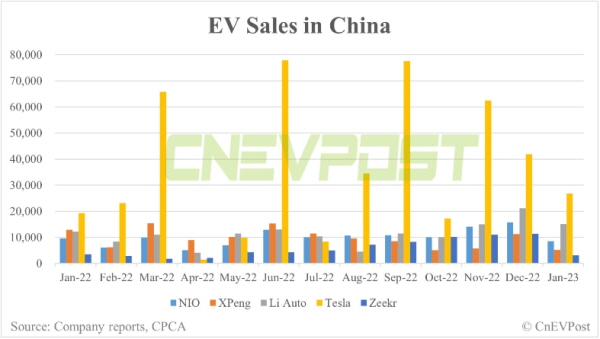
Meanwhile, electric vehicle sales in China plummeted in January 2023.

▲China Electric Vehicle Sales Trends (Image Source: CnEVPost)
According to data released by the China Passenger Car Association (CPCA) on the 8th, China's retail sales of new energy passenger vehicles were 332,000 units in January, down 6.3% year-on-year and down 48.3% month-on-month.
For manufacturers, NIO delivered 8,506 vehicles in January, down 46.22% from 15,815 units in December and down 11.87% from 9,652 units in the same month last year.
BYD sold 151,341 NEVs in January, up 62.44% from 93,168 units in the same month last year, but down 35.65% from 235,197 units in December.
The market is watching closely to see whether China's electric vehicle industry, which has grown competitively, can continue to develop without relying on subsidies.
China has eliminated subsidies for businesses, but will maintain a consumer purchase tax exemption that began in December 2017 until 2023.
When purchasing an internal combustion engine vehicle, a purchase tax of 10% of the vehicle price is imposed, and there are three types of vehicles: pure electric vehicles, hybrid electric vehicles, and hydrogen electric vehicles. New energy vehicles are not taxed.
The Korea International Trade Association (KITA) interpreted this measure by the Chinese government as an attempt to strengthen the competitiveness of its domestic industry in the global competition for electric vehicles.
■ US Inflation Reduction Act
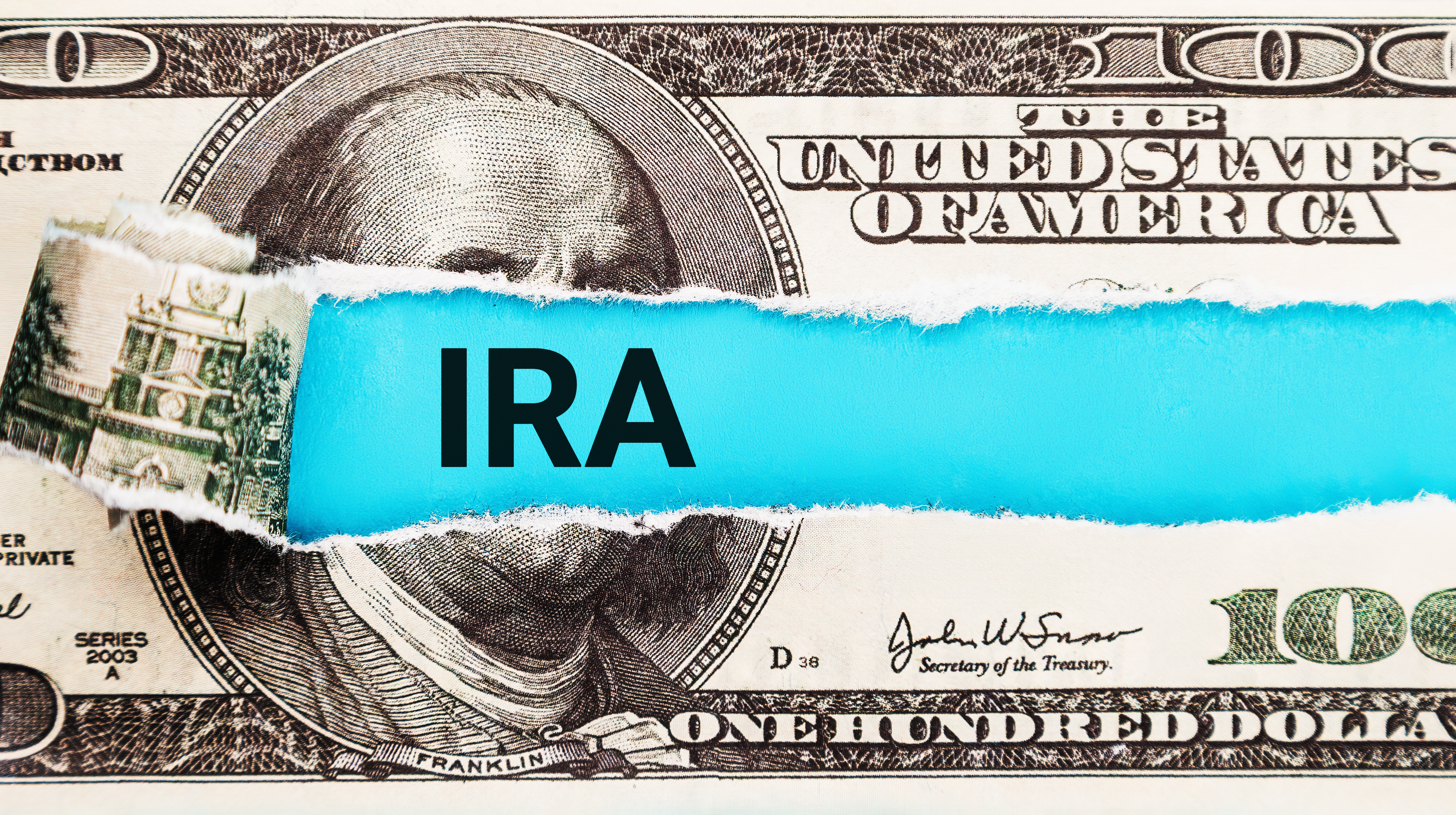
The United States is providing subsidies of up to $7,500 per vehicle through the electric vehicle tax credit policy as part of the Inflation Reduction Act (IRA).
The subsidy limit per buyer remains the same at $7,500, but is divided into $3,750 each for battery components and raw materials.
Payment conditions include achieving the following: △battery components △battery core minerals △final assembly of the finished vehicle.
For battery components, at least 50% of battery parts must be produced or assembled in the United States by 2024 after the bill takes effect, and the percentage will increase by 10% per year thereafter.
Battery core minerals must have at least 40% of their minerals processed in the United States or FTA partner countries or recycled within the United States by 2024 after the bill takes effect, and the proportion will increase by 10% per year, just like components.
Additionally, subsidies will only be provided for vehicles that are finally assembled in North America after the bill takes effect.
The vehicle price to be eligible for the tax credit must be within $55,000 for electric sedans and $80,000 for pickup trucks, SUVs, and passenger vehicles.
However, as the announcement of the policy's detailed implementation guidelines has been postponed to March of next year, the exact criteria and requirements for vehicles and buyers eligible for the tax deduction are still unclear.
The Korea International Trade Association expects a surge in orders in early 2023 due to the delay in the announcement of the implementation details, but the auto industry is experiencing a shortage of key components such as automotive semiconductors. It was reported that production and sales increases are not expected to be significant for the time being due to limited capacity.
The U.S. Department of Commerce has reissued guidelines that would allow leased vehicles to receive electric vehicle subsidies regardless of whether they are assembled in North America, following protests from several foreign companies.
According to Eugene Investment & Securities, the detailed criteria for determining whether a leased vehicle is for commercial use are as follows: △ It will not be a long-term lease corresponding to 80-90% of the economic life of the vehicle; △ It will not include conditions that allow the vehicle to be purchased/sold at the end of the lease period; △ It will not include conditions that transfer ownership risks related to the residual value of the vehicle to the lessor.
Selling dealers will be able to receive the $7,500 subsidy and pass it on to consumers by discounting their lease payments accordingly.
As per the above provisions, it seems that it is practically possible to bypass the IRA as it is not limited to commercial leases.
As far as we know, the vehicle must be manufactured in North America and meet vehicle price and purchaser income requirements.
Lee Jae-il, an analyst at Eugene Investment & Securities, analyzed that each company will choose to sell or retrieve and recycle vehicles whose leases have expired, and if consumers' resistance to leasing is not great, it can reduce recall risks by retrieving old vehicles and is also advantageous in protecting the residual value of used cars.
There are many different opinions about the fact that the subsidy is not limited to fleet sales.
Hyundai Motor Group has been reducing fleet sales considering profitability and brand image.
The fleet sales method for corporations can maintain sales volume by applying greater discounts than those for general consumers, but it does not help much in profitability.
In addition, Kia Motors has product competitiveness and brand awareness. The announcement from the US is not entirely welcome, as the average selling price had been raised by implementing a “get your money’s worth” pricing policy, such as raising the target profitability by vehicle type and drastically reducing incentives.
Cho Hee-seung, an analyst at Haitoo Investment & Securities, analyzed that there are also positive aspects to the expansion of lease sales.
Considering that Hyundai and Kia are expected to sell about 30,000 electric vehicles in the US in 2022, it is expected that most of the volume will be focused on lease sales in 2023, except for a small amount of retail sales, so that they can respond more actively during the transition period.
Hyundai Motor Group also said that it has become possible to compete on equal terms with other companies in the commercial electric vehicle market and that it expects to survive with lease sales during the one to two year transition period until the Georgia plant is completed.
Meanwhile, subsidies for electric vehicles in our country are also on the decline.
The government subsidy for electric vehicles, which was up to 7 million won in 2022, has been reduced by 200,000 won to 6.8 million won in 2023.
The electric vehicle subsidy system, which emphasized environmental friendliness and aimed to expand distribution, has proven effective.
According to the Korea Automobile Manufacturers Association, domestic electric vehicle sales in 2022 reached 448,000 units, accounting for 26.7% of the market, surpassing diesel vehicles at 19.8%.
As electric vehicle sales continue to grow steadily, attention is focused on whether Korea will abolish its deposit system like China or freeze it like the United States.