Physical AI HBM Smart Factory SDV AIoT Power Semicon 특수 가스 정정·반론보도 모음 e4ds plus

[모빌리티 그랑프리] Tesla charging standards take over the US… SAE, NASC release standard technical information report

Google 우선 소스 기사입력2023.12.21 12:26


NACS ranks 1st to 10th in US electric vehicle sales… Volkswagen and Audi announce introduction
US NACS standardization reduces dependence on Tesla for connector manufacturing and distribution

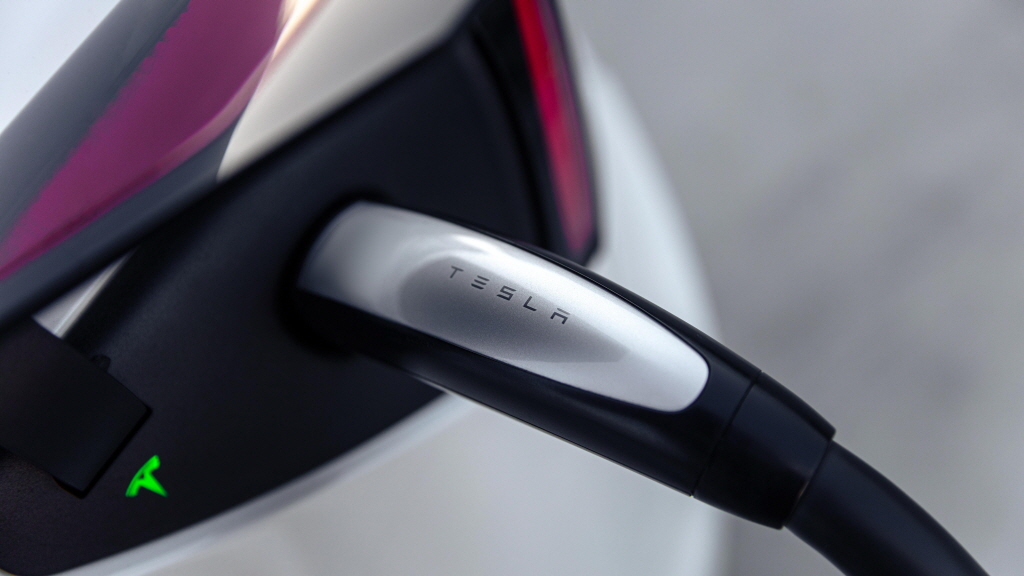
When Tesla changed the name of its Superchargers to the North American Charging Standard (NACS) in November 2022, few would have expected automakers to adopt NACS, but a little over a year later, that has completely changed.

The Society of Automotive Engineers (SAE), which announced in June that it would set technical standards for Tesla's charger connection method, NACS, released the Technical Information Report (TIR) for the NASC standard on December 19.

This report is expected to serve as a foundation for enabling North American electric vehicle and charging station manufacturers and suppliers to manufacture and distribute NACS standard connectors, and the standardization of NACS technology is expected to reduce Tesla's dependence on OEMs and charger companies to adopt NACS.

Ford and GM in the U.S., Honda and Toyota in Japan, and Mercedes-Benz in Germany have already announced that they will use the NACS method.

In addition, Hyundai Motor Company announced in July that it would introduce NACS to vehicles exported to the U.S. starting in the fourth quarter of 2024, and Audi and Porsche, along with Volkswagen, which had been considering introducing NACS, also officially announced the adoption of NACS on the 20th.

Only Stellantis has not yet announced the adoption of the NACS standard.br />
According to the sales rankings of electric vehicles in the U.S. for the first half of 2023 compiled by the Korea Automobile Mobility Industry Association (KAMA), Tesla's Model Y (189,827 units), 3 (108,047 units), and X (14,342 units) took 1st, 2nd, and 5th place, showing a large gap with the 21,326 units of Chevrolet's Bolt, which took 3rd place.

All vehicles ranked from 1st to 10th are using NACS or have confirmed their introduction.

Tesla operates more than 20,000 chargers at 1,900 charging stations across the United States, which is two-thirds of the total chargers in the country.

When the U.S. government demanded that Superchargers be opened as a condition for subsidizing the construction of charging stations, Tesla accepted and opened part of its charging network so that other manufacturers could use it by connecting a MagicDock that can also use the CCS1 standard.

Other manufacturers are not required to install chargers in the United States that conform to their own charging standards.

Changing the charging terminal and exporting it is much cheaper than installing the infrastructure, and there is no need to compete with NACS, which has a high user experience satisfaction, so it is like killing two birds with one stone.

One of the inconveniences for users of CCS1 standard chargers is their weight.

The CCS1 type charger cable, which even an average adult male would find quite heavy, is a burden to the elderly.

Charger companies that participated in xEV Trend Korea in March 2023 also came up with various designs to reduce inconvenience, such as rotating the part where the cable comes out of the device.

On the other hand, NACS has a light cable and a simple appearance.

Unlike other CCS1s, the rapid and slow ports are not divided, and all are controlled up to 1,000 kW and 1 MW.It can happen.

Unlike our country's chargers that rely heavily on the charger, NACS does not have displays or card payment terminals on the charger because the car is in charge of most things.

According to the Ministry of Environment's daily rapid charger status report breakdown details as of December 20, there were two cases of LCD screen failure and four cases of card authentication failure.

The inconvenience of not being able to charge due to a breakdown is also eliminated.

It is unknown in which direction the standards for chargers installed in our country will move.

While the United States is using NACS as its standard, and Europe is using CCS2, Korea is sticking to CCS1.

NACS is suitable for single-phase distribution in the United States, while CCS2 has characteristics suitable for three-phase distribution in Europe.

Many experts say that Korea, which has adopted the European transmission system, should also introduce CCS2 to ensure compatibility in imports and exports.

Current slow chargers are 7kW, but there is an analysis that if CCS2 is used, it can supply up to 22kW, which will significantly reduce slow charging time and reduce inconvenience for electric vehicle drivers.

Attention is being paid to the direction of our country, which aims to distribute 4.2 million electric vehicles and build 1.23 million chargers by 2030.