Kioxia-WD increases lateral cell array density
Implementing 6th generation 162-level vertical stacked memory
40% reduction in die area compared to 112-stage Kioxia and Western Digital (WD) announced on the 24th that they have developed the 6th generation 162-layer 3D flash memory technology, which is the highest density ever achieved by either company.

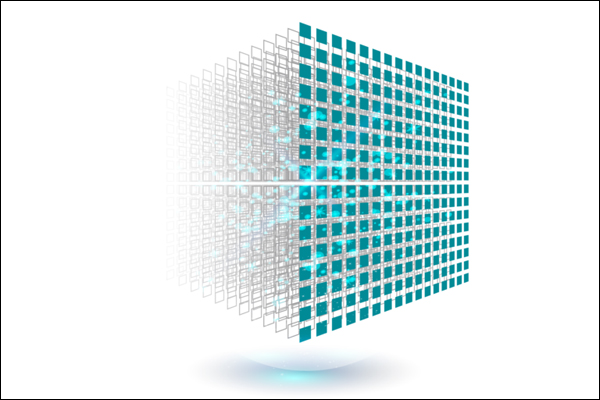
▲ Kioxia-WD Announces 162-Layer 3D Flash Memory Technology [Image = WD]
The 6th generation 3D flash memory announced this time features an advanced architecture compared to the existing 8-stagger structure memory hole array and a 10% increase in lateral cell array density compared to the 5th generation. The combination of advanced lateral miniaturization technology and 162-level vertical stacking memory has reduced the die size by 40% compared to 112-level vertical stacking memory.
The two companies applied the Circuit Under Array CMOS layout and the four-plane method together to the 6th generation 3D flash memory, achieving a 2.4 times improvement in program performance and a 10% improvement in read latency compared to the previous generation. The input/output (I/O) performance was also improved by 66%, enabling support for next-generation interfaces.
The sixth generation 3D flash memory technology reduces the cost per bit compared to the previous generation and also increases bit production per wafer by 70%. The two companies announced detailed information about this technology through a joint presentation at the 'International Solid-State Circuits Conference (ISSCC) 2021' on the 19th.
Currently, the stacking competition is heating up in the memory semiconductor market. Micron announced the mass production of 176-layer 3D NAND last November, and SK Hynix provided 176-layer 4D NAND samples to customers in December. Samsung Electronics announced that it will apply double stack technology to 7th generation V-NAND with 128 layers or more within this year.