UNIST, 소리 듣는 인공피부 개발
기사입력 2022.03.28 16:47
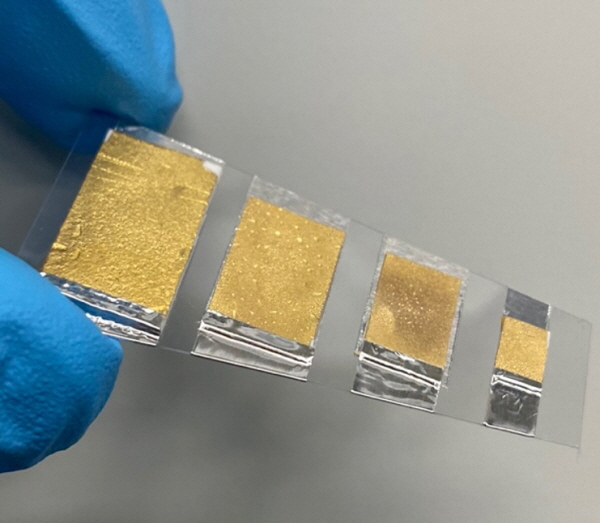
▲연구팀이 제작한 센서
귀의 달팽이관 구조 모방 인공피부 센서 기반
아바타로봇·햅틱장갑 응용 등 VR·AR·IoT 기대
아바타로봇·햅틱장갑 응용 등 VR·AR·IoT 기대
소리를 들을 수 있는 인공피부로 로봇을 조종하는 인터페이스 기술이 개발돼 향후 아바타 로봇 등 가상현실, 증강현실, 사물인터넷 등에 적용이 기대되고 있다.
UNIST(총장 이용훈) 고현협(에너지화학공학과)·김재준(전기전자공학과) 교수팀은 사람 동작, 촉감, 소리 등을 모두 인식해 기계에 전달할 수 있는 사람-기계 인터페이스를 개발했다고 27일 밝혔다.
이번 연구에 대해 연구팀은 “버튼이나 키보드를 누르는 대신 정보를 직관적으로 기계에 전달하는 방식의 사람-기계 인터페이스”라며 “센서가 얇고 부착 가능해 다양한 가상현실(VR), 증강현실(AR), 사물 인터넷(IoT) 기술에 쓸 수 있을 것”이라고 기대했다.
이 인터페이스는 귀의 달팽이관 구조를 모방한 인공피부 센서를 기반으로 한다.
달팽이관 기저막은 두께와 너비, 단단함 정도가 부위별로 달라 소리를 주파수별로 구분해 받아들 수 있는 원리를 응용했다.
센서의 이러한 특성 덕분에 사람의 동작처럼 느리게 반복되는 저주파 신호뿐만 아니라 빠르게 진동하는 소리, 촉감 같은 고주파 신호도 낮은 신호 대 잡음비로 기계에 모두 전달할 수 있다.
연구팀은 이 센서를 활용한 아바타 로봇 손 제어 기술, 스마트 햅틱 장갑 같은 응용 기술을 선보였다.
소리로 아바타 로봇 손을 조종하는 시연에서는 주파수를 바꿔 로봇 손의 손동작을 조종할 수 있었다.
또한 사용자가 스마트 햅틱 장갑을 끼고 움직이면 아바타 로봇 손이 사용자의 손 움직임을 그대로 따라 했으며, 유리, 종이, 실크 등 8가지 다른 물질의 질감도 93% 정확도로 인식했다.
개발한 센서는 달팽이관 기저막처럼 두께, 다공성, 면적 등이 다른 단위 마찰 전기 센서 여러 개가 연속적으로 붙어 있는 형태다.
또한 센서 내부 구조를 특수하게 설계해 기존 평면 형태 센서보다 압력 민감도가 최대 8배 향상됐다.
인식 주파수 대역폭도 45∼9,000Hz(헤르츠)로 사람의 심전도 신호(0.5∼300Hz), 근전도 신호 (50∼3,000Hz), 심음도 신호(20∼20,000Hz), 목소리(100∼400Hz)와 같은 생체 신호를 모두 인식할 수 있다.
외부 소음 환경에서도 머신 러닝을 통해 95% 정확도로 사람 목소리만 인식 가능해 소음 제거 기능을 탑재한 마이크로도 쓸 수 있다.
이번 연구는 미국과학협회(AAAS)에서 발행하는 세계적인 권위지 사이언스(Science)의 자매지인 ‘사이언스 어드밴시스(Science Advances)’에 3월25일 자로 게재됐다. 미래창조과학부 중견연구자지원사업, 이엠텍, 포스코 사이언스 펠로쉽의 지원을 받아 수행됐다.

관련뉴스
-

UNIST, 효율 35% 슈퍼 태양전지 개발 도전
UNIST가 5년간 효율 35%에 달하는 슈퍼 태양전지 개발에 도전해 탄소중립과 함께 국내 태양광 산업 발전에 기여한다.
2021-12-22 오전 9:36:22by 배종인 기자
-

UNIST·연세의료원, 스마트 헬스케어 ‘맞손’
UNIST(총장 이용훈)와 연세대학교 의료원(원장 윤동섭)이 스마트 헬스케어 분야 공동 연구 추진을 통해 연구역량을 강화하고, 의료기술 발전에 기여한다.
2022-01-10 오후 4:36:52by 배종인 기자
-
UNIST, 6G 소자 상용화 눈앞
UNIST 연구팀이 자체 설계한 메타표면을 활용해 이러한 OAM 신호를 빠르게 판별할 수 있는 통신 소자 기술을 제안해 6G 통신 상용화를 앞당길 것으로 기대를 모으고 있다.
2022-03-22 오후 2:52:09by 배종인 기자



많이 본 뉴스

[열린보도원칙] 당 매체는 독자와 취재원 등 뉴스이용자의 권리 보장을 위해 반론이나 정정보도, 추후보도를 요청할 수 있는 창구를 열어두고 있음을 알려드립니다.
고충처리인 장은성 070-4699-5321 , news@e4ds.com