인피니언 Dec
반도체 AI 보안 인더스트리 4.0 SDV 스마트 IoT 컴퓨터 통신 특수 가스 소재 및 장비 유통 e4ds plus

The Ministry of Trade, Industry and Energy is actively fostering star fabless companies, with a large number of global and rising Korean fabless companies participating.

기사입력2023.08.28 13:57


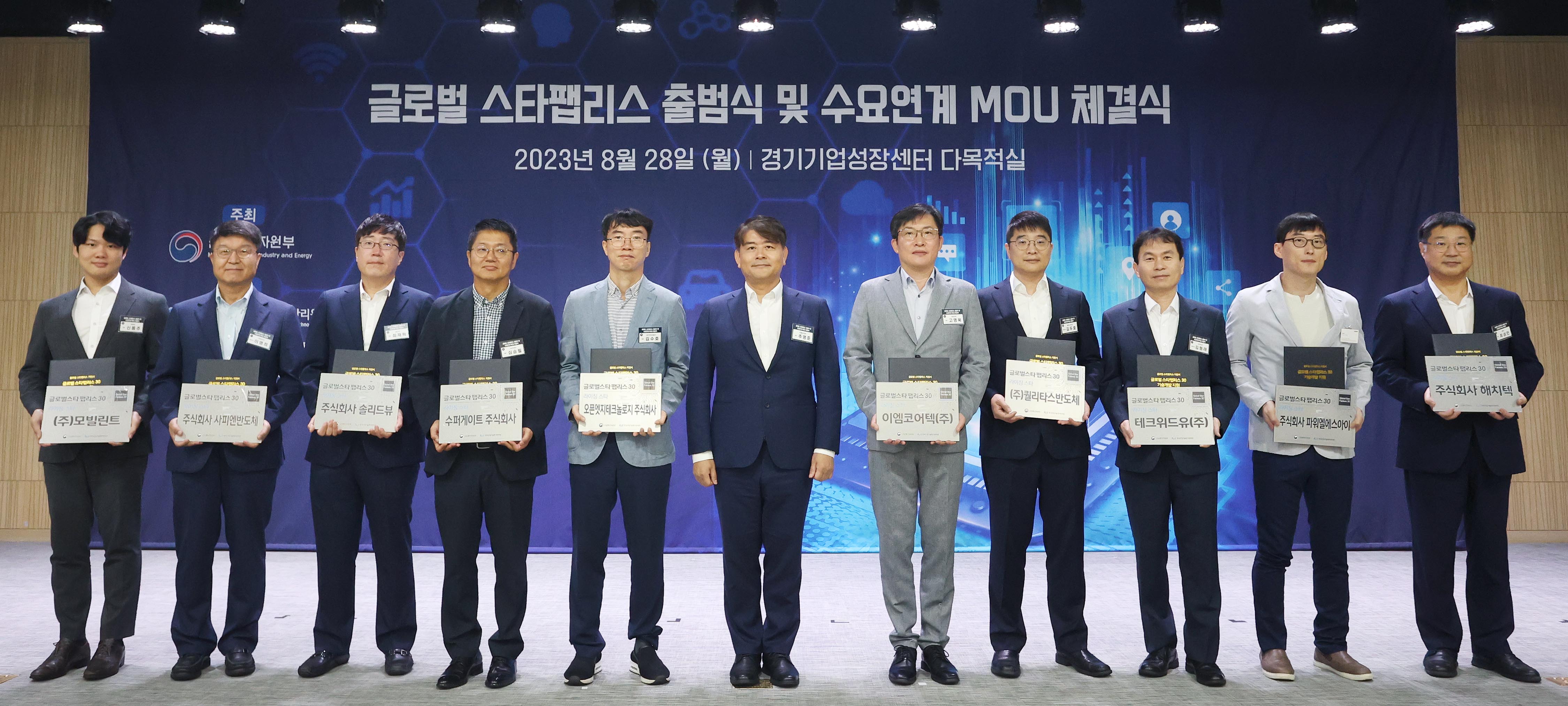
▲Global Star Fabless Launch Ceremony (Photo: Ministry of Trade, Industry and Energy)
10 global companies including Padu, Above, and 3A Logics
10 Rising Companies, Including Mobilint, Supergate, and Sapien
Total support for technology development, MPW prototypes, finance, marketing, and human resources

As the importance of the system semiconductor industry begins to gain attention, government ministries are also contributing to the creation of a related ecosystem and strengthening corporate competitiveness.

The Ministry of Trade, Industry and Energy held the Global Star Fabless launch ceremony at the Gyeonggi Enterprise Growth Center on the 28th.

At the event, representatives from 20 companies selected as global star fabless companies participated and announced to the public that the Ministry of Trade, Industry and Energy and the semiconductor industry are jointly launching a project with the goal of fostering global top-tier fabless companies.

The Global Star Fabless Project is a long-term project aimed at fostering domestic fabless companies into global leaders. The Ministry of Trade, Industry and Energy selected 20 star fabless companies to participate in the project through public notices and expert evaluations.

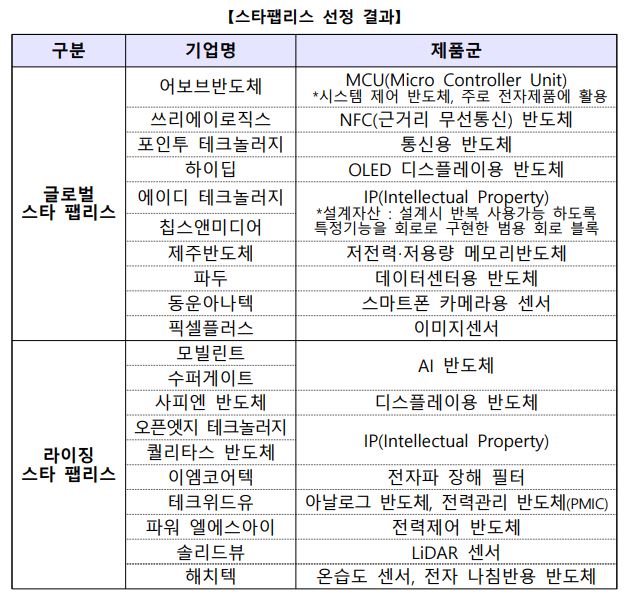
The selected companies are 10 global companies that have been established for more than 7 years: Above Semiconductor (MCU), 3A Logics (NFC), Pointu Technology (communication semiconductor), HiDeep (OLED), AD Technology (IP), Chips & Media (IP), Padu (data center semiconductor), Dongwoon Anatech (smartphone camera sensor), and Pixel Plus (image sensor).

Ten rising star fabless companies with less than 7 years of experience were also selected, including Mobilint (AI chips), Supergate (AI chips), Sapien Semiconductor (display semiconductors), OpenEdge Technology (IP), Qualitas Semiconductor (IP), EMcoretec (electromagnetic interference filters), TechwithU (analog/PMIC), Power LSI (power control chips), SolidVu (lidar sensors), and Hatchtech (temperature and humidity sensors/electronic compass semiconductors).
▲Star Fabless Selection Results (Table: Ministry of Trade, Industry and Energy)

The government plans to actively support the development of star fabless companies by supporting technology development for these companies and applying preferential criteria for various semiconductor support policies, including prototype production such as MPW, financing, domestic and international marketing, and design personnel training.

In addition to the Global Star Fabless launch ceremony, four separate consortium companies developing demand-linked system semiconductor technology also attended the event, signing a Memorandum of Understanding (MOU) for cooperation between supply and demand companies.

The supply companies within the consortium plan to pursue technology development over the next three years with the goal of commercializing semiconductor products that meet the technological standards presented by each demand company within the consortium. The participation of demand companies in technology development is expected to minimize trial and error and increase the possibility of commercialization.

The semiconductor design field, along with foundries, is one of the two major axes of the system semiconductor market, requiring high-level technology and know-how, resulting in high barriers to entry. This is a high-stakes field. The world's top 30 companies account for approximately 90% of the global market, making it imperative for domestic fabless companies to establish a growth foundation to strengthen their competitiveness and secure future growth opportunities.


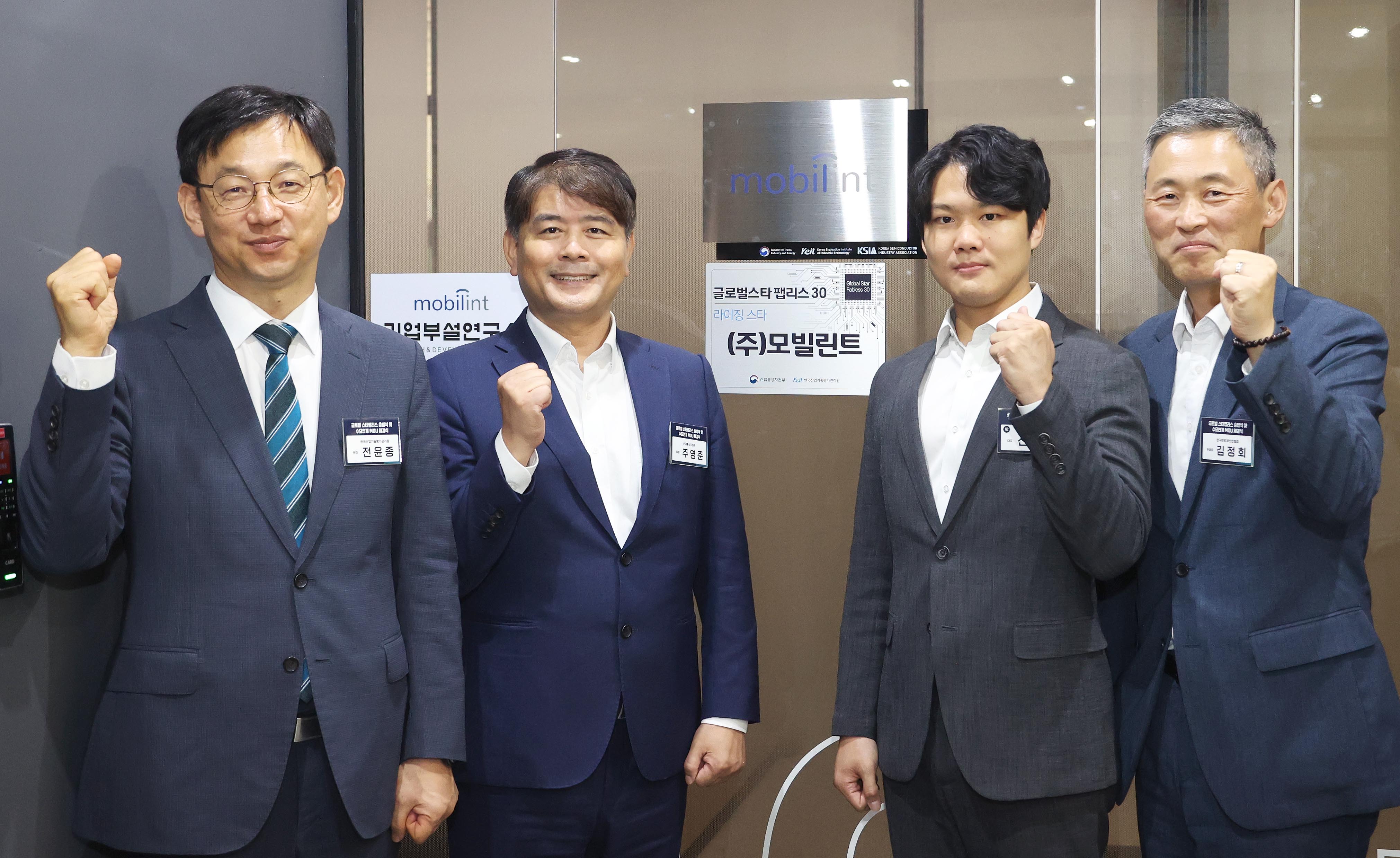
▲Mobilint CEO Shin Dong-joo (center right) and Industrial Policy Director Joo Young-joon (center left) pose for a commemorative photo (Photo: Ministry of Trade, Industry and Energy)

Joo Young-joon, Director of the Industrial Policy Office, emphasized that “the importance of fabless is increasing with the advent of future industries such as artificial intelligence and electrification and the rapid growth of the global system semiconductor market,” and added, “We will provide various government support measures to promising fabless companies to produce top-tier global fabless companies, and provide fabless companies with opportunities to develop new products through support for demand-linked technology development, while creating an opportunity to advance the upstream industry.”

Meanwhile, the government has been supporting the growth of start-up companies by providing EDA tools and office space. It also supports prototype production (e.g., MPW)—essential for fabless companies—to ensure free access to foundries. It also launched a semiconductor ecosystem fund (KRW 300 billion) to foster the growth and independence of fabless companies. Furthermore, it is developing a system semiconductor cluster to strengthen ties with foundries.