마이크로칩 6월
Physical AI HBM Smart Factory SDV AIoT Power Semicon 특수 가스 정정·반론보도 모음 e4ds plus
실무 엔지니어를 위한 LTspice 설계 검증 웨비나
2026-06-09 10:30~12:00
임승찬 고문 / e4ds
.e4ds-wrap { --cream: #f7f4ef; --white: #ffffff; --ink: #1a1a1a; --ink2: #3d3d3d; --muted: #888; --border: #e0dbd2; --orang..

Layout verification with ADS from the design stage for high-speed transmission signal products

Google 우선 소스 기사입력2018.10.08 07:02

With the advent of the 5G era, implementing high-speed transmission signals is essential.
Increasing need for accurate analysis from the product design stage
ADS, collaboration to support development kits and component libraries

Even at this very moment, large amounts of data are being processed at high speed.

The commercialization of 5G is drawing near. Soon, an era will begin where all things will be connected to the Internet.

The characteristics of 5G are ‘ultra-high speed’, ‘low latency’, and ‘hyper-connectivity’.

First, 5G is an ultra-high-speed mobile communication that is much faster than the previous generation. 5G can handle data from 100 Mbps to 20 Gbps per user, which is 20 times higher than LTE (4G). Also, 5G has an extremely short latency. While LTE has a latency of 10 ms, 5G has a latency of 1 ms, which is 10 times shorter. Finally, it can connect a large number of devices simultaneously. While LTE can connect up to 100,000 devices per 1 km2 , 5G can connect up to 1 million devices.

In order to process massive amounts of data from numerous IoT devices connected to the network, the implementation of high-speed transmission signals is essential. Securing signal integrity and power integrity is also becoming more important. Even now, various transmission signal standards are being created, and their specifications are becoming more stringent.

To solve the above difficulties, accurate analysis is necessary from the product design stage.


The challenges of designing high-speed, large-capacity data processing devices

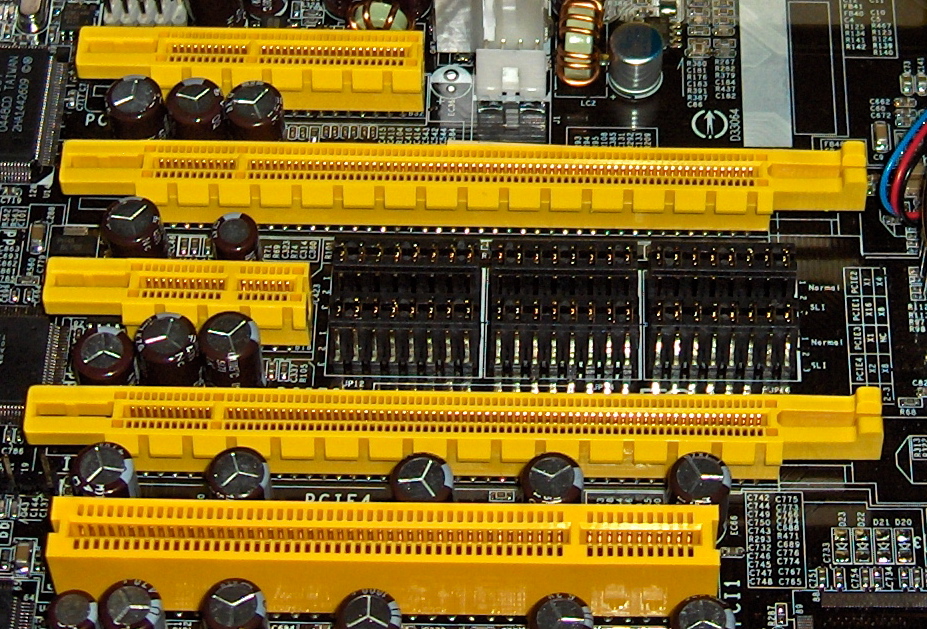
Various PCI Express slots

In line with the 5G era, devices equipped with PCI Express 4.0, USB 3.1, UFS, PAM4, etc. are increasing. Since these devices must process large amounts of data at high speeds, engineers face various difficulties from the product design stage.

Let's look at the difficulties. First, the attenuation of high-frequency components is getting worse. Now, engineers have to pay more attention to channel design. It has also become important to properly set and analyze the various equalizers of the transceiver modules to compensate for the high-frequency attenuation according to the transmission distance.

And as the operating voltage of devices decreases, the current increases, and PCBs become more dense and multilayered. In addition, as product specifications become stricter, engineers must perform meticulous design and verification from the early stages of design. But this is not easy.

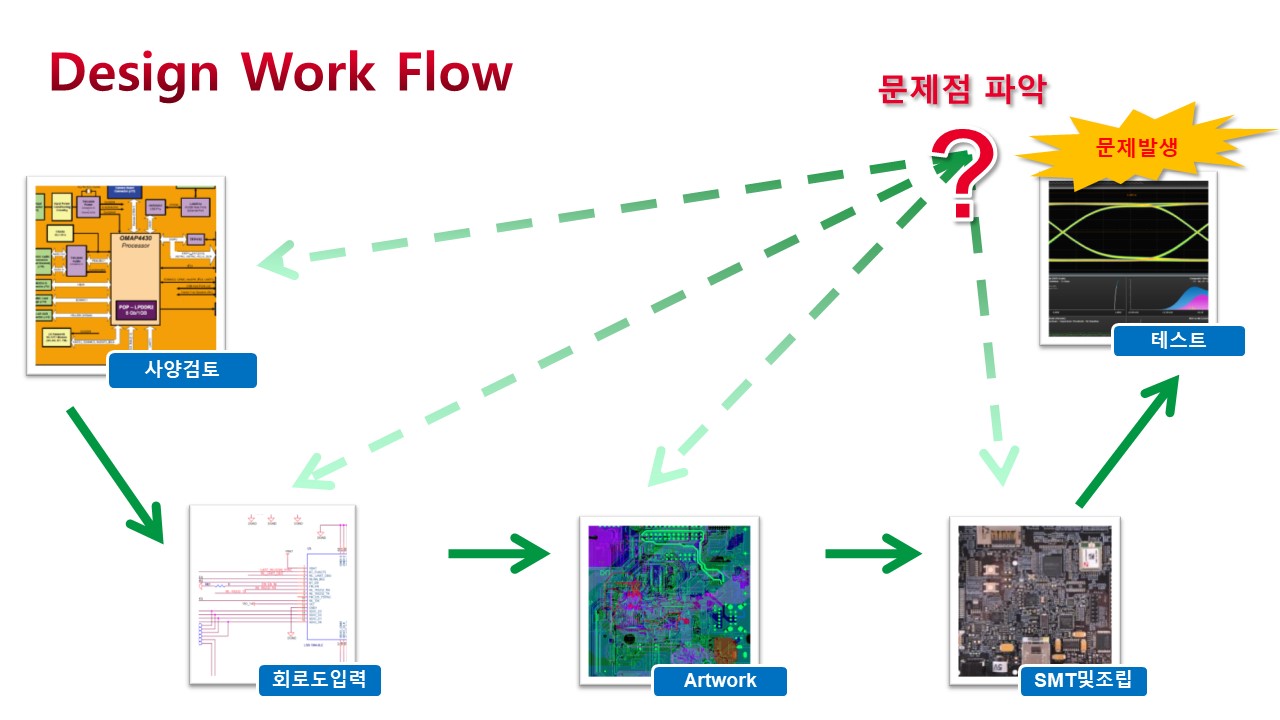
Let's look at a typical design flow.

Finding out where the problem in a finished product originated is a difficult task.

First, in the product planning stage, we conduct a review of specifications for product development. Once the review of specifications is complete, we complete the circuit diagram. Then, for actual PCB production, we collaborate with the artwork engineer to place the components and complete the wiring.

Once the PCB design is complete, the completed Gerber file is sent to the PCB manufacturer to manufacture the PCB and mount the components on the SMT assembly line. The completed product is finally verified using measuring equipment, and if there are no problems, the product is released.

But what if there is a problem? How do you know where the problem is? If you have enough time and resources, you can figure it out, but it will be a tedious task. But what if the design went through a simulation process throughout?

Electronic design automation software makes it easy to identify problems.


What is Keysight's electronic design automation software, ADS?

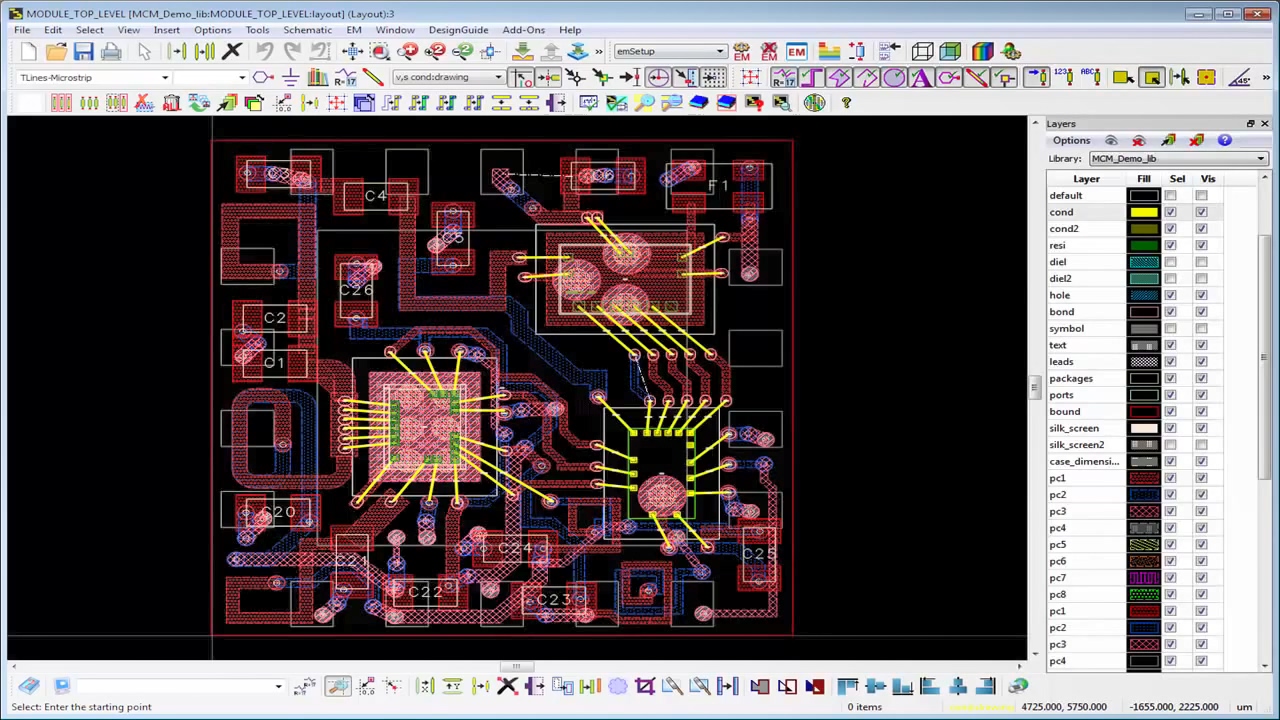
Keysight ADS execution screen

Keysight ADS is electronic design automation software for RF, microwave, and signal integrity applications. According to a related webinar on e4ds.com, ADS is a circuit simulator that acts as a cohesive workflow rather than a point tool solution.

Supporting WiMAX, LTE, multi-gigabit data links, radar and satellite applications, ADS provides a standards-based design and verification environment, including design libraries and circuit-system-EM co-simulation on an integrated platform.

ADS supports product development kits and component libraries through collaboration with major component industry and foundry partners.

After completing the circuit diagram, pre-layout analysis using multiple channel models of ADS can provide an artwork design guide for the product being designed. After completing the artwork process, the current design is verified once more in post-layout analysis.

In this process, channels are extracted into an EM model, and signal quality can be verified through TDR or transient analysis on the time axis. By going through these two pre-verification processes, you can reduce problems such as signal integrity or power integrity that may occur during the actual testing process.


Verify your layout clearly with simulation

PCB transmission line verification requires accurate pre-analysis

Incorporating simulation into your design workflow can help you clearly validate your layout.

In order to reach the concrete stage of the actual model from the abstract product concept stage, clear verification of the layout is necessary. In particular, verification of the transmission lines that make up most of the PCB requires accurate pre-analysis through a clear model.

In the post-layout stage, signal integrity and power integrity must be additionally verified through electromagnetic model extraction and verification along with various parasitic components present on the PCB.

How do we troubleshoot if there is a problem with Eye Open during the final testing phase, the specification testing process?

If there is a problem with a part, you can find the problem by comparing it to other samples. Circuit input errors or coding errors can take a lot of time to resolve.

It is effective to verify signal integrity and power integrity issues through simulation.

Let's look at a simple example.

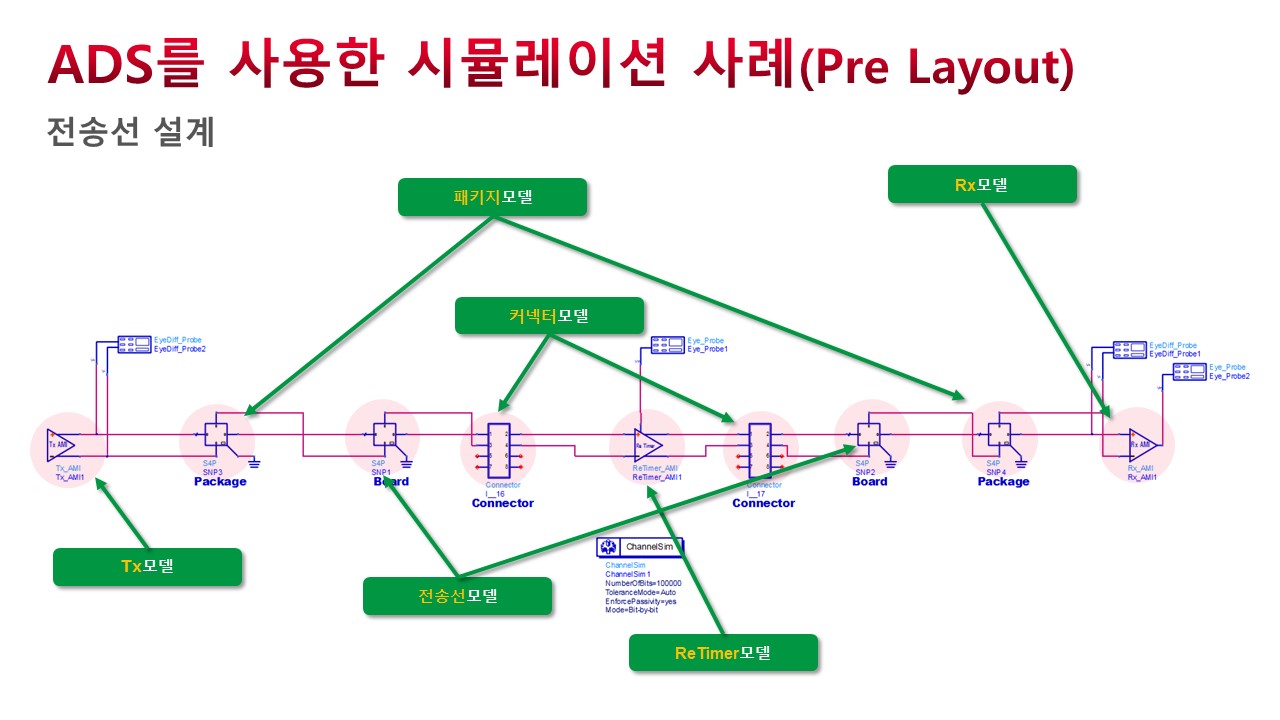
ADS IBIS AMI Model Usage Simulation Case

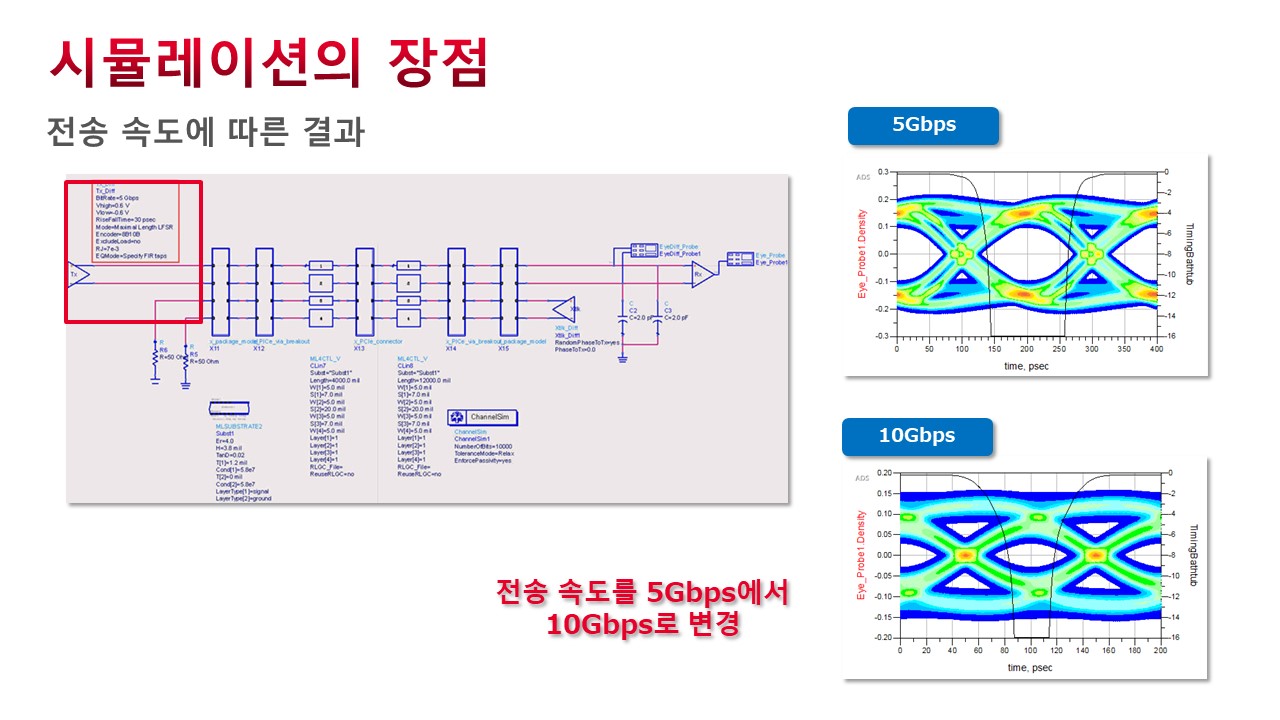
The image is a simulation case using the IBIS AMI model of ADS, a Keysight simulation environment.

The ADS schematic consists of several channel models. A circuit like the image was constructed using the package model, transmission line model, connector model, and IBIS AMI model.

Once you complete the channel and perform the actual simulation, you can check the signal quality level step by step as shown in the image.

The advantage of simulation is that various cases can be verified in advance.

Check channel margin according to transmission speed

You can check how much margin the channel has by changing the transmission rate of Tx as follows. In addition, it is easy to find the optimal design values by simulating the line width or line spacing of a PCB that has not been designed yet.

In the case of the IBIS AMI Model, which is widely used as a Tx model, there are many model-specific contents. For example, adjusting the number of Tx emphasis tabs. Developers can check the results of various cases in advance through ADS.

The models of Tx devices and Rx devices, which are the sources of transmission signals, are supplied by the vendor in the form of IBIS AMI files. For example, if an engineer is using a chipset that transmits a PCI Express signal, he or she can request a file from the chipset manufacturer. However, depending on the circumstances of the chipset manufacturer, it may be supplied in the form of an IBIS model or a SPICE model. In the case of the IBIS AMI model, it is suitable for SerDes applications because it is a model that encrypts the digital parts, such as the equalizer inside the chipset, as a dll file.

The channels through which signals pass, i.e., packages or PCB transmission lines, are modeled using models called S-parameters. Channel models are provided by the vendor, or S-parameters of connector models are received, but engineers can also create them themselves.

In order to obtain the model accurately, modeling is done through measurement or EM analysis. In the case of a measurement model, the bandwidth setting of the measuring equipment or the measurement setup conditions must be taken into consideration, and in the case of modeling based on EM analysis, it is important to accurately set the analysis conditions, such as port setup.

The related webinar held on October 4th at e4ds.com additionally covered the process of importing a designed PCB into the ADS environment, performing electromagnetic analysis, and creating and analyzing an S-parameter model. In addition, a demo was presented of EM analysis using SIPro, the ADS signal integrity electromagnetic analysis tool. This webinar is available for replay.

Engineers from various fields watched the ADS webinar and asked various questions through the Q&A section.

First, there was a question about the application and scope of ADS; ADS can be utilized in various fields. It can be applied to the entire system from ICs such as RFuW, high-speed digital, device modeling, ESL, and RFIC.

There was also a question about what kind of Gerber files ADS can export; ADS can export ODB++, .brd files, and many others.

Finally, there was a question about the difference between the way ADS works and the way it was done traditionally; the traditional way of working inevitably involved a lot of trial and error. However, automated simulation programs like ADS can verify products more quickly by applying already created design guides.
이수민 기자
기사 전체보기

ADS를 이용한 High Speed 채널 시뮬레이션 방법
2018-10-04 10:30~11:52
Keysight / 정태종 부장