First sales after FEC restart, increased capacity to meet battery demand
Fluorine Korea (formerly Solvay Korea Onsan Division, CEO Beom-seok Oh), a semiconductor and secondary battery materials specialist, has achieved its first sales since the restart of its FEC and is steadily preparing for an IPO.
K&W (CEO Won-seok Oh) announced on the 7th that Fluorine Korea has recently resumed full-scale production of secondary battery electrolyte additives. Fluorine Korea is a subsidiary of K&W, a company specializing in advanced materials.
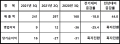
Fluorine Korea resumed production of 'FEC (Fluoro ethylene carbonate),' which had been discontinued due to low profitability during the Solvay Korea era, and recorded its first sales this year.
FEC is an additive used in electrolyte, one of the four key raw materials for secondary batteries. It is a substance that increases battery safety and prevents performance degradation due to electrolyte decomposition during charging, thereby extending battery life.
A company official said, “Due to the increase in demand for electric vehicles, the price of FEC required for battery production has risen significantly, and we expect demand to grow by an average of about 25% per year for the next five years. In response, we are in the process of expanding our existing 100-ton production facility to 150 tons by the first half of next year,” adding, “We will actively take advantage of the market environment in which major companies related to semiconductors and secondary batteries, which are upstream industries, are concentrated in Korea and East Asia.”
He added, "Amidst the worsening supply and demand for various materials due to the US-China conflict and global logistics difficulties, we will contribute to stabilizing domestic supply through rapid expansion."
Fluorine Korea completed construction of the world's largest production plant for lithium-ion secondary battery materials in 2009, when it was a subsidiary of the Solvay Group. The plant remains Korea's only FEC production plant to this day.
FEC is known to take at least five years from research and development to pilot production and is difficult to mass-produce, but the company is securing competitiveness through the know-how and production infrastructure inherited from the Solvay Group. In addition to expanding FEC production facilities in the future, the company is also actively considering the production of VC, another additive.
Meanwhile, Fluorine Korea has been focusing on strengthening its ESG capabilities since 2011 by conducting a carbon emissions trading business utilizing technology to recover and reprocess waste SF6 gas. This reprocessing technology has generated approximately KRW 2.5 billion in annual operating profit, and this year, the company also realized operating profit through carbon emissions trading. Starting next year, the company is preparing a new carbon emissions trading business model that involves recovering and then decomposing waste SF6 gas.
Fluorine Korea CEO Oh Beom-seok said, “As part of our ESG management practices, we will pursue sustainable value for the company through new carbon emission rights businesses that produce F2 gas, which has no ozone impact, and recover and decompose SF6 gas, in addition to secondary battery-related businesses.” He added, “We will resume production of secondary battery electrolyte additives and begin preparing for an IPO by building ESG capabilities.”