현실-가상 동기화하는 CPS로 스마트팩토리 가시화한다
기사입력 2019.10.07 17:39
CPS, 사이버 세계 디지털 모델과 연결되는
컴퓨터 기반 구성 요소 및 시스템
CPS 활용, 단계별 기술 개발 전략에 달려
스마트제조(Smart Manufacturing)란, ICT(Information & Communication Technology)를 활용한 제조로, 시장 수요의 다양화와 고급화에 따른 개인 맞춤형 생산(Personalized Manufacturing)을 구현하는 데 목적이 있다. 인간과 협업하며 스스로 학습하는 디지털 제조 방식이 적용된 4차 산업혁명 시대 고유의 생산방식이다.
그런 스마트제조를 실행하는 생산 시스템이 바로 스마트팩토리(Smart Factory)다. 스마트팩토리는 생산 현장에 다양한 ICT를 결합한다. 그로써 개별 공장의 설비와 공정을 지능화하여 네트워크로 연결한다. 연결된 공장들은 모든 생산 정보를 실시간으로 공유하며 그를 활용해 효율적이고 자율적으로 운영된다.
스마트팩토리의 주 목적은 효율적이고 유연한 자율적인 지능형 설계와 운영이다. 이를 위해 적용되는 주요한 개념이 인지(Sensor), 판단(Decision & Control), 행동(Actuation)을 능동적이고 자율적으로 수행하는 ‘사이버 물리 시스템(Cyber Physical System; CPS)’이다.
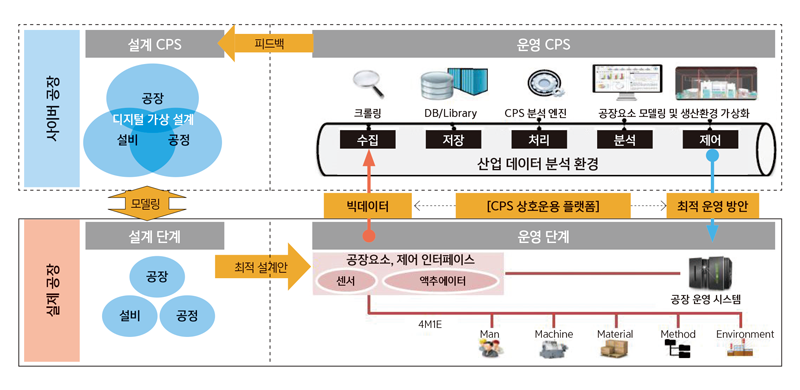
▲CPS와 스마트팩토리 설계 및 운영 개념
(이미지=한국산업기술진흥협회)
(이미지=한국산업기술진흥협회)
성균관대학교 시스템경영공학과 노상도 교수는 2018년 3월, 기술과 혁신지에서 CPS가 있어야 제품, 공정, 설비, 공장이 통합되어 상호 연계되고, 제조의 모든 과정에서 유연하고 효율적인 자율 운영이 이루어지는 스마트팩토리가 실현된다고 설명했다.
일반적으로 CPS는 실제 세계에서 진행되는 업무, 공정, 정보 데이터에 IoT 등의 네트워크를 통해 접근, 처리, 관리하는 개방형 서비스를 기반으로 한다. 즉, CPS는 사이버 세계의 디지털 모델에 연결, 활용하는 컴퓨터 기반 구성 요소와 시스템이다.
제조 시스템에 CPS를 적용하면, 기존의 생산 정보화가 가지고 있던 수직적 네트워크와 한정된 정보 교환 등의 한계를 극복할 수 있다. 또 4M(Man, Material, Method, Machine) 등 다양한 생산 정보를 유연하게 설정하고 이를 바탕으로 한 효율적인 관리와 운영이 가능해진다.
제품 CPS와 생산 CPS
스마트팩토리에서의 CPS 기술은 적용 대상에 따라 ‘제품 CPS(Product CPS)’와 ‘생산 CPS(Production CPS)’로 나눌 수 있다.
제품 CPS는 인지, 판단, 그리고 행동 기능들이 소형화되고 모듈화되어 제품에 탑재된다. 이들은 서로 네트워크를 통해 정보를 교환하여 새로운 제품 서비스를 창출한다. 이를 위해서는 센서, 액추에이터, 제어 기술과 이들을 뒷받침하는 컴퓨팅 기술, 그리고 이들을 서로 연결시켜주는 통신 기술의 융합이 필수적이다.
생산 CPS는 제품, 생산 설비와 공장의 디지털 모델에 기반을 둔 사이버 세계와 실제 세계의 통합 시스템이다. 즉, 실제 세계의 제품, 공정, 설비, 공장 등에 대한 가상화를 통해 사이버 세계의 디지털 모델을 구축한 후, 사전 시뮬레이션을 통한 최적의 생산 계획, 공정 설계를 수행한다. 이를 실제 생산에 적용하고 설비 고장 등 실제 현장의 변화를 각종 센서 등으로 인지하여 사이버 세계에 실시간으로 동기화한다.
또 외부 환경, 공장 설비 및 운영 시스템에 연결된 센서 등과의 통신을 통해 수집된 정보를 자율적으로 분석하고 의사 결정하여 최적의 솔루션을 찾는 방식으로 ‘지능화된 상황 인지’, ‘분석, 판단 및 의사결정’, ‘사전 검증된 수행’을 통해 설계, 운영에 관련된 최적화된 의사결정을 통합하고 지원한다.
특히 데이터를 기반으로 실제 제조 현장에 맞춰 조정되고, 동기화된 사이버 세계의 디지털 모델, 즉 ‘디지털 트윈(Digital Twin; DT)’을 구축하여 활용한다.
CPS 구성하고 운영하려면
스마트팩토리에서는 제품, 공정, 다양한 설비들과 ERP(Enterprise Resource Planning), MES(Manufacturing Execution System) 시스템 등 여러 관리 및 운영 시스템들이 상호 연계된다. 또한 클라우드를 기반으로 제조 빅데이터 관리와 분석이 수행되어 현장과 동기화된 사이버 모델이나 DT가 구성되어 운영(Operation)과 가시화(Visualization)에 활용되며, 이를 바탕으로 지식 관리(Knowledge Management)와 최적화가 달성된다.
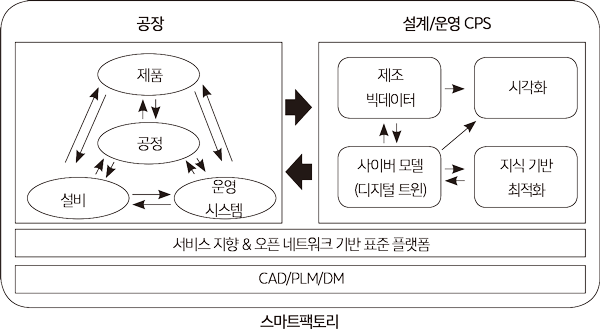
▲CPS 기반 지능형 스마트팩토리 설계 및 운영
(이미지=한국산업기술진흥협회)
(이미지=한국산업기술진흥협회)
이러한 기능들은 서비스 지향 & 개방형 네트워크와 표준 플랫폼, 엔지니어링을 지원하는 제품수명주기관리 시스템(Product Lifecycle Management; PLM)을 바탕으로, IIoT와 산업 서비스 인터넷(Industrial Internet of Services; IIoS) 기반 개방형 네트워크와 상호 운용 플랫폼(Interoperable Platform)을 통해 통합되고 상호 연계된다.
스마트팩토리 사이버 모델, 또는 DT 가상화를 위해서는 PLM에서 관리되고 있는 제품, 공정, 제조자원과 공장에 대한 P3R(Product, Process, Resource & Plant) 엔지니어링 정보와 디지털 모델이 기본이 된다. 엔지니어링 소프트웨어와 서비스 연결을 통해 제조 시스템의 4M, 엔지니어링 정보 기반의 제품, 공정, 설비, 공장의 실시간 가상화(Realtime virtualization)가 가능하게 된다. 즉, PLM 기반 엔지니어링 정보와 IIoT 기반의 제조 빅데이터 활용을 통하여, 제품 개발 및 생산의 모든 단계에서 체계적이고 지속적인 CPS의 구성과 적용을 통해 자율 운영과 최적화가 수행되는 것이다.
이러한 CPS의 구성과 운영을 위해서는 다양한 기술들이 계층별로 융합되어야 하며, 주요한 핵심 요소 기술은 ▲클라우드 기반 상호 운용 플랫폼 ▲센서 네트워크를 통한 데이터 수집 및 처리 ▲산업 데이터 분석을 통한 수집 데이터의 정제와 해석 ▲실시간 가상화를 통한 사이버 모델, 또는 DT 자동 구축 ▲머신 러닝 등 여러 AI 기법 기반 의사결정 최적화다.
특히 CPS 기술의 개발과 적용을 위해서는 기술 그 자체에 대한 연구와 개발에 더하여, 다른 기술들과 상호 작용, 유연하게 운용될 수 있는 통합 기술과 지원 시스템이 필수적이며, 적용 목적과 수준, 단계에 따른 단계별 기술 개발과 적용 전략이 필요하다.
지능화되는 조선업
한국스마트제조산업협회(KOSMIA)는 지난 2일, 서울 삼성동 코엑스에서 AI 기반 산업지능화 방안을 주제로 한 ‘AI 팩토리 컨퍼런스 2019’를 개최했다.
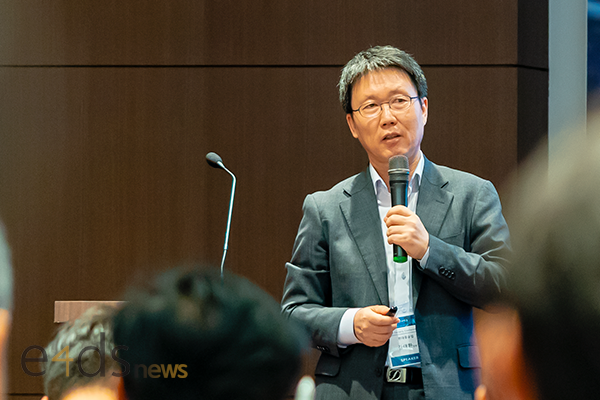
▲김태환 현대중공업 전무 (사진=이수민 기자)
김태환 KOSMIA 협회장 겸 현대중공업 전무는 개회사에서 스마트팩토리를 온전히 구현하기 위해서는 필요한 시점에 필요한 데이터를 수집하고, 확보한 데이터를 업무에 적용하여 가치를 창출할 수 있어야 한다고 말했다. 그리고 이어진 세션에서 김태환 전무는 ‘현대중공업 제조 지능화 사례’에 대해 발표했다. 현대중공업은 2017년부터 디지털 전환을 진행 중이다.
선박은 영업과 수주, 선박 설계, 강재 절단, 용접 조립, 의장, 도장, 탑재, 안벽작업 후 시운전을 거쳐야만 출하된다.
현대중공업은 강재 절단에는 절단장비 모니터링 시스템을, 용접 조립에는 용접 모니터링 시스템과 BLT 라인 스마트팩토리 시스템, 대조립 차세대 제조 시스템을 적용했으며, 의장에는 스마트 자제 물류 시스템을, 도장에는 도장 모니터링 시스템을, 탑재에는 골리앗 크레인 예지보전 시스템을 운용하고 있다. 그리고 실질적인 건조 부분 전반에서 도크 분전반 전력 모니터링 시스템을 활용하고 있다.
궁극적으로는 IoT로 이 시스템들을 통합하여 조선소의 현황을 가시화하는 것이 목표라고 김태환 전무는 설명했다. 광활한 크기의 조선소는 업무 특성상 이동도 잦다. 한눈에 선박의 건조현황을 파악하는 것은 쉽지 않은 일이다.
현대중공업은 5G를 활용하여 IoT 엔드포인트 디바이스를 연결하고 이들로부터 얻어진 각 시스템의 정보를 통합 플랫폼으로 모아 물리적인 세계와 동기화된 사이버 세계의 디지털 모델, DT를 구축할 계획이다.
CPS, 스마트팩토리 구현 핵심 기술
앞서 언급한 것처럼 스마트팩토리는 전통적인 제조업에 ICT를 결합하고 적용하여 모든 생산 과정에서 자율최적화를 실현하려는 전략이다. 이를 통해 다양한 상황 변경에서도 낭비나 시행착오 없는 효율적인 제조 최적화를 달성할 수 있다.
CPS는 IIoT 기술을 적용해 생산 전 과정에서 제품, 공정, 설비, 공장 등 모든 개체를 연결, 감시하고, 모아진 제조 빅 데이터를 관리, 정제, 분석한다. 그리고 실시간 동기화를 통해 현장 상황과 일치하는 사이버 모델을 수립하고 지능적으로 활용한다. 이를 통해 자율적이고 능동적으로 설계 및 운영 최적화를 달성하려는 스마트팩토리의 핵심 기술이라고 할 수 있다.
이수민 기자
관련뉴스
-
유니버설로봇-포스코 ICT, 산업용 협동로봇 공동 전선 구축 "스마트팩토리 시장 선점한다"
유니버설로봇과 포스코 ICT는 스마트팩토리 및 산업용 협동로봇 사업 공동추진 협약을 체결했다. 포스코 ICT는 로봇통합 O&M 운영 솔루션인 IRaaS를, 유니버설로봇은 IRaaS에 협동로봇을 제공하여, 유니버설로봇의 국내 대리점 망을 활용한 마케팅 및 유통에 공동 협력하기로 했다. 유니버설로봇은 대리점과 연계하여 IRaaS 솔루션 마케팅 및 영업, 협동로봇 및 애플리케이션의 공급 및 구축을 지원하며, 포스코 ICT는 협동로봇 사업을 위한 컨설팅 및 엔지니어링 서비스와 로봇통합 O&M 솔루션 및 IT 솔루션의 개발·공급·구축을 지원한다. 유니버설로봇의 협동로봇은 향후 포스코 그룹사 대상으로 단계적 확대 적용될 예정이다.
2019-08-08 오전 9:21:11by 이수민 기자
-
KT, 5G 기반 클라우드 스마트팩토리 플랫폼 소개
스마트팩토리는 방대한 데이터를 실시간으로 수집, 분석하고 이를 저장 관리하는 고성능 서버와 저장소가 필요해 많은 비용이 소요된다. 중소기업들은 스마트팩토리의 필요성에 공감하면서도 비용 부담으로 인해 쉽게 도입하지 못하고 있다. 이에 KT가 26일부터 28일까지 ITS2019에 참가하여 중소기업을 위한 5G 제조 클라우드와 스마트팩토리 플랫폼을 소개한다. KT는 중소기업들이 서버 구축 및 유지관리에 대한 부담 없이 스마트팩토리를 도입할 수 있도록 5G 기반 제조 클라우드를 제공할 계획이다.
2019-08-26 오후 2:30:00by 이수민 기자
-

AI 팩토리 컨퍼런스 2019, 제조업에 부는 AI 바람 조명
한국스마트제조산업협회가 서울 삼성동 코엑스에서 AI 기반 산업지능화 방안을 주제로 한 'AI Factory 컨퍼런스 2019’를 처음으로 개최했다. KOSMIA 김태환 협회장은 개회사에서 “스마트팩토리를 온전히 구현하기 위해서는 필요한 시점에 필요한 데이터를 수집하고, 확보한 데이터를 업무에 적용하여 가치를 창출할 수 있어야 한다”라며, “기업은 새롭게 수집하는 데이터뿐만 아니라 기존에 축적해둔 데이터를 활용할 줄 아는 인재와 역량을 확보해야 한다”라고 강조했다.
2019-10-02 오후 3:59:39by 이수민 기자


많이 본 뉴스

[열린보도원칙] 당 매체는 독자와 취재원 등 뉴스이용자의 권리 보장을 위해 반론이나 정정보도, 추후보도를 요청할 수 있는 창구를 열어두고 있음을 알려드립니다.
고충처리인 장은성 070-4699-5321 , news@e4ds.com