반도체 AI 인더스트리 4.0 SDV 스마트 IoT 컴퓨터 통신 특수 가스 소재 및 장비 e4ds plus

The autonomous vehicle market will grow explosively starting in 2025

기사입력2019.10.30 18:03

Securing AI technology determines competitiveness of companies, countries, and individuals
Automotive AI ultimately evolves into self-driving cars
AI robots introduced across all industries including manufacturing, logistics, and finance


On the 29th, IRS Global published a report titled 'Domestic and international core technology development trends and business analysis of artificial intelligence (AI) in the automobile and robotics sectors.'
Domestic and international key technology development trends and business analysis report on artificial intelligence (AI) in the automobile and robotics sectors (Image = IRS Global)

According to the report, AI technology is growing into a core technology that will change not only industries but also human lives, and the ability to secure and utilize AI technology will now determine the competitiveness of companies, countries, and individuals.

Recent advances in AI technology have been largely driven by deep learning technology. Accordingly, big data based on high-quality data is also emerging as an important element, and major advanced countries are strengthening policy support by including big data in their AI technology development strategies.

The areas of application of AI can be broadly divided into product and service areas, but it is expected that AI will be applied to almost all areas in the near future.

Global companies are actively pursuing strategies to secure leadership and expand the ecosystem, and are strengthening their platforms through open sourcing.


Partial car AI will evolve into self-driving cars
The automotive industry is undergoing a transformation due to AI. In automobiles, AI is used for in-vehicle infotainment, advanced driver assistance systems (ADAS), etc.

According to IHS Technology, the adoption rate of AI in automobiles is expected to increase from 8% in 2015 to 109% in 2025, and AI is expected to become a standard system in new cars. It also predicted that partial application of AI in automobiles will ultimately result in convergence with autonomous vehicles.

Currently, two groups of companies are pushing ahead with development and commercialization of autonomous driving.

One group is OEMs, which want to put features like deep learning algorithms to recognize obstacles in their cars to improve ADAS. Companies like Toyota, GM, Ford, BMW, Audi, Mercedes, and Tesla are included here. Level 2+ and Level 3 cars are expected to be commercially available soon.
Autonomous vehicle technology is developing, focusing on the taxi industry.

Another group is global IT companies and startups that provide services using autonomous vehicles such as robotaxis or driverless shuttles. Waymo, Uber, Yandex, Baidu, and Apple are planning to provide robotaxi services in certain cities, and many startups are also pushing to launch MaaS (Mobility as a Service).

The autonomous vehicle industry is still in its early stages of growth, and each organization has different forecasting methodologies and measurement standards, so there is a large difference in forecasts by organization. However, they all predict that the market will grow significantly by 2025 and reach its peak around 2040.

The reason why the commercialization of autonomous vehicles seems slow is because automobiles have the characteristic of having a fatal impact on life. Automakers are also well aware of this, so they are carefully and thoroughly conducting the expansion of autonomous vehicle projects and test runs.


AI Robots, Now Industries That Haven't Adopted Them Are Getting Attention
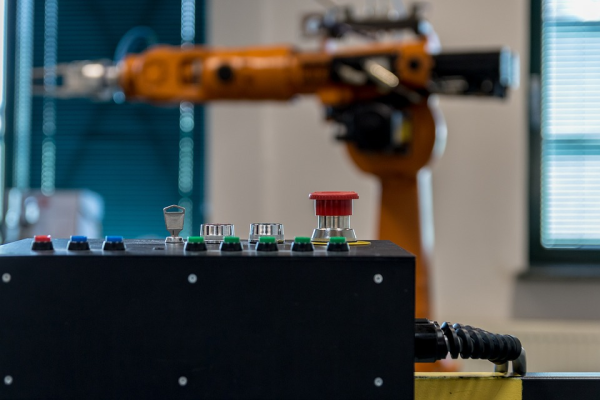
AI robots are already being used in various industrial fields and are expected to expand into various application fields. The field where AI robots are most advanced is manufacturing. Robots have been used extensively in manufacturing. Manufacturing AI robots that can perceive their work environment and adjust their own movements are evolving factory automation into autonomy.
Existing robots can be transformed into AI robots simply by installing AI modules.

In the logistics field, autonomous transport robots are representative. In large warehouses, dozens to hundreds of transport robots run, but in order to prevent collisions and accidents, the location of the shelves and the travel path must be optimized. AI predicts the work movements of each robot and thinks about and moves the most efficient arrangement and path.

AI robots are spreading to most industries, including healthcare/medical, agriculture, security, construction, tourism, and finance. Until recently, industries that introduced AI were the talk of the town, but now, industries that have not introduced AI will be the ones to receive attention.

RPA (Robotic Process Automation) is also something that cannot be left out. RPA is the process of automating tasks that people repeatedly handle through software robots, converting standardized and regular work processes into automated systems. Recently, it has been greatly improving work productivity by performing regular and repetitive tasks based on technologies such as AI and machine learning.

Some people are raising critical opinions that humans will lose their jobs. Experts in the robotics industry believe that robots will not take over human jobs, but will contribute to the creation of large numbers of high-quality jobs while increasing productivity and quality.
이수민 기자
기사 전체보기