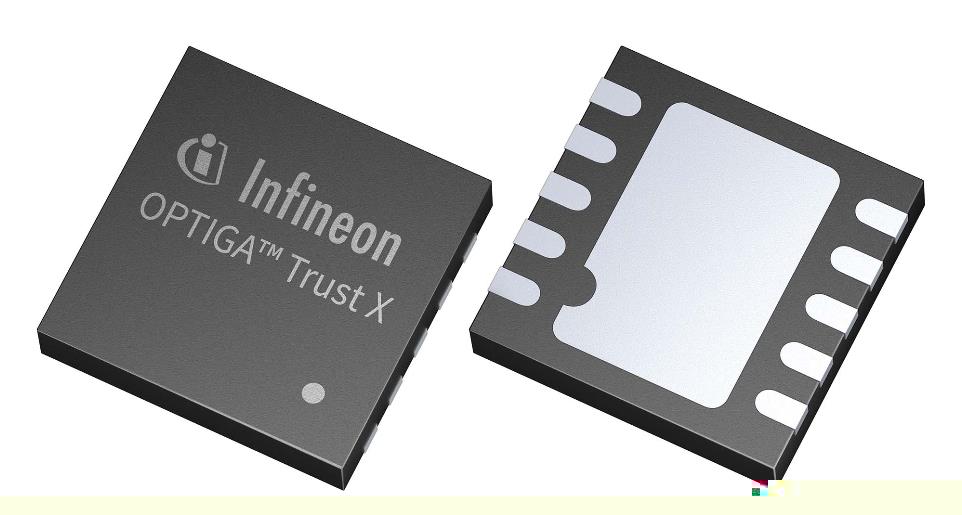
Providing security for a wide range of IoT applications, from smart homes to drones Infineon Technologies AG has launched the OPTIGA Trust X series of hardware-based security solutions to provide robust security for a wide range of IoT applications, from smart homes to drones.
OPTIGA Trust X provides secure communication, software updates, and mutual authentication. It is also plug-and-play capable, allowing device manufacturers to save development time and costs and easily develop products without requiring specialized security knowledge.
“When developing IoT, security must be considered from the beginning,” said Thomas Rosteck, President of Infineon’s Chip Card and Security business line. “Hardware-based security can better thwart attacks by safely separating critical data from execution. With OPTIGA Trust X, manufacturers can easily integrate robust security into their IoT devices.”

Infineon’s OPTIGA Trust X, used in eluminocity’s smart streetlights, protects streetlights from unauthorized access from the cloud to the device. In collaboration with Infineon and Intel, eluminocity transformed simple streetlights into multipurpose hubs. The streetlight has already been installed in Hong Kong Science Park, providing flexible street lighting as well as electric vehicle charging and air quality measurement sensors.
Emergency responders often arrive at the scene of an accident with only scant information. At the “Digital Product School” event of the UnternehmerTUM Innovation Center at the Technical University of Munich, employees from Infineon, Nokia and TÜV SÜD together with students developed the first drone with hardware-based security. The idea was to provide emergency responders with reliable information before they even arrive at the scene. Here too, it is necessary to protect sensitive data, reliably authenticate control units and block attacks. The OPTIGA Trust X used here effectively defends against attacks and acts as a trust anchor.
This security solution can be used for a variety of applications such as mutual authentication, secure communication, data storage protection, key assignment, lifecycle management, power management, security updates, and platform integrity protection.
저전력으로 보안을 확보하기는 대단히 어려운 숙제로 보입니다