2021년 글로벌 BEV 판매량 전년比 112% ↑
기사입력 2022.03.11 09:38
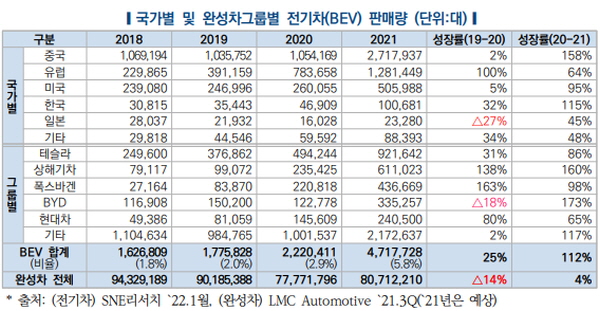
▲ 국가별 및 완성차그룹별 전기차(BEV) 판매량 (출처: 한국자동차연구원)
2021년 테슬라 글로벌 판매량 92만대…1위
현대차 국내 BEV 판매량 7만2천대…157% ↑
2021년 완성차 전체 판매량이 전년 대비 4% 증가하며 미약한 회복세를 보인 반면 전기차 판매량은 세 자리 증가율을 보이며 자동차 시장에 확고하게 자리매김했다.
한국자동차연구원 자료에 따르면 2021년 글로벌 전기차 신차 판매량은 약 472만대로 전년 대비 112% 증가하면서 전체 완성차 판매량의 5.8%를 차지했다.
지역별로 살펴보면 중국과 한국이 각각 158%, 115% 판매 성장률을 보이며 다른 지역보다 월등히 높다.
중국은 지난해 271만7,937대를 판매하며 1위를 차지했고, 유럽이 128만1,449대로 2위에 올랐다.
테슬라가 판매량 1위를 쟁취했고 상해기차, 폭스바겐, BYD, 현대차그룹이 뒤를 이었다.
테슬라는 지난해 92만1,642대를 판매하며 전체 전기차 판매의 19.5%를 점유했다.
이는 글로벌 전기차 판매량 1위로 2018년부터 단 한 번도 정상의 자리를 내주지 않은 기록이다.
지난해 글로벌 최다 판매 전기차 모델 1, 2위는 테슬라의 ‘모델3’와 ‘모델Y’다.
전 세계에서 각각 47만대, 42.6만대 판매 기록을 세우며 테슬라 연간성장률 86% 상승을 이끌었다.
한국자동차연구원 자료에 따르면 2021년 글로벌 전기차 신차 판매량은 약 472만대로 전년 대비 112% 증가하면서 전체 완성차 판매량의 5.8%를 차지했다.
지역별로 살펴보면 중국과 한국이 각각 158%, 115% 판매 성장률을 보이며 다른 지역보다 월등히 높다.
중국은 지난해 271만7,937대를 판매하며 1위를 차지했고, 유럽이 128만1,449대로 2위에 올랐다.
테슬라가 판매량 1위를 쟁취했고 상해기차, 폭스바겐, BYD, 현대차그룹이 뒤를 이었다.
테슬라는 지난해 92만1,642대를 판매하며 전체 전기차 판매의 19.5%를 점유했다.
이는 글로벌 전기차 판매량 1위로 2018년부터 단 한 번도 정상의 자리를 내주지 않은 기록이다.
지난해 글로벌 최다 판매 전기차 모델 1, 2위는 테슬라의 ‘모델3’와 ‘모델Y’다.
전 세계에서 각각 47만대, 42.6만대 판매 기록을 세우며 테슬라 연간성장률 86% 상승을 이끌었다.
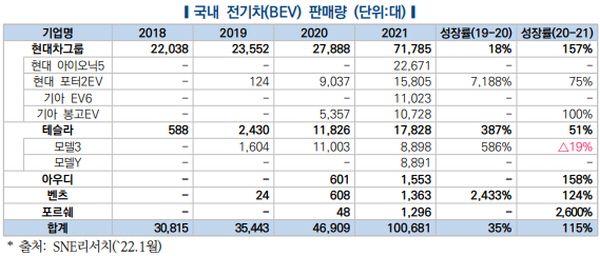
지난해 국내 전기차 시장도 뜨거웠다.
2021년 국내 전기차 판매량은 10만681대로 전년대비 115% 증가했다.
국내에서는 현대 아이오닉5, 포터2EV와 기아 EV6 등의 판매량 증가로 테슬라의 성장률은 주춤했다.
현대차그룹은 지난해 7만1,785대의 전기차를 판매하며 국내 전기차 시장 점유율 71.3%를 차지했고, 157%의 연간성장률을 기록했다.
2021년에 출시된 아이오닉5가 2만2,671대가 판매되어 현대차그룹 내 판매량 1위를 차지했다.
테슬라는 지난해 국내 판매량 17,828대를 기록해 전년대비 51% 증가했다.
중국의 전기차 성장세가 매섭다.
지난해 중국은 약 50만대의 전기차를 수출하며 최다 전기차 수출국으로 자리매김했다.
2020년 2%의 그쳤던 성장률이 지난해 158%를 기록했고 271만7,937대가 판매되며 전 세계 전기차 판매량에서도 1위를 차지했다.
상해GM우링의 ‘홍광 MINI’는 지난해 41만9,000대가 판매되며 세 번째로 많이 팔린 모델로 새로운 전기차 카테고리 창출의 가능성을 입증했다.
2022년에도 글로벌 기업들이 다양한 전기차 모델을 출시하며 치열한 경쟁을 할 것으로 보인다.
기아 ‘EV6’가 ‘유럽 올해의 차’에 뽑힌 데 이어 현대 ‘아이오닉5’가 ‘2022 영국 올해의 차’에 선정되어 유럽 시장 공략에 긍정적인 신호탄을 쏘아 올렸다.
올 하반기에 현대는 ‘아이오닉6’를 출시해 상승세를 이어갈 방침이다.
다만 계속되는 반도체 부족 사태와 우크라이나, 러시아 간 전쟁으로 배터리 주 원료인 니켈의 가격 폭등이 전기차 산업에 지장을 줄 수 있다.
반도체 부족으로 인해 기아 ‘EV6’의 출고 대기기간은 15개월, 현대 제네시스 전기차 G60는 12개월로 연초보다 약 2개월 더 길어졌다.
한국자원정보서비스에 따르면 10일 니켈 가격은 톤당 42,995달러로 지난달 10일 24,055달러보다 79.1% 올랐다.
한국자동차연구원은 니켈에 대한 완성차 기업들의 공급망 관리 역량이 판매량에도 반영될 수 있다고 전했다.
이어 전기차 시장은 여전히 보조금 영향이 큰 초기 시장으로, 올해 일부 국가의 구매보조금 정책 변화에 따라 지역별 판매 양상 및 증가세는 상이할 것으로 예상된다고 밝혔다.

관련뉴스
-
글로벌 車 반도체 기업 6社 매출 708억불…전년 比 29% ↑
글로벌 자동차 반도체 기업들의 2021년 경영실적이 세계적인 자동차 반도체 부품난 및 수요증가에 힘입어 기록적인 판매량 및 단가 상승으로 고성장을 기록했다.
2022-03-03 오전 11:08:47by 성유창 기자
-
기아 전략 핵심 목표…EV·커넥티비티
기아가 2027년까지 매년 2종 이상의 전기차를 출시해 총 14종의 라인업을 구축하겠다는 계획과 기술 중심의 상품화 전략으로 국내외 시장 공략에 나선다.
2022-03-07 오후 2:37:57by 성유창 기자
-

“EV 산업 문제, 전 세계의 도전으로 인식해야”
오토모티브 기술 트렌드 주제로 다양한 전문가들이 토론한 결과 진화하고 있는 EV 산업에서 생기는 문제 해결은 전 세계의 도전이라는 데에 모두 동의하는 모습을 보였다.
2022-03-08 오후 4:51:15by 성유창 기자

많이 본 뉴스

[열린보도원칙] 당 매체는 독자와 취재원 등 뉴스이용자의 권리 보장을 위해 반론이나 정정보도, 추후보도를 요청할 수 있는 창구를 열어두고 있음을 알려드립니다.
고충처리인 장은성 070-4699-5321 , news@e4ds.com