.jpg)
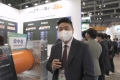
▲ Lee Ye-bin, senior researcher at H2KOREA, explains key policies for the hydrogen economy in Korea.
Korea aims to build a full-cycle hydrogen economy ecosystem and lead the clean hydrogen economy.
The US is moving to secure hydrogen value chain capabilities and strengthen its energy leadership. The Hydrogen Convergence Alliance (H2KOREA) participated in H2 MEET, the world's first and largest hydrogen industry exhibition, to help visitors understand H2 KOREA's role and the domestic and international hydrogen economy and policies.
H2KOREA shared various information with visitors, including global hydrogen economy trends and key policies for the hydrogen economy in Korea, at the H2 MEET held at KINTEX in Ilsan from August 31 to September 2.
Lee Ye-bin, a senior researcher at H2KOREA, explained the trends in hydrogen economy policies in major countries around the world and said that hydrogen is becoming an essential element in the spread of renewable energy.
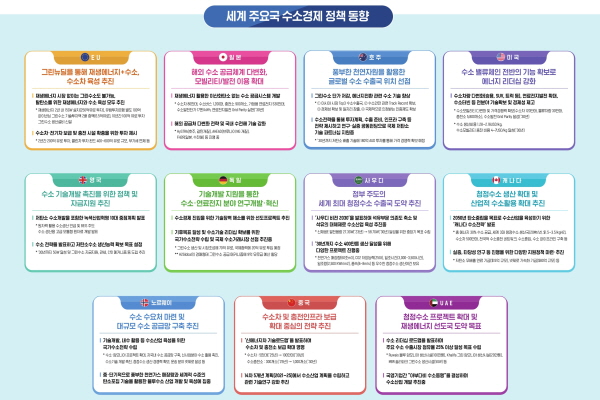
▲ Hydrogen economy policy trends in major countries around the world (Data provided by H2KOREA)
The United States is expanding the functionality of the entire hydrogen value chain.Boro is demonstrating moves to strengthen its energy leadership. Notable policies include diversifying hydrogen vehicles, including passenger cars, SUVs, and trucks; expanding fuel cell power generation; and securing technology across all sectors, including hydrogen turbines. In this regard, the United States has set a goal of installing 5,800 hydrogen charging stations by 2030 to diversify hydrogen mobility and secure price competitiveness.
If the United States is a hydrogen user, Saudi Arabia is a hydrogen producer. Saudi Arabia is pursuing government-led policies to become the world's largest exporter of clean hydrogen. With the announcement of "Saudi Vision 2030," the kingdom is promoting the development of the hydrogen industry as a substitute for oil and reducing dependence on the oil sector. Boasting excellent clean hydrogen production conditions, Saudi Arabia is pursuing various projects aimed at producing 4 million tons of hydrogen by 2030.
South Korea launched its hydrogen economy policy in earnest in 2019 with the announcement of the "Hydrogen Economy Activation Roadmap." Following this, in November of last year, the government established the "First Basic Plan for Hydrogen Economy Implementation," striving to build a full-cycle hydrogen economy ecosystem and lead the clean hydrogen economy. The basic plan's goals include transitioning to a clean hydrogen supply system and diversifying hydrogen utilization, and it also aims to strengthen infrastructure and the ecosystem.
With the above goals in mind, H2KOREA, a public-private hydrogen-related consultative body, focuses on serving as a bridge between the government and the private sector, and carries out various tasks to promote hydrogen.
H2KOREA is promoting the 'H2 PLUS 1000' project to foster hydrogen specialized companies.
We are taking steps to designate hydrogen specialized companies based on legal requirements and establish support tables so that companies can choose to receive support.
Lee Ye-bin, a senior researcher at H2KOREA, said, “It is important for companies to develop and grow hydrogen technology,” and added, “I hope that those in hydrogen-related companies will take interest in the H2KOREA support project and apply in large numbers.”