 SerDes, 자동차 탑재 카메라 수 증가 따른 중요성 부각
이미지 센서·디스플레이 해상도 발전, GMSL 2 보급 증가
차량에 탑재되는 카메라의 수가 증가함에 따라 발생되는 데이터 전송 부분에서의 문제를 보완하는 데에 아날로그디바이스의 GMSL이 주목받고 있다.
정운호 길라닉스 FAE는 지난 20일 e4ds 웨비나에서 아날로그디바이스 ADI 오토모티브 SerDes 제품인 GMSL(Gigabit Multimedia Serial Link)에 대해 설명했다.
GMSL은 ADI 사의 SerDes 제품을 명칭하며, SerDes는 시리얼라이저와 디시리얼라이저를 의미하는 단어이다.
정운호 FAE는 SerDes를 사용하는 이유로 RGB888, 로우 데이터 등 많은 수의 병렬데이터(Parallel Data)을 전송하기 위해서는 많은 수의 와이어가 필요하기 때문이라고 전했다.
병렬데이터를 전송할 때 사용하는 많은 수의 와이어로 인해 가격, 무게와 부피 부분에서 단점이 있으며, EMI 측면에서도 악영향을 끼친다.
SerDes를 이용하면 병렬 데이터를 시리얼라이징하여 전송하기 때문에 여러 개의 와이어를 단선 또는 두 개의 선으로 전송할 수 있어 위와 같은 단점을 보완할 수 있다.
SerDes 시장의 대표적인 성장요인은 자동차의 카메라 탑재 수 증가다.
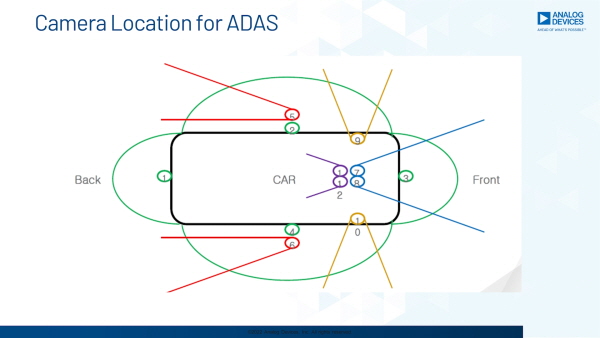
현대 차량에서 카메라는 △후방 카메라 △서라운드 뷰 모니터 △차선이탈 방지 및 주차보조 시스템 △크루즈 컨트롤 △사이드 미러 카메라 등에 탑재되며, 운전자 및 승객의 상태를 감지하는 데에도 사용된다.
자율주행에서도 비전 센서를 담당하는 카메라는 빠질 수 없는 요소다.
LCD 디스플레이에 사용되는 SerDes도 과거에 비해 많이 증가했다.
기존 내비게이션과 라디오 외에도 HVAC 제어형 센터 디스플레이도 추가되었으며, 클러스터와 사이드 미러 화면용으로도 디스플레이가 사용되며, 헤드업 디스플레이에도 탑재된다.
아날로그디바이스 GMSL의 주요 기능은 △비디오 전송 △오디오 신호 전송 △전원 전송이 가능한 POC △내부 레지스터 제어를 통한 SerDes 제어 등이 있다.
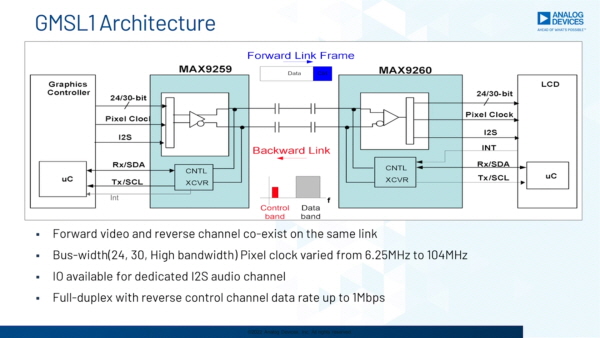
▲ ADI GMSL 1 아키텍처 구성 (그림 출처: e4ds 웨비나)
GMSL 1은 동일 링크 상에서 비디오 전송을 하는 포워드 링크와 컨트롤 통신을 위한 리버스 링크로 구성되어 있다.
포워드 링크는 시리얼라이저에서 디시리얼라이저로 전송되는 방향을 의미하여, 리버스 링크는 반대 방향 전송을 의미한다.
24비트, 30비트, High bandwidth의 세 가지 Bus-width 모드가 있으며, 이 때 전송 가능한 픽셀 클락(Pixel clock)의 범위는 6.25MHz부터 104MHz까지다.
Full-duplex 방식으로 컨트롤 채널은 최대 1Mbps의 속도를 지원한다.
정운호 FAE는 "이미지 센서, 디스플레이 해상도의 발전으로 GMSL 2가 보다 더 널리 보급되었다"며 "GMSL 1과 2의 차이점은 bandwidth"라고 설명했다.
GMSL 1의 3Gbps의 두 배인 GMSL 2는 6Gbps까지 지원하며 이 대역폭은 4k 디스플레이, 8M 픽셀 이미지 센서를 지원할 수 있다.
GMSL 1 대비 용이해진 기능은 Adaptive Equalization과 Automatic HDCP, Sync 기능 등이 있다.
GMSL 2 디바이스가 지원하는 데이터 인터페이스는 △MIPI CSI-2 △MIPI DSI △HDI △oLDI △eDP 등이 있으며, 병렬 제품은 대부분의 AP나 ISP 이미지 센서에서 사용되지 않기 때문에 제품이 없다.
GMSL 2도 GMSL 1과 마찬가지로 coax와 STP를 지원하며, 4k 디스플레이를 지원한다.
기존에는 이더넷 통신을 지원하기 위해 SerDes와 별도로 이더넷을 구성하고 케이블을 사용했다.
GMSL 2에서는 RGMII 포트를 사용하여 GMSL 링크를 통해 동시 전송이 가능하여, 비용과 구조에서 많은 장점이 있다.
GMSL 2 시리얼라이저의 비디오 멀티 스트리밍 스플리팅이 지원되며 멀티 디스플레이 구현이 가능해졌다.
정운호 FAE는 “과거에는 SoC에서 CID와 IC에 영상을 각각 전송하기 위해서는 별도의 SerDes를 구성해야 했다”며 “반면 GMSL 2 디바이스에서는 스플리팅이 가능해 한 개의 시리얼라이저를 통해 두 개의 디시리얼라이저에 전송이 가능하다”고 설명했다.

.jpg)

.png)