인피니언 StrongIRFET™
반도체 AI 보안 인더스트리 4.0 SDV 스마트 IoT 컴퓨터 통신 특수 가스 소재 및 장비 유통 e4ds plus

Samsung Electronics Ships First EUV Process-Applied DRAM at Pyeongtaek Line 2

기사입력2020.08.31 10:21

Starting mass production of DRAM and next-generation V-NAND
Ultra-fine foundry products to be produced


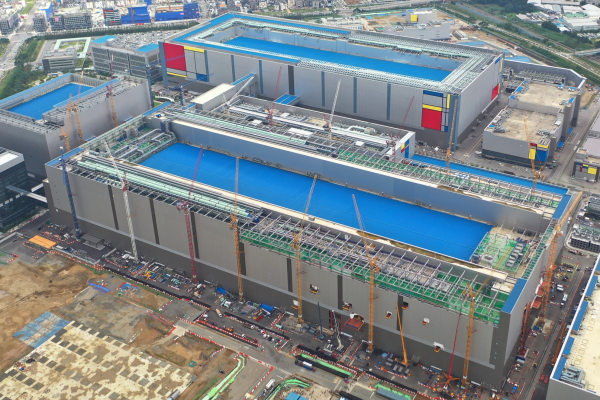
Samsung Electronics announced on the 30th that it has started operation of the world's largest semiconductor production line, Pyeongtaek Line 2. This line will produce the industry's first 10nm-class (1z) LPDDR5 mobile DRAM using the extreme ultraviolet (EUV) process.
▲ Pyeongtaek Line 2 [Photo = Samsung Electronics]

Pyeongtaek Line 2 has a total area of 128,900㎡, equivalent to 16 soccer fields, and plans to begin mass production of DRAM, next-generation V-NAND, and ultra-fine foundry products in the second half of 2021.

The Pyeongtaek campus, which was established in 2015, is Samsung Electronics' next-generation semiconductor outpost with a site of 2.89 million m2. Pyeongtaek Line 1 began mass production in June 2017, and Pyeongtaek Line 2 began construction in January 2018, shipping DRAM products for the first time this time.
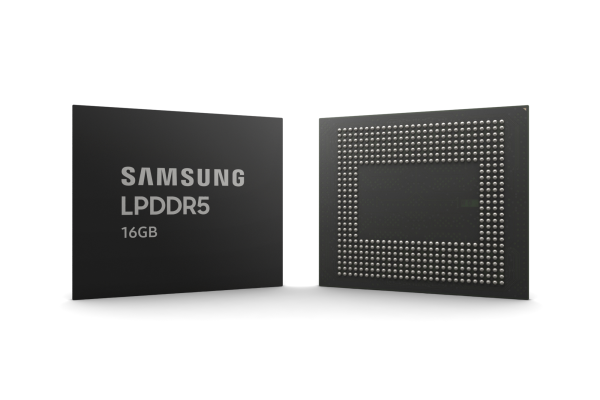
▲ 3rd generation 1z-based 16GB LPDDR5 [Photo = Samsung Electronics]

The 3rd generation 10nm (1z) 16Gb LPDDR5 mobile DRAM using the EUV process that was recently shipped has an operating speed (6400Mb/s) that is 16% faster than the existing 12Gb LPDDR5 mobile DRAM (5500Mb/s).

Unlike existing products (requiring 8 x 12Gb chips and 4 x 8Gb chips), a 16GB product can be configured with only 8 chips, and a 16GB product can process 51.2GB of data per second based on a 64-pin (x64, JEDEC standard) configuration package. Accordingly, it is suitable for 5G smartphones or foldable phones with a large number of components.

Samsung Electronics plans to expand its use to include battlefield products by securing high-temperature reliability in the future.
이수민 기자
기사 전체보기