World's 2nd Largest Nanotechnology Exhibition 'Nano Korea' Opens
270 companies and organizations, 473 booths participated to highlight technology
Professor Kim Sang-woo of Sungkyunkwan University, Everchemtech, etc. receive the Prime Minister's Award 'Nano Korea 2021', which supports exchanges and cooperation between domestic and international nano industry stakeholders, will be held for three days from July 7 (Wed) to 9 (Fri) at KINTEX Exhibition Center 1 in Gyeonggi-do. 'Nano Korea', now in its 19th year, is the world's second largest nanotechnology exhibition, and this year, 270 organizations and companies participated by setting up 473 booths while observing quarantine measures.

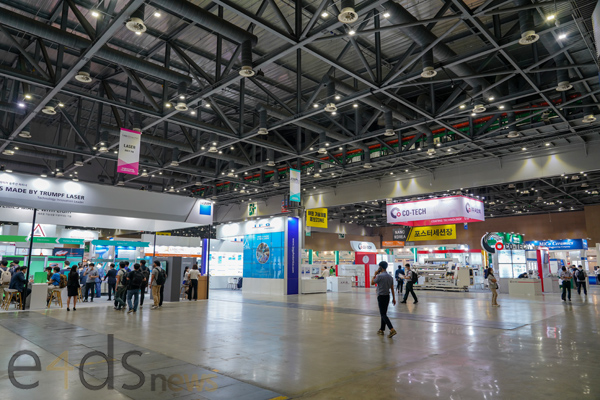
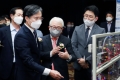
▲ Nano Korea 2021, opening on July 7 [Photo = Reporter Lee Su-min]
This event was co-hosted by the Ministry of Science and ICT and the Ministry of Trade, Industry and Energy, and co-hosted by the Nanotechnology Research Council and the Nano Convergence Industry Research Association, with 11 major organizations under both ministries participating as sponsors. The opening ceremony was attended by Minister of Science and ICT Lim Hye-sook, Vice Minister of Trade, Industry and Energy Park Jin-gyu, and about 20 major domestic figures related to nano.
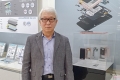
Keynote speeches include 'Electronic Components Industry and Nanotechnology' by Lee Si-woo, Director of Samsung Electro-Mechanics Research Institute, and 'The Role of Gallium Nitride (GaN) Semiconductors in Realizing a Carbon-Neutral Society' by Professor Hiroshi Amano of Nagoya University, Japan. An academic symposium and convergence exhibition will be held over three days. At the academic symposium, 952 papers from 17 countries will be presented in 35 sessions in 12 technical fields.
The awards ceremony was held in two parts. The Ministry of Science and ICT's Nano Research Innovation Award went to Professor Kim Sang-woo of Sungkyunkwan University, Professor Lee Jong-ho of Seoul National University, Professor Hwang Seong-ju of Yonsei University, Professor Kim Sang-hyun of Korea Advanced Institute of Science and Technology (KAIST), Professor Kim Dong-hoe of Sejong University, Researcher Shin Hyeon-jin of Samsung Advanced Institute of Technology (SAIT), Principal Researcher Jeong Jin-yeong of Korea Research Institute of Bioscience and Biotechnology (KRIBB), Professor Kim Myeong-gi of Korea University, Professor Cho Nam-jun of Nanyang Technological University, Principal Researcher Lee Sang-jun of Korea Research Institute of Standards and Science (KRISS), and Professor Kim Tae-hyung of Chung-Ang University.
Professor Kim Sang-woo, who received the Prime Minister's Award, was recognized for his research achievements, including the development of new materials for triboelectric generators and the world's first application of energy harvesting technology to medical devices.
The following companies were recognized for their contributions through the Ministry of Trade, Industry and Energy’s Nano Industry Technology Award: Everchemtech Co., Ltd., Wysol Co., Ltd., Sang-A Frontech Co., Ltd., Truewin Co., Ltd., CIIS Chemical Co., Ltd., Biotns Co., Ltd., Chamgraphene Co., Ltd., Megacos Co., Ltd., the Intelligent Sensor Laboratory of the Electronics and Telecommunications Research Institute (ETRI), Jo Hang-jin, a senior researcher at Kolon Glotech Co., Ltd., and Lee Gyeong-yeop, Secretary General of the National Nano Infrastructure Forum (KION).
Everchemtech has demonstrated its achievements by receiving the Prime Minister's Award for localizing a high-functionality anti-static nano-coating agent used in the polarizing plate process of LED and OLED displays.

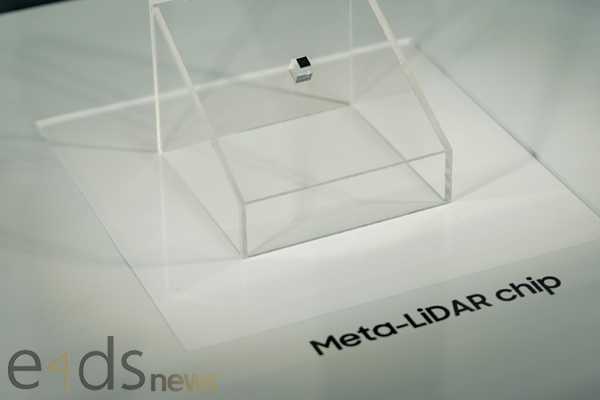
▲ Breakthrough in the size of existing solid-state lidar sensors
Samsung Electronics' shortened Meta Lidar chip prototype [Photo = Reporter Lee Su-min]
The fusion exhibition will feature nanomaterials (CNT, graphene, nanocellulose, BNNT, etc.) that surpass the limitations of existing materials, and nanoprocess measurement and analysis equipment (pulverizers, dispersion equipment, plasma surface treatment equipment, electron microscopes, atomic force microscopes) that serve as the basis for manufacturing new materials.Along with the latest mobile DRAM from Samsung Electronics, the ultra-small LiDAR chip that is being prepared for commercialization, and LG Electronics' biodegradable plastic material will be introduced. The Nano-Fusion R&D Achievement Promotion Hall will exhibit 53 government achievements, including the advancement of the nanofab process to support system semiconductor R&D.
In addition, for overseas companies and buyers who cannot participate in person due to COVID-19, unmanned booths promoting the technologies and products of 26 companies from 5 countries will be installed and operated, and a non-face-to-face service will be implemented for the first time in Korea to match business partners through exhibition site guides (avatars) for 30 overseas buyers from 7 countries including the US, Japan, and Canada.
Minister of Science and ICT Lim Hye-sook said, “Nanotechnology can help solve issues such as small and medium-sized enterprises, semiconductors, carbon neutrality, and pandemics,” and added, “In accordance with the 5th Comprehensive Nanotechnology Development Plan, we will support Korea to elevate its nanotechnology capabilities, which are currently ranked 4th in the world, to the forefront.”
Park Jin-gyu, Vice Minister of Trade, Industry and Energy, said, “In the future, nanotechnology will become the core foundation for implementing an eco-friendly digital economy and fostering the three new industries of semiconductors, bio, and future cars,” and added, “We will push forward the Nano Convergence 2030 project, which we are jointly planning with the Ministry of Science and ICT, on twice the scale of the previous one.”

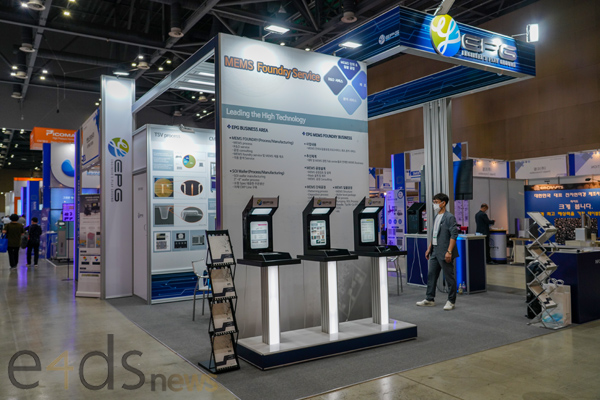
▲ EPIG Booth [Photo = Reporter Lee Su-min]
This exhibition showcased various semiconductor-related technologies required for semiconductor manufacturing and processing, the field in which cutting-edge nanotechnology is most actively applied. Founded in 2011, EPG said it supports customers by providing semiconductor and MEMS product manufacturing, unit process construction, R&D agency, and analysis services, as well as SOI wafer manufacturing and sales.
Domestic equipment company Hyutem was established in 2007 and supplies equipment for the pharmaceutical, automation, and semiconductor industries. At this event, they showcased their semiconductor technology by unveiling wafer bonding equipment such as the 'HBS-800A, HBS-400A, HBS-800S, and HBS-600M' series. They also emphasized WLP process services for micro LED, mini LED, FBAR filter, SAW filter, CIS, vertical LED, acceleration sensor, piezoelectric transducer, and solar cell.

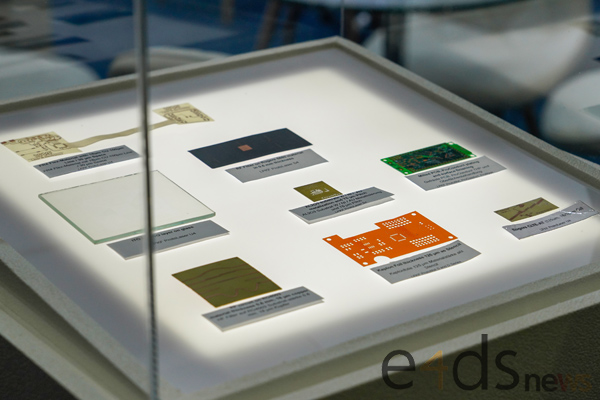
▲ PCBs precision-processed with LPKF laser equipment [Photo = Reporter Lee Su-min]
LPKF Laser & Electronics Korea showcased PCB prototyping and depaneling solutions and support services, including the 'LPKF ProtoLaser U4' and 'LPKF CuttingMaster' series, which precisely process printed circuit boards (PCBs) with lasers. The solutions can be used not only for PCBs but also for thin film processing such as TCO and ITO, and are software controlled.
In addition, Korea Trump attracted attention by listing in order the intermediate results of how the company's laser technology is applied in the process of manufacturing electric vehicle batteries, which has recently seen increased demand.