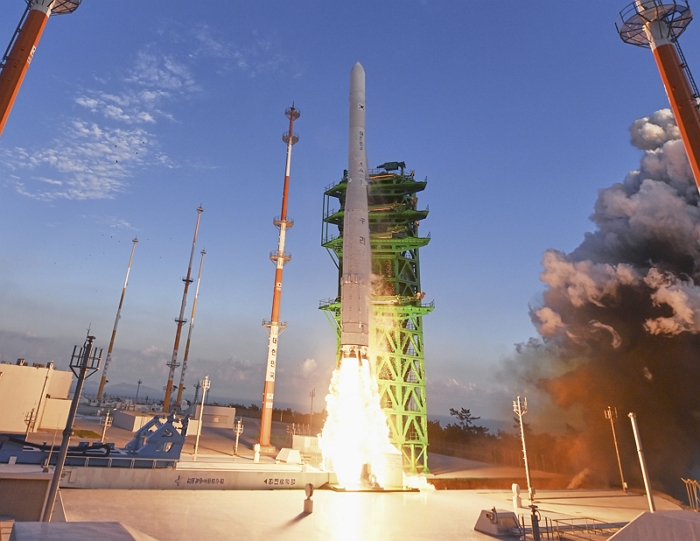
▲Nuriho 1st launch (Photo - Public work of Korea Aerospace Research Institute)
30% of the causes of malfunctions in battle equipment are 'cosmic radiation'
Semiconductor companies rush to launch radiation-resistant products
The launch of Nuri, a symbol that will bring about the space age in Korea, is preparing for a second attempt. As the launch date scheduled for the 21st approaches, high-reliability semiconductor components with precision and durability are essential for the equipment to function properly in the harsh space environment.
■ Space and Aerospace Semiconductors Must Be Radiation Resistant
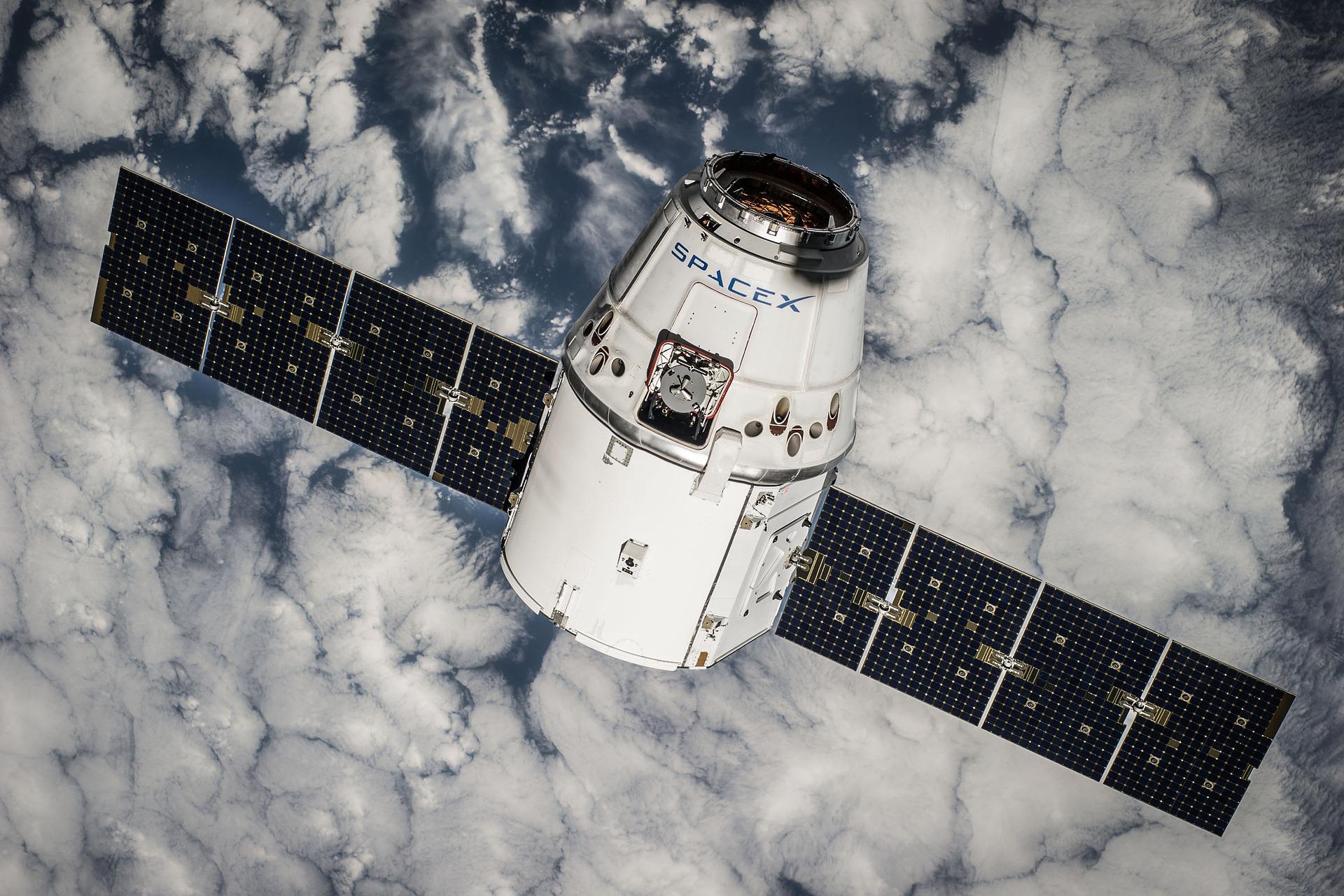
▲SpaceX satellite (Photo-Pixabay) It is known that approximately 30% of malfunctions in equipment in space environments are caused by cosmic radiation, and as ICT components become more highly integrated, concerns about the effects of exposure to high-level cosmic radiation are also increasing.
According to the ‘Impact of Space Radiation Environment on ICT Devices and Development Trends’ published by the Electronics and Telecommunications Research Institute (ETRI), “the absence of radiation-resistant technology in the space, aviation, nuclear power, and medical fields that require high reliability can not only lead to the failure of space exploration missions, but also to the malfunction of social infrastructure, resulting in enormous material and human losses.”
In space, high-energy gamma-ray electromagnetic waves interact with matter to ionize the medium, and secondary radiation is also generated from charged particles. Silicon, the main raw material for semiconductors, can experience 'single event burnout' when exposed to ionizing radiation in space for long periods of time, which can lead to permanent damage.
The ETRI report categorizes the representative electrical equipment malfunctions caused by radiation into the following: △TID (Total Lionizing Dose), a phenomenon in which leakage current increases due to interface traps as a result of continuous exposure of semiconductors; △SEU (Single Event Upset), a phenomenon in which current is generated and bit upset occurs in the process of recombination with high-level ionizing radiation; △SEL (Single Event Latch-up), a phenomenon in which a high current state is induced in the internal circuit of the device, causing a loss of function; and DD (Displacement Damage), a phenomenon in which lattice defects occur due to particle radiation colliding with the nucleus of the lattice and causing a deformation of the lattice state.
Advanced countries have been conducting research on radiation resistance of electronic modules in fields such as space and aviation for a long time. ETRI evaluated that, compared to advanced countries, Korea is still in the crawling stage in both academia and industry. ETRI explained that in the development of space environment devices, aluminum alloys were widely used in packaging in the past, but as the demand for lightweight space structures increases, the need for lightweight materials to replace them is increasing.
■ High-reliability product line with enhanced radiation resistance continues to be launched 
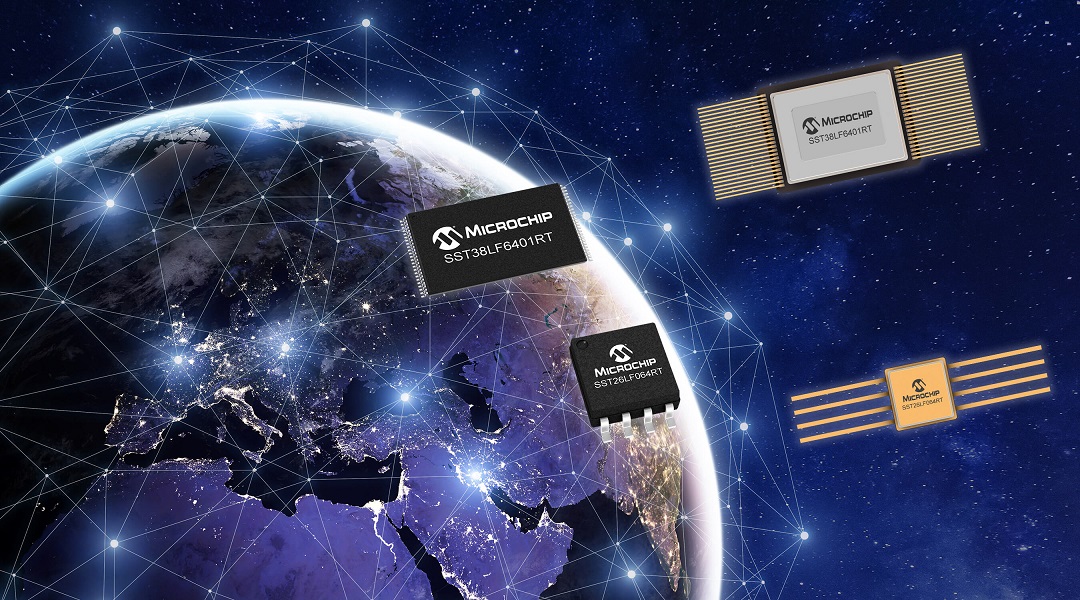
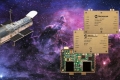
▲RT SuperFlash family (Image courtesy of Microchip)
All parts used in satellite development are difficult to modify or supplement during operation, so stability and reliability are of the utmost importance. High-reliability space electronic parts used in these satellites were manufactured in small quantities in the past to maintain high reliability, but they were inevitably more expensive than commercial products that were mass-produced.
However, with the recent advancement of semiconductor process technology, the cost of producing commercial products has been reduced while reliability has increased significantly. It is also applied to automobiles and defense products that require durability and a long life cycle in harsh environmental conditions, and there is a trend of mass production of high-reliability parts that can be applied to the space industry in commercial electronic components.
Microchip continues to introduce a range of commercial products that are space-ready. Microchip’s RT Super Flash technology is now space-qualified, and its Super Flash NOR Flash memory products use a proprietary split-gate cell architecture to provide data retention and reliability. These products eliminate the complexity of power management switching, allowing flash to be biased and operate in systems such as satellite onboard computers, or in controllers for motors, sensors, solar panels and power distribution, providing the benefits of TID.
Teledyne Technologies has announced that it has developed an ultra-high density DDR4 that will soon be in mass production with radiation-hardened DDR4 for space use. The DDR4T04G72 is designed to be used with the company’s Qormino® processors and is compatible with most processors, SoCs, and FPGAs from other vendors. It has passed total ionizing dose (TID) radiation tests with a radiation hardness of 100 krad in SEU and SEFI (Single Event Function Interrupt) data, indicating its potential for use in edge computing platforms deployed in future space environments.
STMicroelectronics (ST) is producing low-cost, radiation-hardened ICs that will ease the burden on the high-cost civil satellite industry. The company has developed a mass-producible radiation-hardened IC to simplify cost and production in the design of next-generation, high-reliability small satellites.
“With the advent of a new era of private-sector-led space commercialization, called New Space, we are rapidly commercializing the deployment of thousands of large-scale satellite constellations,” said Marcello San Biagio, President and CEO of STMicroelectronics. “This is fundamentally changing the economics of how satellites are conceptualized, implemented, launched and operated.”