Kyungshin Soo, CEO, “Gallium Oxide Power IC Glass, High Price Competitiveness”
Gallium Oxide Market, Japan Leads Patents, Recent Surge in Chinese Patent Applications

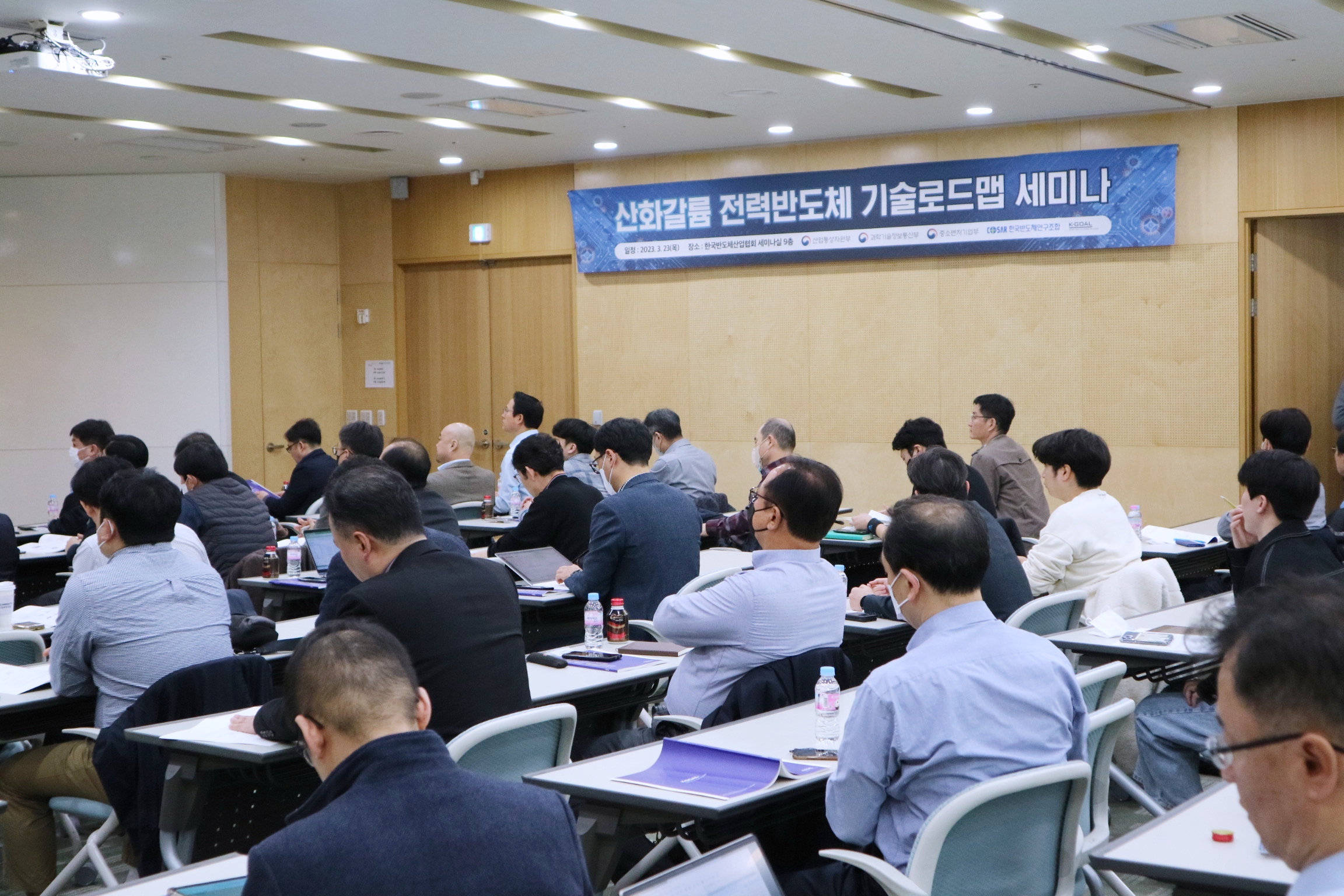
▲Gallium Oxide Power Semiconductor Technology Roadmap Seminar
In the midst of a paradigm shift in compound semiconductors, which are called next-generation semiconductors, movements to prepare for the next step in SiC and GaN compound semiconductors have been detected.
On the 23rd, the Gallium Oxide Power Semiconductor Technology Roadmap Seminar was held at the Korea Semiconductor Industry Association Seminar Room in Pangyo, Seongnam City. This event, hosted by the Gallium Oxide Alliance, was organized to promote the establishment of an early-stage gallium oxide semiconductor ecosystem.
Gallium oxide is a material that is expected to be widely utilized in the long term in power electronics applications that require a larger band gap and higher breakdown voltage than SiC and GaN. △It is expected to be effective in high-voltage and high-output applications such as power converters, motor drives, and inverters, so it is a technology that is being watched with interest in the electric vehicle market.
Bae Si-young, chairman of the Korea Institute of Ceramic Technology, said, “The global power semiconductor market size is expected to exceed 30 trillion won in 2025, and the emerging materials market including gallium oxide is expected to grow by more than 24% annually to reach 500 billion won in 2024.”
Jang Sung-hwan, head of NexusB, who announced the equipment technology trend, said, “Once the marketability of gallium oxide is confirmed, the equipment market will follow,” and said that while the EFG (Edge Film Feed) method is currently leading in single crystal growth equipment, the CZ (Czochoralski) method is expected to be advantageous for commercialization in the future. Chairman Bae mentioned that there was also a case where a 6-inch VB (vertical bridge only) was demonstrated, and predicted that the market trend will change according to additional research on the related equipment market.
He added that although MIST CVD is being used in the initial stages of epitaxy, it has many shortcomings when it comes to mass production, and that “MOCVD is also being used in the GaN process, so it will be possible to catch up with it with some tuning.”
SiC·GaN semiconductors are evaluated as being dominated by foreign companies and domestic companies are lagging behind, but if domestic research and industry prepare for gallium oxide, it is expected to have marketability.
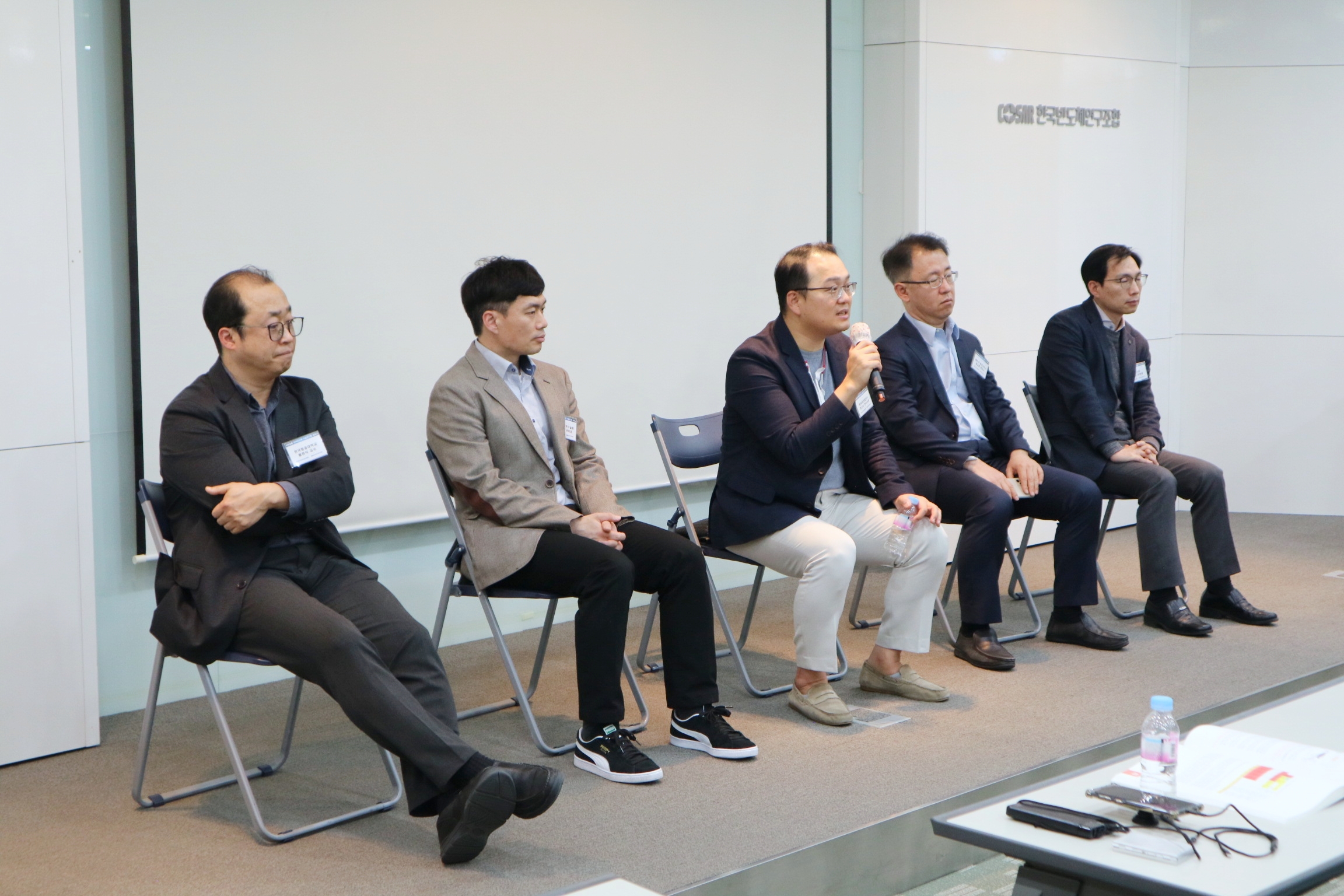
▲From left, Professor Hwang Wan-sik of Korea Aerospace University, Director Bae Si-young of Korea Ceramic Technology Institute, Director Kyung Shin-soo of Power Cube Semiconductor Research Institute, Patent Attorney Hong Seung-hoon of ANA-IP Patent Office, and Director
Jang Seong-hwan of Nexus B answer questions during the Q&A session after the presentation. “In the technology-leading market, SiC accounts for 7%,” said Kyung-Soo Lee, head of Power Cube Semiconductor’s research lab, who said that gallium oxide devices are promising in the power IC market. “The remaining 93% is the price-leading market, and gallium oxide will have a lot to offer because it can provide GaN performance at 1.2 times the price of silicon.” Emphasized.
Ahn Ki-hyun, executive director of the Korea Semiconductor Industry Association, said, “Among compound semiconductors that are attracting attention as next-generation future markets, gallium oxide is receiving the next most attention after SiC and GaN.” He added, “We are currently preparing a 440 billion won ETA for compound semiconductors, and we hope to lead the development of the compound semiconductor ecosystem, including gallium oxide.”
Currently, Japan is leading in patents for gallium oxide technology, with Tamura Manufacturing being the leading company. Following that, the United States and China are countries with high patent applications, and in particular, China has poured out about 50% of the patents accumulated over the past 20 years in the past year and two months, said patent attorney Hong Seung-hoon.
Meanwhile, the Gallium Oxide Alliance was launched in 2021 to build a gallium oxide-based power semiconductor ecosystem, and several companies and research institutes are actively developing materials and devices for related technology development and industry establishment in the initial stages.