HPC support for code generation, weather, genetics, and materials science
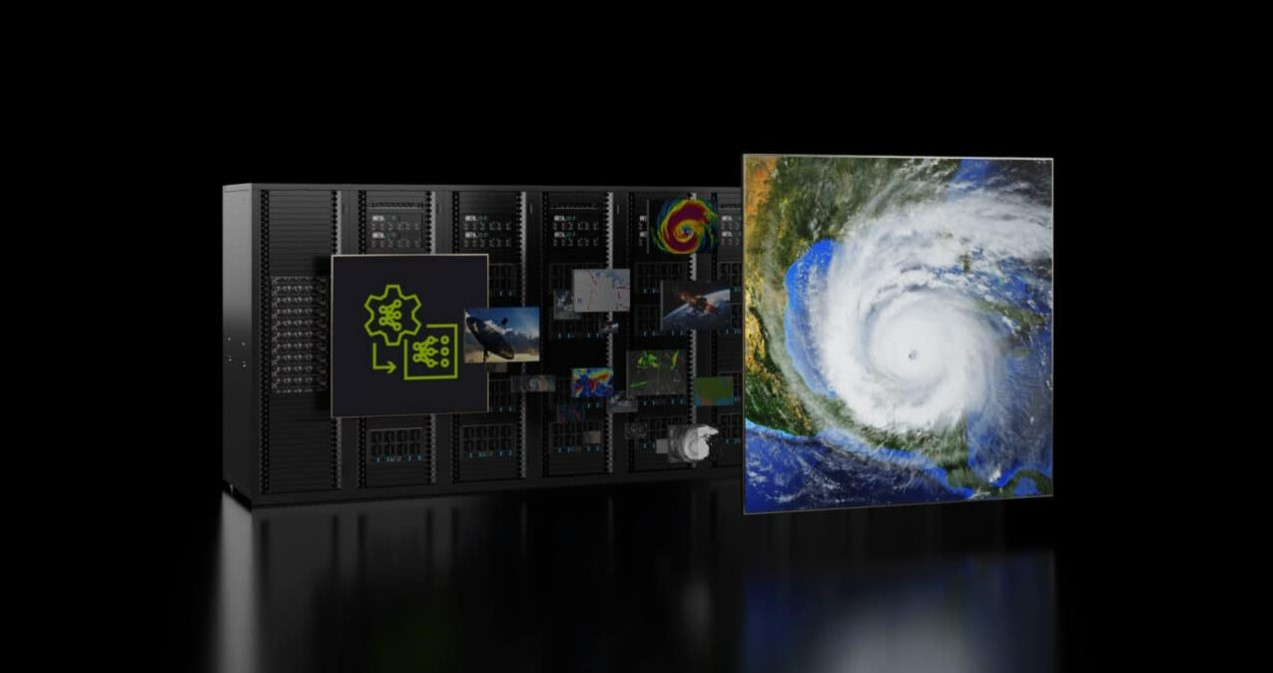
NVIDIA announced on the 16th that it is accelerating HPC work through generative AI and supporting research in the fields of code generation, weather, genetics, and materials science.
Sandia National Laboratories is attempting to automatically generate code using Kokkos, a parallel programming language designed for use on the world's largest supercomputers. Developed by researchers at several national laboratories, the specialized language can handle the subtleties needed to run tasks on tens of thousands of processors.
Researchers at Sandia National Laboratories are using retrieval-augmented generation (RAG) to create the Cocos database and connect it to AI models. They reported that initial tests had shown positive results as they experimented with different RAG approaches.
“NVIDIA provides a comprehensive set of tools that can dramatically accelerate the work of HPC software developers,” said Robert Hoekstra, senior manager for extreme scale computing at Sandia National Laboratories.
The researchers ultimately aim to leverage the foundation models trained on scientific data from fields such as climate, biology, and materials science.
■ Preemptive response to climate change Researchers and companies in the weather forecasting field are adopting CorrDiff, a generative AI model from NVIDIA Earth-2, a set of services and software for weather and climate research.
CODIF can adjust the resolution of existing atmospheric models from 25 km to 2 km. Additionally, the number of predictions that can be combined has been expanded by more than 100 times, improving prediction reliability.
“Generative AI is enabling faster and more accurate forecasts,” said Tom Gowan, director of machine learning and modeling at Spire, a U.S. company that collects data from its own network of small satellites. “Our partnership with Nvidia allows us to use Nvidia GPUs for training and inference.”
Swiss company Meteomatics also recently announced plans to use NVIDIA's generative AI platform for its weather forecasting business.
■ Gene generation to improve medical services Scientists at Argonne National Laboratory are using AI to generate genetic sequences that can help them better understand the virus that causes COVID-19. The GenSLM model has produced simulations that closely resemble real SARS-CoV-2 variants.
“Understanding how different parts of the genome coevolve can provide clues to how viruses can develop new vulnerabilities or new forms of resistance,” Arvind Ramanathan, a senior scientist at Argonne National Laboratory, wrote in a blog post.
GenSLM trained on over 110 million genome sequences using a supercomputer based on NVIDIA A100 Tensor Core GPUs. These supercomputers include Argonne National Laboratory's Polaris system, the U.S. Department of Energy's Perlmutter, and Nvidia's Selene.
■ MS's new material proposal Microsoft's MatterGen model generates new, stable materials that exhibit desired properties. This approach can be used to specify other desired properties, such as chemical, magnetic, electronic, or mechanical.
The Microsoft research team trained MatterGen on Azure AI infrastructure using NVIDIA A100 GPUs.
Companies like Carbon3D are reportedly looking to apply generative AI to materials science in commercial 3D printing operations.