Industrial Edge AI Solution Challenge 2026
반도체 AI 보안 인더스트리 4.0 SDV 스마트 IoT 컴퓨터 통신 특수 가스 소재 및 장비 유통 e4ds plus

[혁신포커스] Metaverse Expo Held… Expectations for Apple's Vision Amid a Stagnant Market

기사입력2023.06.15 15:49


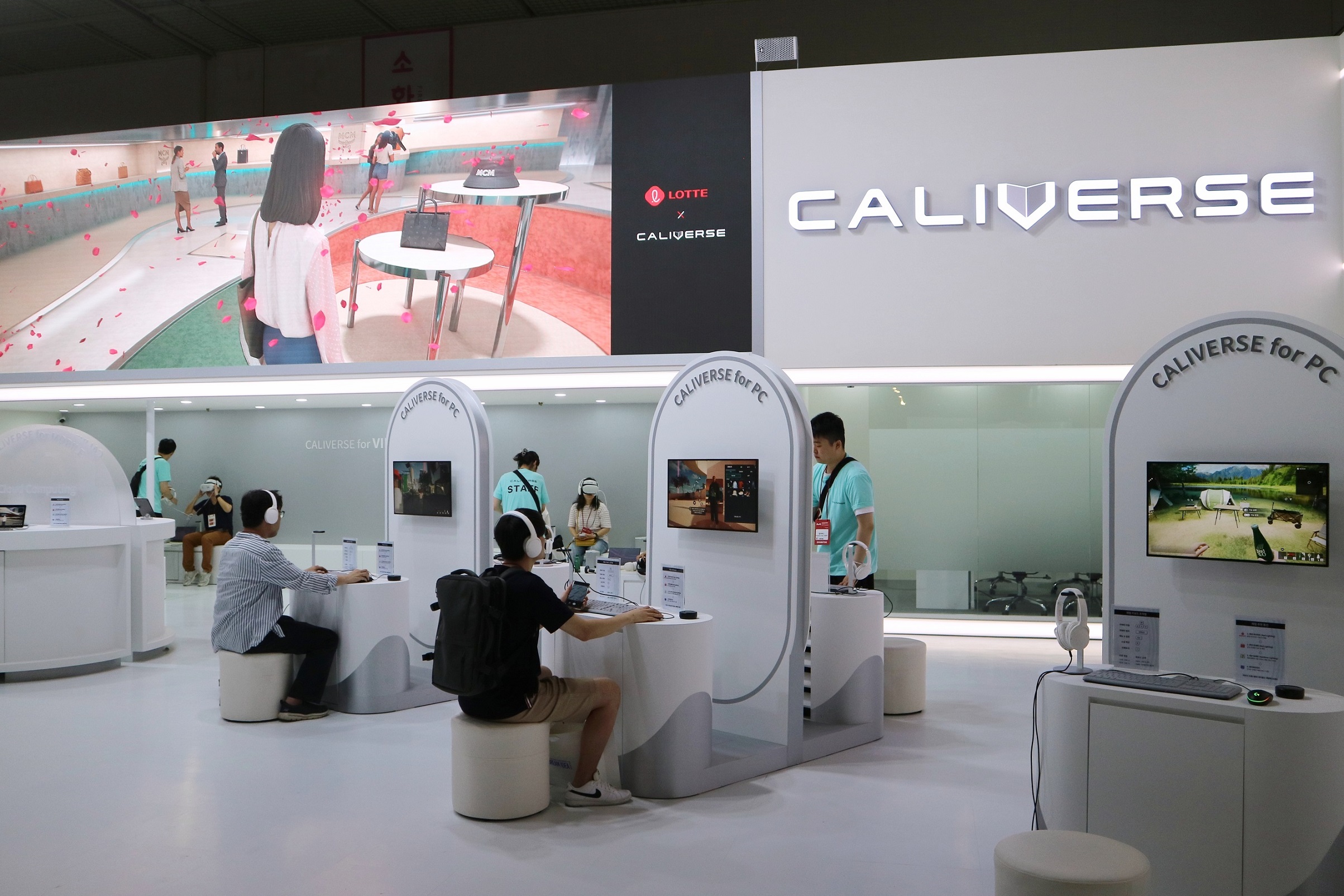
▲Visitors experiencing the Caliber booth at the 2023 Metaverse Expo.
118 companies, including Calibus, Pico, and HTC VIVE, participated.
Metaverse investment is sluggish, reaching 57.7 billion won this year, down 5% from last year.
"HMD Growth is Only Possible if the Content Ecosystem Expands"

Amidst a slower-than-usual market for the metaverse, industry expectations are rising for market expansion driven by the recently released Apple Vision Pro. Leading hardware developers are unanimously arguing that user-facing, useful content innovations and a relevant development ecosystem must be supported.

The 2023 Metaverse Expo took place on the 14th at COEX in Samseong-dong, Seoul. This 6th edition of the exhibition will be held concurrently with the "2023 Metaverse + Generative AI Summit," which will be held in a conference room within the exhibition hall.

This event, in which 118 companies including Calibus, Penesia, and Pico participated, held various special exhibitions such as the Digital Twin Special Exhibition, Future Education Special Exhibition, and NFT Special Exhibition, providing visitors with something to see.

Calibus, a subsidiary of Lotte Information & Communication, is developing a hyper-realistic metaverse based on Unreal Engine 5 and unveiled its PC version platform for the first time at this exhibition. Caliber's hyper-realistic metaverse platform, 'Lotte Metaverse', is a seamless metaverse that minimizes loading when moving between maps or buildings.

Several companies developing HMDs also participated. Microsoft partner KCIEM unveiled the HoloLens 2, while HTC Vive introduced the XR Elite, an MR/AR headset. Pico also showcased a number of VR device series, including the PICO4 and enterprise products.


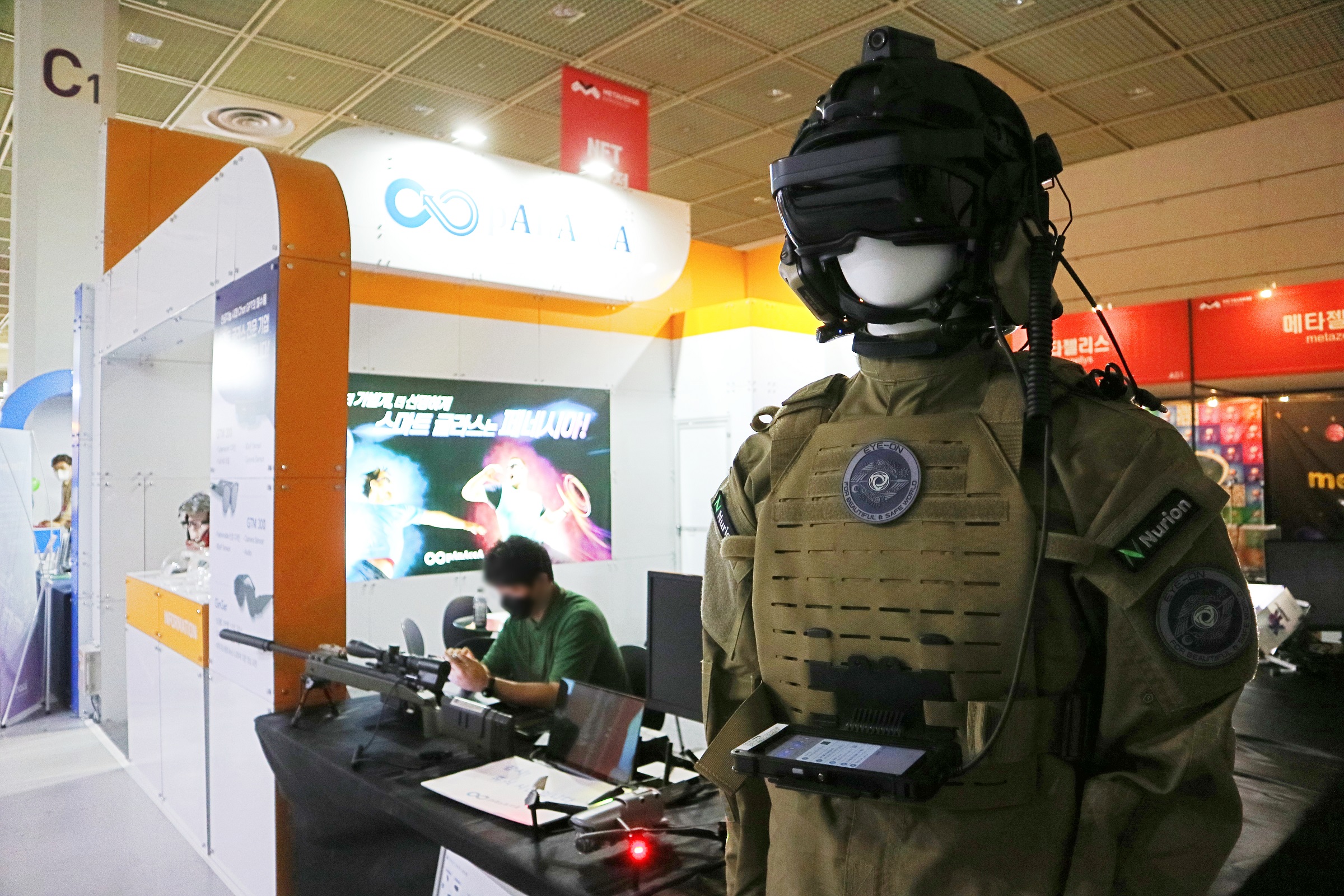
▲Penecia exhibition booth

Penesia, a domestic AR glasses developer, is developing and releasing lightweight wearable headsets. The company showcased technology that allows 3D images to be projected onto a screen linked to the physical world through AR glasses like the Ginger and GTM series.

May Co., Ltd., the only company in Korea developing and producing 4K LCOS panels, unveiled a prototype of a 4K VR/AR HMD using its Micro Display LCOS panel. LCOS panels, which boast high brightness, high resolution, and low price as next-generation displays, utilize semiconductor technology to increase pixel density and achieve high resolutions, making them a valuable technology for HMD applications.

Metaverse investment trends plummet year-over-year.

The investment chill caused by inflation and the global economic crisis is adding a harsh wind to the metaverse industry. The pocket money of tightly-held investment firms is being concentrated in the AI-related industry, starting with ChatGPT this year, while the metaverse sector is only attracting small amounts of investment.

According to the monthly investment status data for the metaverse sector by consulting firm Roa Intelligence, while 34 investments totaling over 1 trillion won were recorded in the second half of last year, the number of investments made as of the first half of 2023 has only been 16, halved compared to the second half of last year, and the investment amount has plummeted to one-twentieth of the 12 disclosed investment cases, reaching only 57.7 billion won.

HMDs are still heavy and not yet lightweight, and as a device connecting to the physical world, they lack performance and functionality to implement the metaverse. Issues such as the biased content areas such as games, education, and fitness apps still remain as homework to be solved.

According to TrendForce, the market outlook for VR/AR devices is expected to face certain limitations between 2023 and 2025. It backtracked from its previous position that it could see shipment growth of around 40% annually, predicting that such shipment growth may not be realized until 2025.

VR device shipments are expected to reach approximately 6.67 million units, a decrease of 18.2% compared to last year, and the factors cited for the decline in shipments include the burden on users of the high consumer prices of premium HMD devices and the lack of cost-effective new models.

■ HMD developers: “We expect Apple to expand the market”… Expanding the content ecosystem is essential.


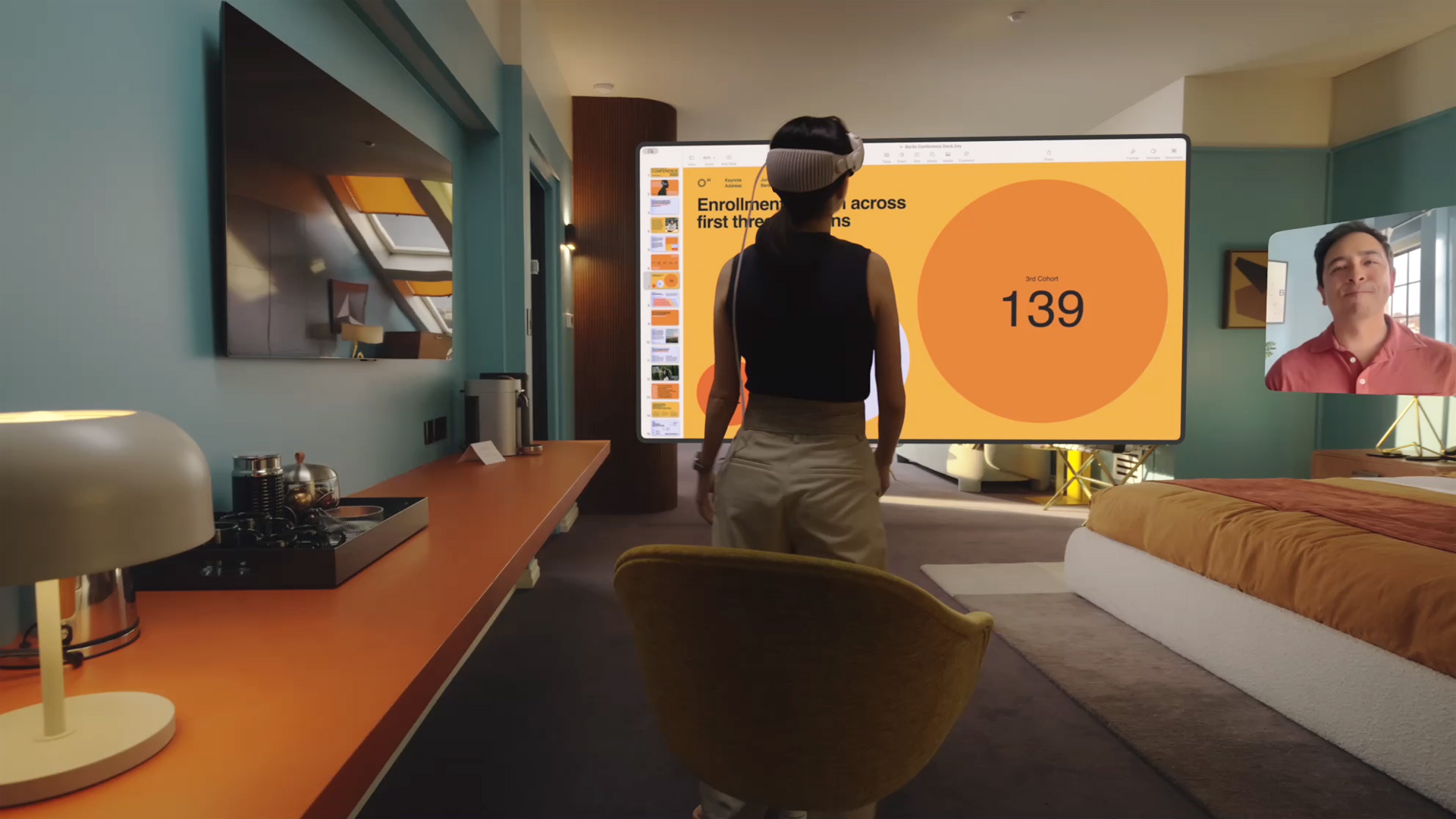
▲Apple Vision Pro in use (Photo: Apple)

When listening to developers developing HMD hardware, they all agree that the metaverse market seems to have lost its vitality this year. Amidst this, Apple's recent release of its HMD Vision Pro product has garnered significant market attention, leading some to anticipate that Apple, as the market leader, will drive market success and expansion.

An industry insider expressed high expectations for the Apple Vision Pro, saying, "A time will come when HMDs will replace computing." He added, "I feel the metaverse industry has definitely shrunk significantly this year compared to previous years," adding, "We can only grow together if we have a well-established content ecosystem."

Hardware developers are developing and installing their own content to showcase functionally diverse references and presenting them to the market through exhibitions and other means. Conversely, companies that produce materials and components, such as chipsets and panels, are also establishing references through their own prototype HMDs due to the narrow HMD industry.

With the market still struggling to expand, the industry is eager to expand its "content ecosystem" alongside the anticipated success of the Apple Vision Pro. Hardware developers are relatively lacking in software capabilities, so startups will need to come up with innovative ideas and develop software applications and services that run on HMD platforms.

While clients have application needs that can only be implemented on HMD platforms, the current market lacks the software diversity to properly implement these needs. Furthermore, hardware performance remains limited, falling short of expectations. Therefore, the industry anticipates that a true metaverse will be realized only when both hardware and software axes function simultaneously.