가트너, 북미·신흥 아태지역 지난해 판매 호조세
애플·샤오미 7.8%·16.5% 증가하며 유일한 성장
삼성·화웨이 상반된 폴더블폰 전략 관전 포인트
지난 4분기 전 세계 스마트폰 판매량은 전년 동기 대비 0.4%, 2019년 연간 판매량은 전년 대비 1% 감소한 것으로 나타났다.
지난해 북미와 신흥 아시아·태평양 시장에서 스마트폰 판매량이 소폭 증가했는데 인도는 1억5,190만 대의 판매량을 기록하며 미국을 제치고 2019년 스마트폰 판매량 2위로 올라섰으며 중국은 2019년 연간 판매량 3억9,080만 대로 1위 자리를 유지했다.
 ▲ 2019년 4분기전 세계 스마트폰 판매량은 전년 동기보다 소폭 하락했다
가트너가 4일 발표한 2019년 4분기 전 세계 스마트폰 판매량 보고서에 따르면 상위 5대 스마트폰 기업 중 애플과 샤오미만이 성장세를 보였다. 삼성은 매출 감소에도 불구하고 17.3%의 시장점유율을 기록하며 1위를, 애플은 시장점유율 17.1%로 2위를 차지한 것으로 집계됐다.
4분기 연속 하락세를 보인 애플의 아이폰 판매량은 지난 4분기 7.8% 증가하며 성장세를 회복했다. 가트너는 이에 대해 아이폰11 시리즈 가격이 아이폰XR에 비해 소폭 낮아지고 이전 세대 아이폰 모델의 가격이 인하되면서 아이폰의 수요 증가가 매출 상승을 견인한 것으로 분석했다.
아이폰 판매량은 특히 중국에서 강세를 보이며 4분기에 39%의 성장률을 기록했다. 애플은 영국, 프랑스, 독일, 브라질, 인도 등 일부 성숙 시장과 발전 시장에서도 우수한 성과를 거뒀다.
가트너 애널리스트들은 애플이 오는 3분기에 첫 5G 스마트폰을 출시할 것으로 예상하며 5G 네트워크 서비스가 가능한 국가에서 신형 모델 구매를 장려하는 움직임을 보일 것으로 전망했다.
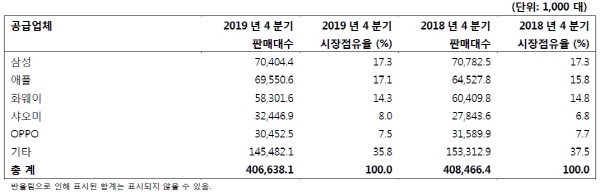 ▲ 2019년 4분기 전세계 공급업체별 최종 사용자 대상 스마트폰 판매량 <자료=가트너>
샤오미의 지난 4분기 스마트폰 판매량은 총 3,240만 대로 전년 동기 대비 16.5% 증가했다. 샤오미는 오포를 제치고 4위를 차지하는 동시에 신흥 아·태 지역에서 큰 성과를 거뒀는데 가트너 관계자는 이에 대해 레드미 모델의 가격과 성능이 판매 증가세를 이끌었다고 분석했다.
샤오미는 중국에서 수익을 높이기 위해 스마트폰 가격 인상 전략을 구사하고 있다. 중국 내 코로나19 확산 사태로 인해 오포와 비보 등 소매 중심 기업들이 어려움을 겪은 반면 샤오미는 온라인 채널 확장 전략 덕에 기회를 얻었다.
삼성·화웨이·샤오미 모두 성장세 기록
삼성의 지난 4분기 스마트폰 판매량은 전년 동기 대비 0.5% 감소했음에도 불구하고 세계 시장에서 1위 자리를 지켰다.
삼성의 2019년 연간 스마트폰 판매량은 전년 대비 0.4% 늘어난 2억9,620만 대를 기록했다.
삼성은 2019년 중급 및 보급형 스마트폰 판매 전략을 성공적으로 개선했다. 프리미엄 스마트폰 가격에 민감한 구매자들을 유치하기 위해 지난해 1월 삼성은 갤럭시 S10 라이트와 갤럭시 노트 10 라이트 모델을 출시했다. 이어 최근에는 새로운 폴더블 스마트폰을 발표하며 화웨이의 위협에 반격하고 있다.
안슐 굽타 가트너 책임 연구원은 “폴더블폰 시장에서 삼성과 화웨이는 서로 다른 접근방식을 취하면서 흥미로운 관전 포인트를 제공할 것”이라며 “삼성은 갤럭시 Z플립을 선보이며 가로에서 세로 접이식 스마트폰으로 전환해 크기와 가격을 동시에 낮춘 반면 화웨이는 현재 전 세계에서 화웨이 모바일 서비스를 이용할 수 있는 화웨이 앱갤러리를 탑재한 메이트엑스에스(Mate Xs)를 출시하면서 가격을 인상했다”고 말했다.
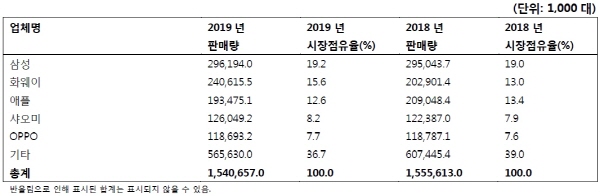 ▲ 2019년 전 세계 공급업체별 최종 사용자 대상 스마트폰 판매량 <자료=가트너>
화웨이는 지난 2019년 연간성장률 18.6%로 가장 높은 성장세를 보이며 애플을 제치고 2위에 올라섰다. 미국의 제재가 지속되는 상황에서도 화웨이는 중국에서 공격적인 스마트폰 전략을 펼쳐 지난해 37%의 시장점유율을 기록했다.
안슐 굽타 책임 연구원은 “2020년에도 화웨이에 대한 미국의 기술 접근금지 조치가 계속된다면 화웨이의 세계 스마트폰 시장 내 실적은 심각한 영향을 받을 것”이라고 말했다.
아네트 짐머만 가트너 리서치 총괄 부사장은 “코로나19 사태는 2020년 1분기 중국 내 스마트폰 수요에 부정적인 영향을 미칠 것으로 예상되지만 이 기간 동안 전 세계 스마트폰 시장의 수요는 줄지 않을 것”이라고 밝혔다.



.png)