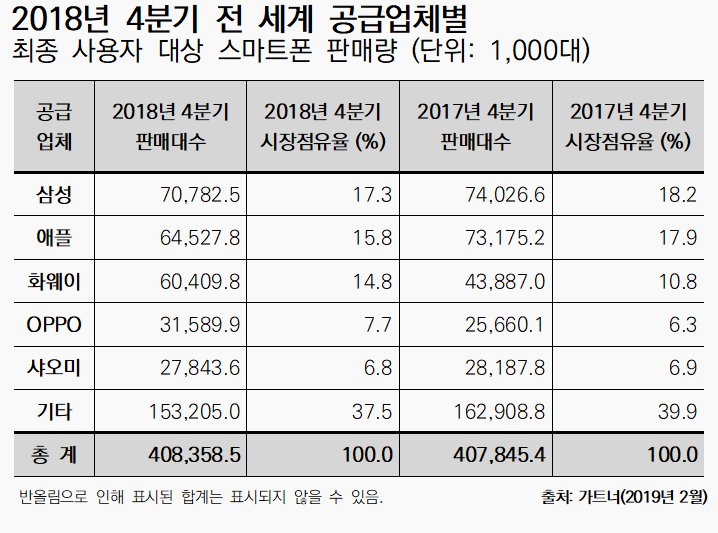
가트너에 따르면 2018년 4분기 최종 사용자 대상 스마트폰 판매량은 4억 840만대로, 전년 동기 대비 0.1% 성장에 그치며 둔화된 양상을 보였다. 애플의 판매량은 11.8% 하락하며 2016년 1분기 이래 사상 최악의 분기별 하락세를 기록했다. 2018년 4분기에는 시장 전반적으로 보급형과 중저가 스마트폰에 대한 수요가 강세를 보인 반면, 고급형 스마트폰에 대한 수요는 계속 둔화됐다. 고급형 스마트폰의 미미한 혁신과 가격 인상이 사용자들의 교체 결정을 저하시킨 것으로 보인다.
| 애플, 1Q16 이래 분기별 하락세 가장 커
| 화웨이, 아너 시리즈로 애플과의 격차 줄여
| 삼성, 중화권-서유럽-남미 시장 점유율 하락
대외적인 악재로 연일 힘든 비즈니스 행보를 이어가는 화웨이가 2018년 스마트폰 시장에서 가장 좋은 성과를 거둔 사업자로 드러났다.

가트너
가트너는 21일, 2018년 4분기 전 세계 스마트폰 판매량을 발표했다.
발표에 따르면, 2018년 4분기 최종 사용자 대상 스마트폰 판매량은 4억 840만대로, 전년 동기 대비 0.1% 성장에 그치며 둔화된 양상을 보였다. 애플의 판매량은 11.8% 하락하며 2016년 1분기 이래 사상 최악의 분기별 하락세를 기록했다.
가트너의 책임 연구원 안슐 굽타(Anshul Gupta)는 “2018년 4분기에는 시장 전반적으로 보급형과 중저가 스마트폰에 대한 수요가 강세를 보인 반면, 고급형 스마트폰에 대한 수요는 계속 둔화됐다”며, “고급형 스마트폰의 미미한 혁신과 가격 인상이 사용자들의 교체 결정을 저하시킨 것으로 보인다”고 말했다. 이로 인해 2018년 4분기 시장의 성장률은 제자리걸음에 머물렀다.
2018년 4분기 애플의 아이폰 판매량은 6,450만대로, 전년 대비 11.8% 하락했다. 애플은 두 자릿수 하락세를 기록하며 5대 글로벌 스마트폰 업체 중 가장 저조한 실적을 보였다.
북미와 시장 성숙도가 높은 아태지역을 제외한 대다수 지역에서 아이폰에 대한 수요가 감소했다. 애플의 판매량은 중화권에서 가장 크게 감소했다. 2017년 4분기 14.6%였던 애플의 중화권 시장 점유율은 2018년 4분기 8.8%로 하락했다. 2018년 전체 아이폰 판매량은 2.7% 하락한 2억 9백만 대에 그쳤다.
굽타 연구원은 “애플은 보다 혁신적인 스마트폰을 기다리며 구매를 미루는 소비자들 때문에 어려움을 겪고 있으며, 중국 업체들이 아이폰을 대체할 강력한 고급형 및 중저가 스마트폰을 계속해서 선보이고 있는 상황”이라고 설명했다. 이어서 이러한 이중고가 애플의 판매대수 성장 전망을 제한한다고 분석했다.
고급형 라인에서는 삼성의 갤럭시 S9, S9+, 노트9 등이 2018년 4분기 성장을 이끄는데 어려움을 겪었다. 중저가 라인에서는 샤오미와 화웨이가 시장 점유율을 계속 확장했다. 결과적으로 삼성의 스마트폰 판매량은 2018년 4분기 4.4% 감소했다. 특히, 중화권, 서유럽, 남미 지역에서 삼성의 시장 점유율이 하락하면서, 2018년 삼성의 전체 스마트폰 판매량은 총 8.2% 하락했다.
굽타 연구원은 “삼성이 중저가 스마트폰 제품 라인을 강화하고 있으나, 시장 진출을 점점 더 확대하고 있는 중국 브랜드와의 경쟁이 치열하다. 더불어, 고급형 스마트폰을 획기적으로 혁신하는 데에서도 어려움을 겪고 있다”고 설명했다. 신흥 시장에서 공격적인 행보를 보이고 있는 중국 업체들에 대응하기 위해, 삼성은 올해 1분기 새로운 중저가 라인인 M 시리즈 스마트폰을 출시하고 온라인 판매 채널을 확장하고 있다.
2018년 4분기 화웨이는 6천만대 이상의 스마트폰을 판매하며 5대 글로벌 스마트폰 업체 중 가장 돋보이는 37.6%의 분기 성장세를 기록했다. 화웨이는 2018년 전반에 걸쳐 성장을 거듭하며 애플과의 격차를 좁혔다.
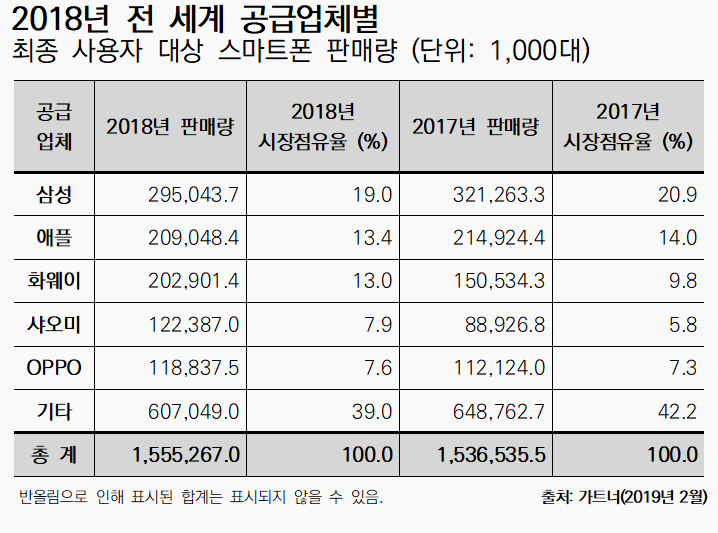
굽타 연구원은 “화웨이는 중국과 유럽에서의 탄탄한 입지를 넘어 아태지역, 남미, 중동에서 투자를 계속 확대하며 한층 높은 성장을 도모하고 있다”며, “화웨이는 2018년 2분기 신흥 시장 중심의 아너(Honor) 시리즈 확장을 성장의 기회로 활용했으며, 이는 2018년 화웨이의 시장 점유율을 13.0%로 끌어올리는 데 도움이 됐다”고 말했다.
2018년 최종 사용자 대상 전 세계 스마트폰 판매량은 전년 대비 1.2% 상승한 16억대를 기록했다. 북미와 더불어 시장 성숙도가 높은 아태지역 및 중화권 지역은 각각 6.8%, 3.4%, 3.0%로 최악의 하락세를 보였다.
굽타 연구원은 “성숙한 시장의 스마트폰 수요는 상위 3개 브랜드인 삼성, 애플, 화웨이의 플래그십 스마트폰의 매력에 의해 크게 좌우되는데, 2018년에는 화웨이를 제외한 두 업체가 하락세를 기록했다”고 말했다.