인피니언(5월21일부터)
Physical AI HBM Smart Factory SDV AIoT Power Semicon 특수 가스 정정·반론보도 모음 e4ds plus
실무 엔지니어를 위한 LTspice 설계 검증 웨비나
2026-06-09 10:30~12:00
임승찬 고문 / e4ds
.e4ds-wrap { --cream: #f7f4ef; --white: #ffffff; --ink: #1a1a1a; --ink2: #3d3d3d; --muted: #888; --border: #e0dbd2; --orang..

ETRI Successfully Develops AI-Based Software Technology to Reduce VR Motion Sickness

Google 우선 소스 기사입력2020.11.30 11:21

VR motion sickness is a major factor hindering the spread of VR technology.
ETRI Develops VR Motion Sickness Analysis and Monitoring Tool
AI-based VR motion sickness prediction based on user biosignals


A technology has been developed that uses AI to analyze and reduce motion sickness that occurs when enjoying virtual reality (VR) content.

The Electronics and Telecommunications Research Institute (ETRI) announced on the 26th that it had successfully developed software technology that predicts the level of VR motion sickness based on AI technology.
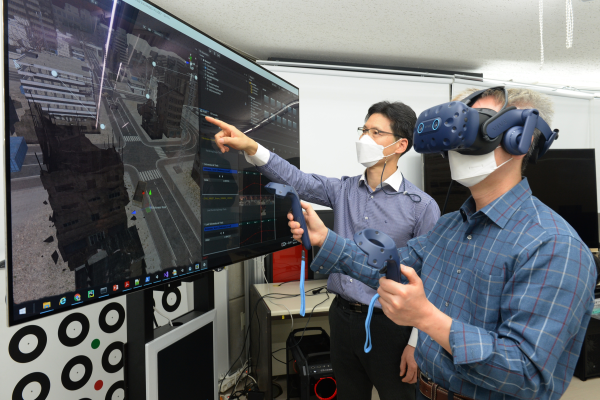
▲ ETRI researchers used VR motion sickness quantitative analysis technology
Experiencing content with reduced motion sickness [Photo = ETRI]

VR technology is expanding into diverse fields, including education, industry, sports, and entertainment. However, prolonged use of VR head-mounted displays (HMDs) can cause motion sickness, nausea, and dizziness in some users, hindering practical application and service expansion.

However, because there are so many factors associated with motion sickness, finding a clear cause and solution has been difficult. This is because conducting a systematic analysis to quantitatively determine the correlation between these factors has been challenging. ETRI developed a technology that obtains experimental data from over 500 users and applies machine learning to derive correlations between VR elements and VR motion sickness.

The 'VR Human Factor-Based VR Motion Sickness Analysis and Monitoring Tool' developed by the research team is a learning engine software that obtains biosignal information from the user and predicts VR motion sickness using AI.

This technology, which analyzes individual VR motion sickness triggers through observation of biomarker patterns, is being used in the healthcare field as software for psychological and psychiatric analysis, in conjunction with personal portable biosignal devices. It is currently being incorporated into Medication's VR-based alcohol addiction treatment device, "Medication-S," and is currently pursuing medical device approval and review.

Another technology developed by the research team, the "VR Motion Sickness Reduction Content Authoring Tool," allows for real-time adjustment of VR motion sickness-inducing factors during the content creation process. Content can be objectively adjusted based on quantitative indicators ranging from Level 1 to Level 5. It is also easily compatible with commercial game engine programs widely used in general game development.

Commercial VR games utilizing ETRI technology have also been released. Dragonfly's "Special Force VR Invasion" utilizes the researchers' VR motion sickness-reducing content authoring tool to reduce motion sickness during gameplay and has been available in domestic and international markets since 2019.

The research team also developed a "VR Human Factor-Based Motion Data Editing Tool" that analyzes and reduces VR motion sickness in immersive VR devices. By interpreting and utilizing the difference in information between VR images and user behavior as entropy, the tool can automatically adjust or edit content to reduce motion sickness. It is expected to be mainly applied to ride-type sensory amusement rides or utilized for VR motion sickness and safety analysis.

Meanwhile, ETRI, an editor participating in a working group under the IEEE Standards Association (IEEE SA), has submitted a draft international standard for VR technology and has received final approval. It is scheduled for publication early next year. ETRI plans to release its VR motion sickness clinical trial database internationally through IEEE and its VR motion sickness prediction module in executable format through the Korea Virtual and Augmented Reality Industry Association (KoVRA).
이수민 기자
기사 전체보기