.jpg)
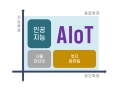
▲ Infographic of “AI Semiconductor Industry Growth Support Measures”
Support of 1.2 trillion won over the next 5 years and training of 7,000 professional personnel
Creating initial domestic demand...building large-scale measuring stations and expanding public projects
In order to take the lead in the AI semiconductor market, where industrial value is expected to increase in the era of digital transformation, we are strengthening the competitiveness of system semiconductors overall.
Minister of Science and ICT Lee Jong-ho announced on June 27 that he chaired the '1st AI Semiconductor High-Level Strategic Dialogue' comprised of industry, academia, and research institutes, including Samsung Electronics and SK Hynix, as a cooperation channel in the AI semiconductor field at the headquarters of the Korea Advanced Institute of Science and Technology (KAIST) and announced 'AI Semiconductor Industry Growth Support Measures.'
This measure was prepared through discussions among industry, academia, and research institutes based on the policy demands raised by the industry at a meeting with AI semiconductor companies, which was promoted as Minister Lee's first field trip after taking office in May.
First, we will work to secure AI semiconductor super-gap technology. The plan is to invest 1.2 trillion won in AI semiconductor cutting-edge technology research and development (R&D) and related businesses over the next five years and expand joint research with leading countries such as the United States. The targets include: △Next-generation NPU that fuses new devices and design technologies △PIM semiconductors (Processing In Memory) that integrate computation (processor) and storage (memory) functions △System software that maximizes semiconductor performance △Ultra-large AI systems that combine the advantages of NPU and PIM to maximize system performance.
In addition, we are working to create initial market demand for domestically produced AI semiconductors. We plan to establish a project (NPU Farm construction and verification) next year to build data centers, one of the largest demand sources for semiconductors, with domestically produced AI semiconductors, and provide computing power free of charge to AI developers.
In addition, we will newly launch a project to utilize domestic AI semiconductors in the development of AI products and services and verify their performance, and discuss ways to apply and expand domestic chips to public projects built by each ministry and local government, such as intelligent CCTV and smart cities.
In addition, we will create an ecosystem of industry-academia-research cooperation with the participation of large corporations: We will strengthen cooperation with large corporations so that universities and research institutes can design semiconductors optimized for advanced commercial processes.
In particular, Samsung Electronics and SK Hynix will provide technical consulting to research institutes participating in government projects developing PIM semiconductors, review the application of excellent research results to semiconductor production processes, and if research results from government projects developing NPUs are verified by Samsung Electronics’ partner companies (design houses) and evaluated as excellent design technology (IP), they will be included in Samsung Electronics Foundry’s design technology database (IP pool) and supported so that they can be applied to various fabless company products.
In addition, we are working to train AI semiconductor experts. We plan to train 7,000 people, jointly open educational courses in various departments related to AI semiconductors, promote the advancement of semiconductor test production facilities owned by universities and research institutes, and establish semiconductor design and manufacturing education linked to this.
In particular, it announced that it plans to train more than 7,000 people, establish an 'AI Semiconductor Graduate School' (3 schools) in 2023 to train research-oriented advanced talents, and operate a program to dispatch excellent students to overseas universities for a short period (6 months to 1 year).
Minister of Science and ICT Lee Jong-ho said, “AI semiconductors will have increasing economic and industrial value in the era of digital transformation, and this is a field that our country can dominate based on our competitiveness in the memory semiconductor and foundry sectors.” He added, “We will actively support the expansion of AI semiconductors to strengthen competitiveness across the board and expand the market while dominating the global market for AI semiconductors.”